
Australia tests cyborg cockroaches to find people under rubble
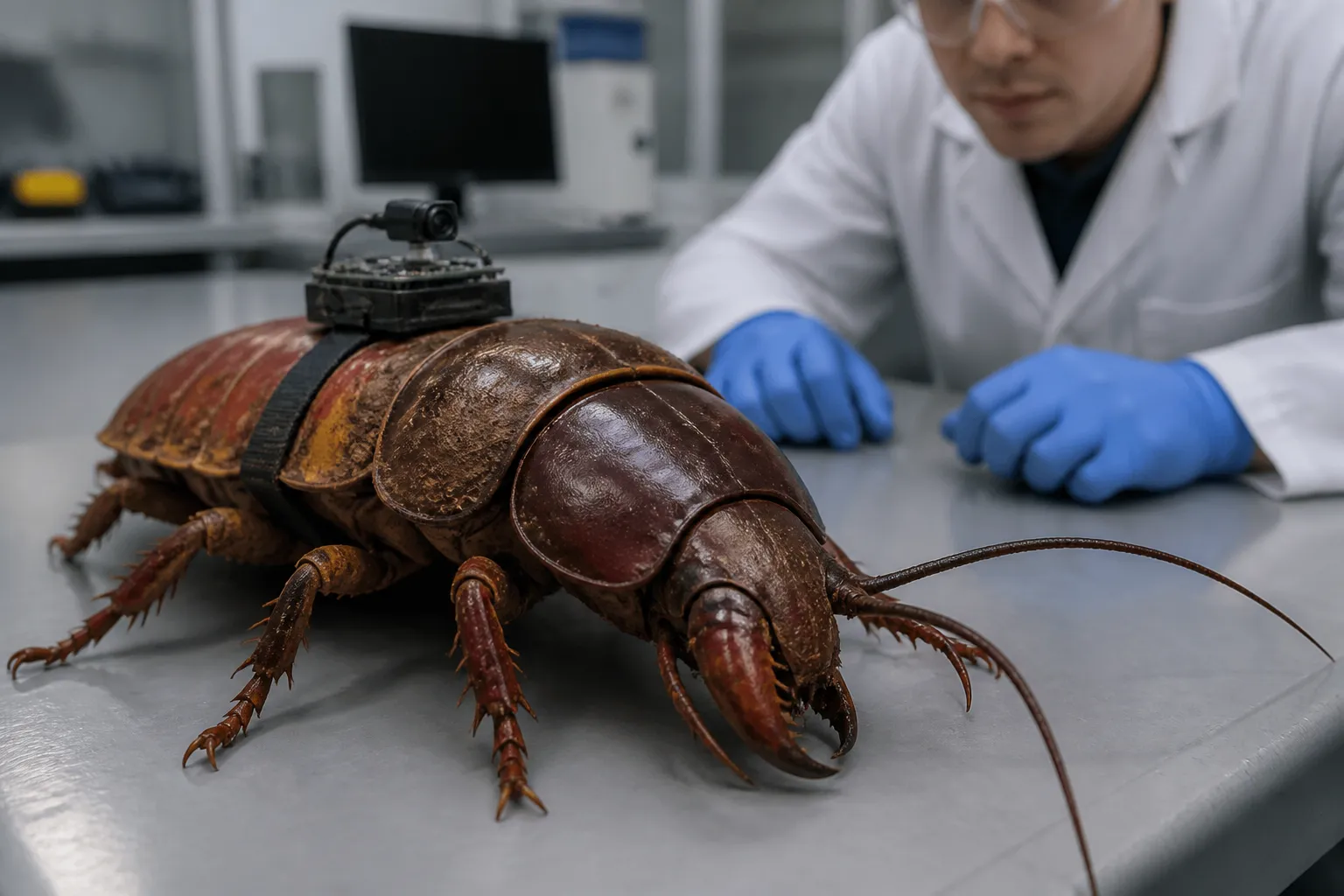
Researchers from the University of Queensland and the University of New South Wales in Australia are testing giant burrowing cyborg cockroaches to search for and provide emergency assistance to people who may be trapped under rubble after earthquakes or in other hard-to-reach places. The insects were fitted with lightweight electronic devices, cameras and remotely controlled auto-injection systems.
Cameras and injection systems
As The Guardian reports, the giant burrowing cockroach species Macropanesthia rhinoceros from far north Queensland was used for the development. These insects are being considered as a potential tool for rescue operations in collapsed buildings, caves and other spaces that are dangerous or impossible for rescuers to reach.
Biorobotics engineer Thang Vo-Doan noted that previous models of cyborg insects were created primarily for search and reconnaissance. The current study is intended to determine whether they can help victims after a person is detected. At the same time, important medical decisions, he said, must remain under human control.
More current news is available on the UA.News Telegram channel Telegram.
Results of initial tests
During the proof-of-concept test, the cockroaches successfully delivered an injection at close range in 95% of cases when they were no more than 15 centimetres from the target. The full task, which included navigation and injection, was completed in 72% of trials.
PhD student Hai Nhan Le called precise positioning one of the main engineering challenges: the insect must reach the target, position itself correctly and remain stable for the injection. The cockroaches are anesthetized during the installation of electrodes and microchips. According to the researchers, after the equipment is removed, they live as long as other cockroaches.
Fire and Rescue NSW representative Tim Hassiotis said the technology could potentially expand the capabilities of urban search-and-rescue teams. Vo-Doan suggested that specialized groups of cyborg insects could be used in real operations within the next five to ten years.


