
Users are looking for ways to protect themselves from covert recording by Meta glasses
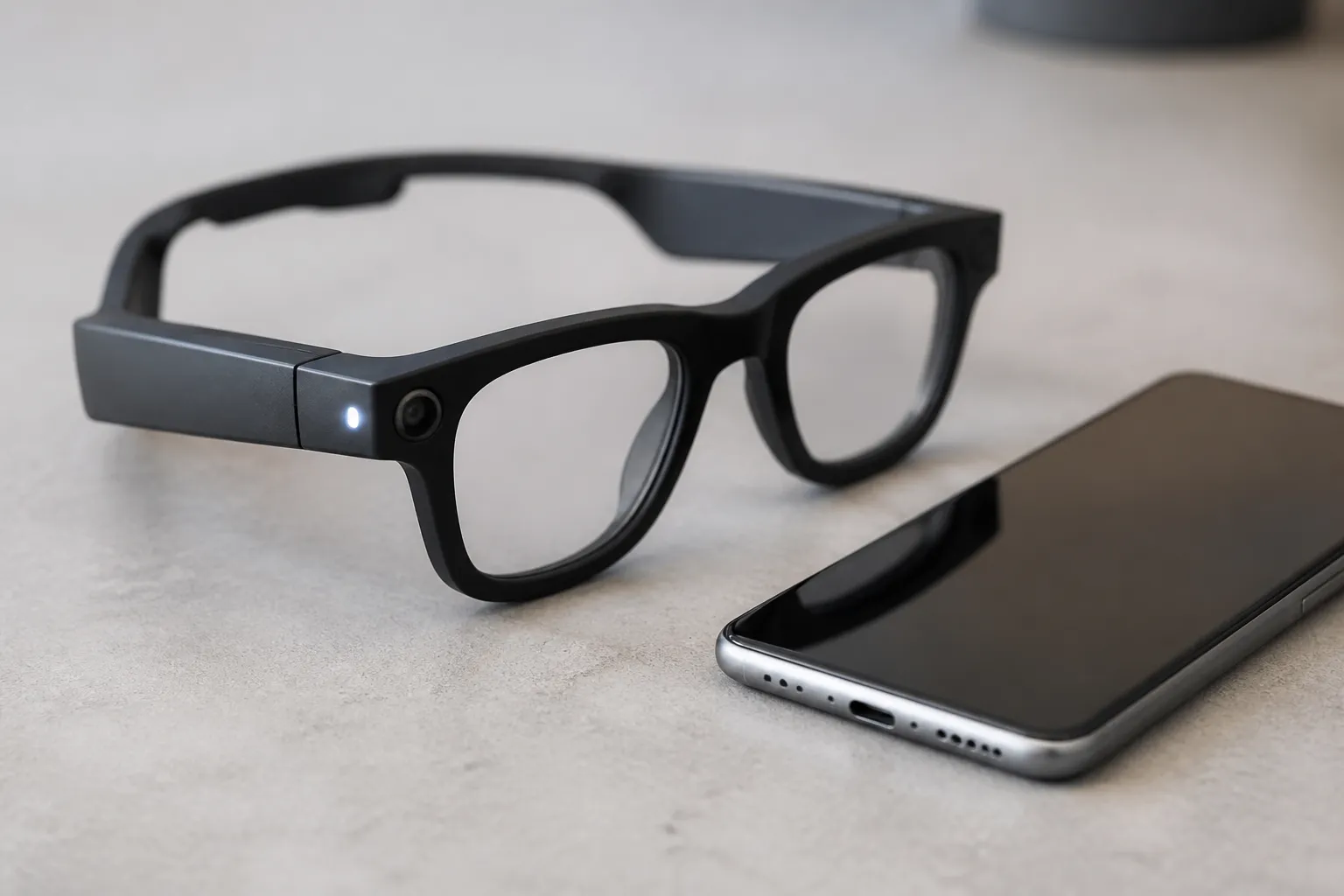
Users are employing various methods to protect themselves from potential covert recording by Ray-Ban Meta smart glasses: from face markings to apps designed to alert them to nearby devices. At the same time, lawyers and researchers warn that such methods do not guarantee privacy protection, according to Fortune.
Ray-Ban Meta glasses have built-in cameras and microphones, allowing users to take photos and videos without using a phone, as well as livestream on Facebook and Instagram. A white LED indicator flashes on the front of the frame when recording. Meta stated that the indicator cannot be turned off, and the camera will not work if the indicator is covered or blocked.
Harvard computer science professor Jim Waldo believes that the risks are exacerbated by the combination of smart glasses with facial recognition, artificial intelligence, and other data-collection technologies. According to him, manufacturers are making the devices safer for their owners, but not necessarily for the people around them.
Gene Kang, a partner at the law firm Rivkin Radler LLP, noted that a key issue is a person’s lack of awareness that they are being recorded. When a conversation partner sees a phone pointed at them, this could potentially constitute implied consent. With a hidden camera in glasses, it is much more difficult to make such an assumption, and therefore questions may arise regarding privacy laws and consent to recording.
For more breaking news, follow the UA.News Telegram channel.
Researchers at the University of Sydney analyzed more than 350 “pickup artist”-style videos in which women are filmed while being approached in public places. In 60% of the videos, they identified behavior they classified as potentially constituting harassment. In 43% of the videos, women were subjected to degrading comments, and other people were identified or de-anonymized. The study focuses on the so-called “background recording” of people in everyday settings without their awareness that a camera is pointed at them.
Among the technical responses to these concerns is the free, open-source app Nearby Glasses, developed by Professor Yves Jeanrenaud. It is designed to alert users to the presence of Meta glasses nearby. According to Google Play, the app has been downloaded over 100,000 times. At the same time, the developer acknowledged that this is an imperfect approach.
Advice has also been circulating on social media to sing Disney songs so that videos would be removed from platforms due to potential copyright claims. Kan emphasized that the person being filmed does not own the copyright to the musical work, so this method is not reliable. In his opinion, such cases primarily concern privacy.


