
The Space Race for Artificial Intelligence: How Musk, Bezos, and Google Want to Transform the Data Center Market
26 November 2026 15:50On November 25, 2026, the U.S. Federal Communications Commission (FCC) granted Elon Musk’s SpaceX permission to deploy up to one million satellites that will function as orbital data centers. The project, called Starmind, is intended to meet the growing demand for computing power for artificial intelligence.
SpaceX is not the only company planning to move servers beyond Earth. Jeff Bezos’s Blue Origin, Google, and the startup Starcloud are also developing their own projects.
Proponents of this concept promise nearly uninterrupted access to solar energy and reduced electricity costs. However, placing servers in space creates new challenges—ranging from the difficulty of repairing equipment to the risk of collisions with space debris.
UA.News examined how space data centers will operate, how economically viable it is to place them in orbit, and what risks this may pose to satellite infrastructure.
What Is Known About SpaceX’s Space Data Centers and Those of Its Competitors
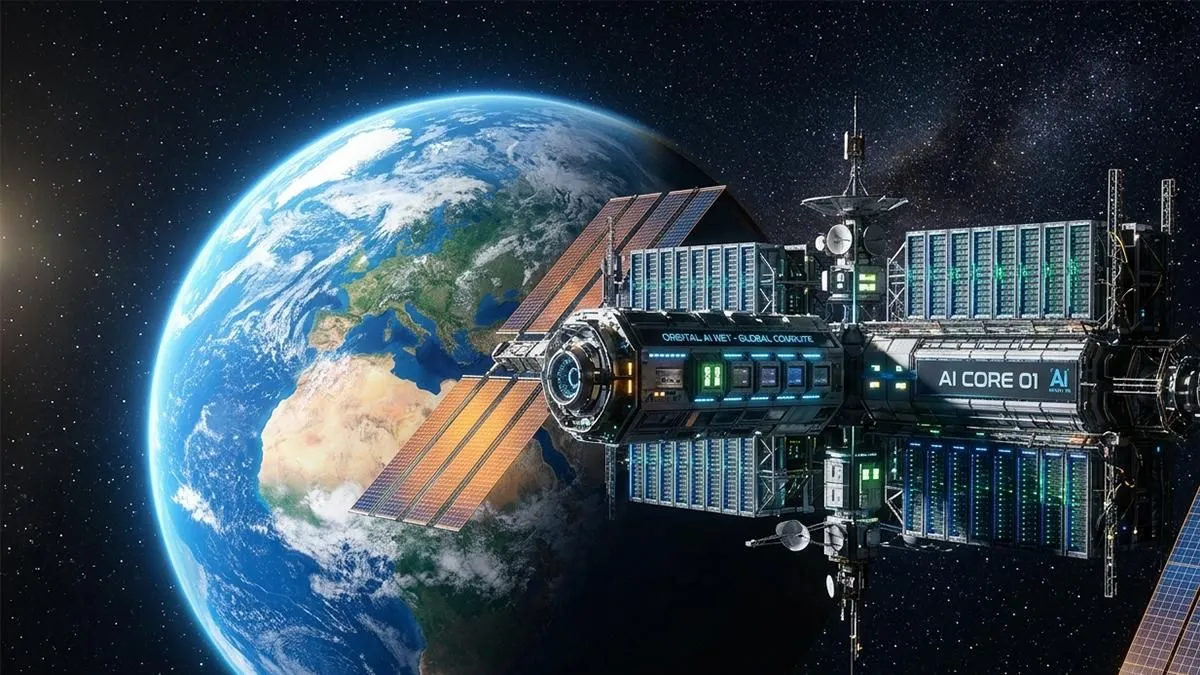
SpaceX submitted an application to create a network of orbital data centers on January 30, 2026. In total, the company received permission to deploy up to one million computing satellites, which are planned to be placed at altitudes ranging from 500 to 1,002 km, and laser communication will be used to transmit information between them.
Elon Musk expects to begin launches as early as the third quarter of 2027. Under the terms of the FCC’s authorization, SpaceX must place at least 100,000 satellites into orbit by November 2035, 500,000 by November 2038, and complete the deployment of the entire constellation by November 2040.
Alongside Musk, Jeff Bezos plans to create his own computing infrastructure in space. In March 2026, his company, Blue Origin, filed an application with the FCC to deploy up to 51,600 satellites as part of the Sunrise project.
For Bezos, this is an opportunity not only to enter the computing power market but also to ensure steady demand for launches of his own heavy-lift rocket, New Glenn.
Google is also developing the Suncatcher project, which involves creating a network of satellites equipped with its own TPU processors for artificial intelligence. The startup Starcloud, for its part, is banking on high-performance Nvidia graphics processors and large solar panels.
Why Move Data Centers from Earth to Space

The rapid development of artificial intelligence is the main reason behind these projects. Tech companies now have to compete not only for processors, but also for electricity, land, and access to water for cooling servers.
According to a forecast by the International Energy Agency (IEA), global electricity consumption by data centers could rise to 950 TWh by 2030—nearly double the 2025 level.
Starcloud CEO Philip Johnston explained in an interview with McKinsey that energy infrastructure is becoming the main obstacle to the industry’s development.
In the right orbit, solar panels can receive light almost continuously. Companies also won’t have to purchase land for server complexes, build ground-based power plants for them, or connect to overloaded power grids.
However, free solar energy does not mean free computing. Panels, processors, cooling systems, and communication systems must be manufactured, delivered into orbit, and maintained in working order.
How Space Data Centers Will Work

Instead of a single massive server complex, SpaceX plans to create a distributed network of satellites, each of which will function as a separate computing module.
The satellites will be equipped with processors, storage devices, solar panels, heat sinks, engines for orbital maneuvers, and laser communication equipment.
The first experiments with such technologies are already underway. In October 2026, Google launched an experimental satellite as part of the Suncatcher project using a SpaceX rocket. The company later reported receiving the first artificial intelligence response generated directly on an orbital TPU processor.
The most promising applications for such data centers may be tasks that do not require the constant transmission of large amounts of data between Earth and orbit. For example, generating responses using neural networks or processing satellite imagery.
At the same time, training large language models requires extremely fast information exchange between thousands of processors. Ensuring such interaction between individual spacecraft is more challenging than between servers in a single room.
Why Cooling Servers in Space Is More Difficult Than on Earth
Despite the low temperature of outer space, cooling equipment in orbit is a complex engineering challenge. There is virtually no air in space, so conventional cooling systems cannot transfer heat to the surrounding environment the way they do on Earth. In fact, the vacuum of space works on the same principle as the thermal insulation of a thermos.
To dissipate heat, orbital data centers will need large radiators that will emit the accumulated thermal energy.
In April 2026, the U.S. Government Accountability Office (GAO) published a study identifying heat dissipation as one of the main technological barriers to the development of space-based data centers.
According to the study’s authors, meeting the energy needs of large computing complexes will require the creation of solar panels larger than any that humanity has previously launched and assembled in space.
Thus, the savings on water supply and ground-based cooling systems could be offset by the costs of manufacturing and delivering massive heat sinks into space.
How Cost-Effective Are Space Data Centers?
Elon Musk is convinced that space-based data centers will be able to surpass ground-based ones in terms of cost-effectiveness within the next few years. During a speech at the World Economic Forum in Davos in January 2026, the entrepreneur stated that placing computing power in orbit would help overcome the energy constraints facing the artificial intelligence industry.
“Space will become the cheapest place to host artificial intelligence. This will happen within two, at most three, years,” Musk said.
In February 2026, in an interview with Dvarakesh Patel, the businessman explained his position in greater detail. In his view, the advantage of space-based data centers lies not only in the availability of solar energy but also in the ability to scale computing power much more quickly without the need to expand ground-based energy infrastructure.
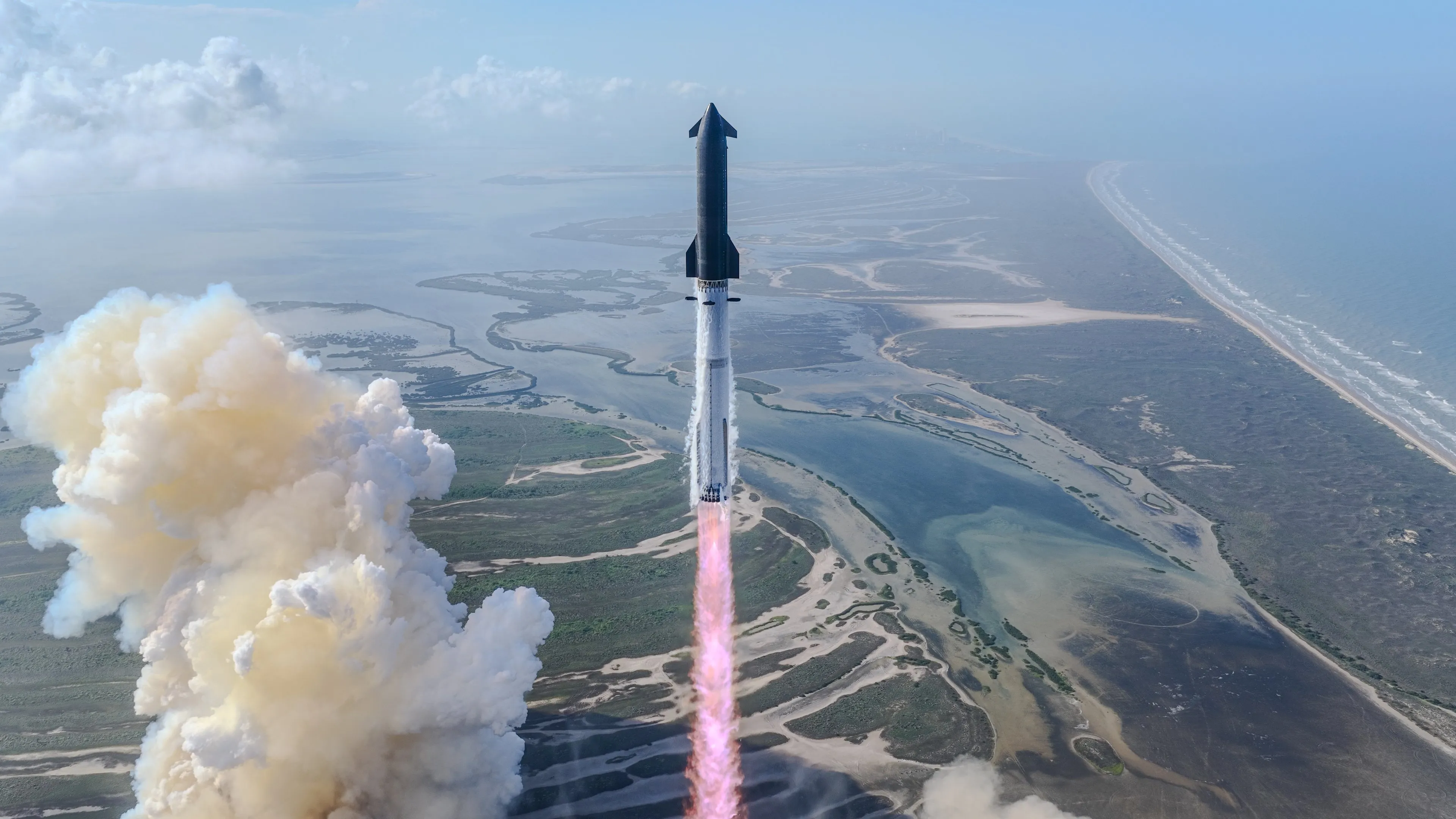
Musk expects that the reduction in the cost of space launches, thanks to the reusable Starship, will allow SpaceX to deliver computing equipment to orbit on a massive scale. According to the entrepreneur’s optimistic scenario, the company will eventually be able to launch data centers with a combined capacity of about 200 GW into space each year.
However, Starcloud CEO Philip Johnston believes that orbital data centers will be able to compete with ground-based ones if the cost of delivering cargo to space drops to about $500 per kilogram.
“Today, space-based data centers are generally more expensive, mainly due to launch costs. The long-term economics depend largely on how these costs evolve,” Johnston explained.
He estimates the potential infrastructure costs of space-based data centers at less than $5 million per megawatt of power, compared to $12–15 million for ground-based facilities in the U.S.
In their research paper on orbital data centers, Google researchers project an even lower launch cost—about $200 per kilogram. Under this scenario, the amortized cost of delivering equipment to orbit could approach the electricity costs of an equivalent ground-based facility.
However, Andrew Cavalier, a leading analyst at ABI Research, takes a much more skeptical view of the industry’s prospects. In his study for IEEE Spectrum, he examined the economics of space-based data centers even under the extremely optimistic launch cost of $44 per kilogram.
According to his estimates, the additional costs of protecting equipment from radiation, cooling, and ensuring system reliability could make space-based computing significantly more expensive than ground-based computing even under such a scenario.
So far, no company has demonstrated the economic viability of orbital data centers on an industrial scale.
Who Will Repair Space Data Centers

One of the main advantages of ground-based data centers is the ability to perform ongoing maintenance. If a processor, storage device, or power supply fails, engineers can replace the individual component.
In space, even a minor physical malfunction can result in the loss of an entire computing satellite. Brandon Lucia, a professor of electrical and computer engineering at Carnegiewho specializes in the development of computing systems for satellites, expressed skepticism in a comment to NPR about the prospects for a rapid reduction in the cost of space-based data centers.
According to the researcher’s estimates, the cost and complexity of maintaining equipment in space could increase 10-fold, and in some cases even 100-fold, compared to ground-based infrastructure. Consequently, the economic benefits of placing servers in orbit would have to be extremely significant to offset these costs.
Lucia also called Elon Musk’s prediction overly optimistic—namely, that deploying artificial intelligence infrastructure in space could become cheaper than on Earth within just two to three years.
At the same time, Starcloud CEO Philip Johnston acknowledges that the first generations of space data centers will most likely not allow for any physical repairs of equipment in orbit at all. Satellites will have to operate autonomously for approximately five years.
Some malfunctions can be fixed remotely. However, a physically damaged processor or a punctured heat sink cannot be repaired in this way.
An additional problem is the rapid obsolescence of equipment. Nvidia, AMD, and Google regularly introduce new generations of processors. On Earth, upgrading requires replacing servers, whereas in space it may require launching entirely new satellites.
What would happen if a space data center exploded or collided with space debris?

The destruction of a ground-based data center primarily creates problems for its owner and customers. A similar accident in space could pose a danger to satellites belonging to other companies and entire nations.
According to NASA, the average relative speed of space debris colliding with other objects in orbit is about 36,000 km/h. Under such conditions, even a small piece of debris can seriously damage equipment.
In February 2009, the American satellite Iridium 33 collided with the non-functional Russian satellite “Kosmos-2251.” According to the European Space Agency’s database, the collision resulted in more than 2,000 registered pieces of debris. If debris from one satellite damages other satellites, which in turn create new fragments, a cascade of collisions could begin. This phenomenon is known as the Kessler syndrome.
In its 2026 report, the European Space Agency (ESA) warned that the amount of space debris could continue to grow even if all new launches were completely halted.
According to the agency’s estimates, new collisions and the destruction of spacecraft create debris faster than it naturally decays from orbit and re-enters Earth’s atmosphere.
The destruction of a single data center would not necessarily cause a large-scale disaster. However, the deployment of hundreds of thousands of additional satellites significantly increases the potential risks.
How Space-Based Data Centers Could Affect Starlink, GPS, and Astronomy
Earth orbit is already used to provide internet connectivity, meteorological observations, military reconnaissance, and scientific research. An increase in the number of satellites will require more frequent adjustments to their orbits, the use of propulsion system resources, and coordination among operators.
Damage to communications satellites could potentially cause internet outages. At the same time, GPS satellites are located at an altitude of approximately 20,200 km, so a failure at a data center in low Earth orbit would not automatically halt global navigation.
Astronomers also oppose the large-scale deployment of orbital data centers. Large solar panels would reflect light, creating interference for ground-based telescopes, and cooling systems would generate infrared radiation.

On November 25, the American Astronomical Society (AAS) issued a statement regarding the FCC’s decision to authorize the deployment of SpaceX satellites.
“We believe it is critically important that the FCC take into account the protection of optical and infrared astronomy when reviewing applications from satellite operators,” the organization emphasized.
Scientists fear that the large-scale deployment of space-based data centers could jeopardize years of government investment in astronomical research.
Thus, private corporations could reap the potential economic benefits, while some of the negative consequences would fall on governments, scientific institutions, and other participants in the space market.
What will happen to space data centers once they are decommissioned?
Satellites have a limited operational lifespan. Over time, solar panels degrade, electronics fail, engine resources are depleted, and processors become obsolete.
Assuming that the average service life of a computing satellite is five years, SpaceX will have to replace about 200,000 satellites each year to maintain a constellation of one million.

Today, many satellites are directed into Earth’s atmosphere at the end of their operational life, where they burn up. However, the mass disposal of large computing satellites could place an additional burden on the atmosphere.
In its report on the state of the space environment, the ESA notes that the increase in the number of launches, satellites, and their re-entry into the atmosphere is gradually raising risks even for people on Earth’s surface due to the possibility of falling spacecraft debris.
Separate issues include legal liability for accidents, equipment insurance, and compensation for the owners of other satellites in the event of damage. All these factors will also influence the final cost of space-based computing.
Can Space Data Centers Replace Ground-Based Ones?

The most realistic scenario for the coming years remains the coexistence of ground-based and space-based computing infrastructure. Orbital data centers may prove particularly useful for processing information generated directly in space. At the same time, for most traditional cloud services and neural network training, ground-based facilities still hold significant advantages.
Even Google currently positions Project Suncatcher as a long-term research project rather than a ready-made alternative to ground-based data centers.
In addition, technology companies continue to develop more energy-efficient processors, improve cooling systems, and invest in nuclear power. Therefore, space-based data centers will have to compete not with today’s ground-based infrastructure, but with the infrastructure that will exist in ten or fifteen years.
The main question is no longer whether humanity is capable of launching servers into space, but whether it will be able to make space-based computing cheaper, more reliable, and safer than ground-based computing.
After all, if saving on electricity requires constant rocket launches, replacing entire satellites, and dealing with space debris, moving data centers beyond Earth may not solve the tech industry’s existing problems—it may simply create new ones, this time on a planetary scale.




