
Laser Weapons for Ukraine: Will the Ukrainian Armed Forces Be Able to Shoot Down "Shaheds" with a Beam of Light?
23 July 2026 15:20In the coming months, Ukraine may receive new weapons to combat Russian drones, which will operate on the principle of laser weapons. This is not a distant prospect or a laboratory experiment, but rather a technology that Ukrainian developers are already testing against aerial targets.
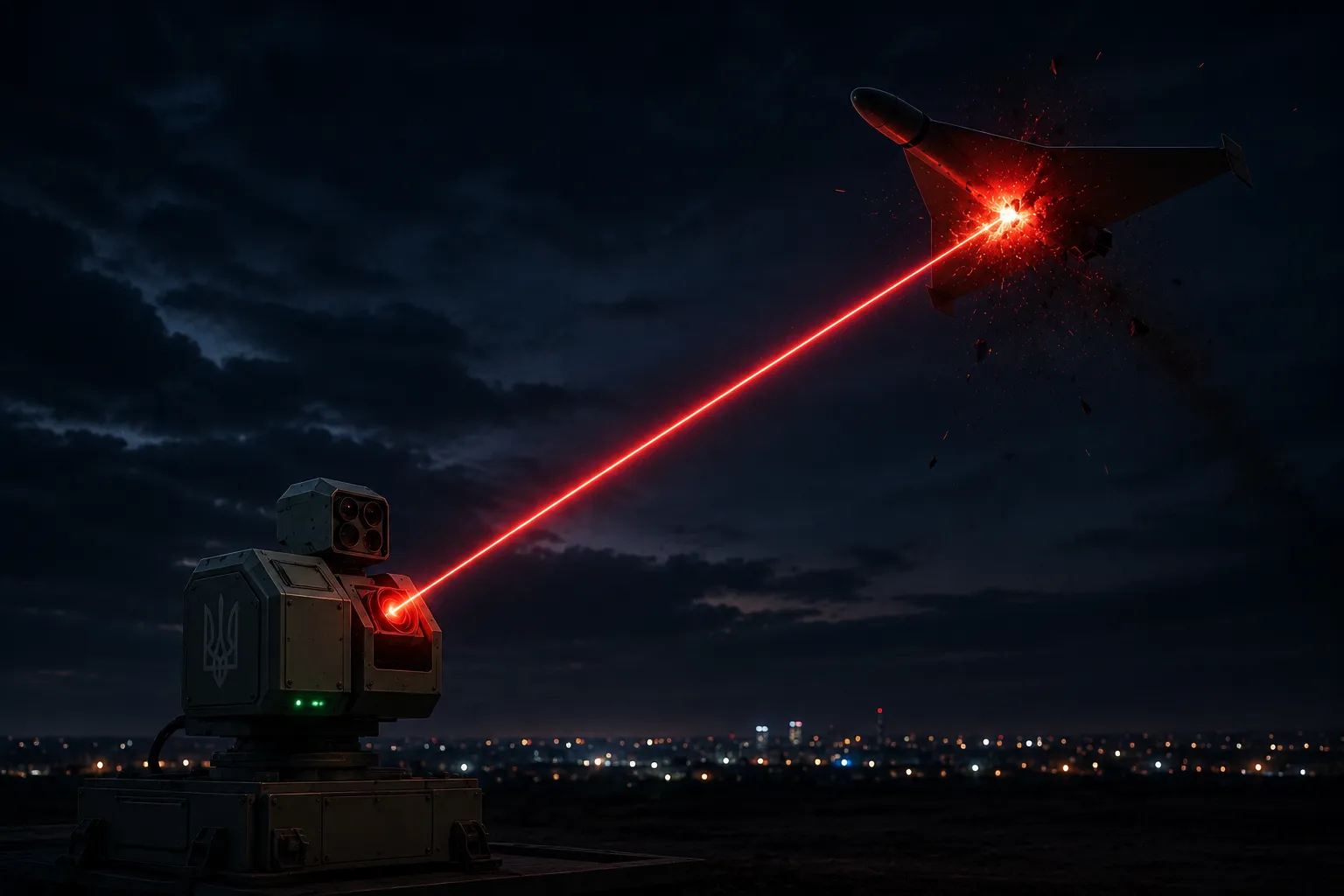
On July 22, 2026, Deputy Commander-in-Chief of the Armed Forces of Ukraine, Brigadier General Andriy Lebedenko, stated that both teams within the Armed Forces and private Ukrainian companies are working on laser weapons. According to him, current prototypes are already capable of shooting down FPV drones, and they are now being adapted to combat attack drones such as the Shahed.
Lebedenko suggested that within the next two to three months, Ukraine will have systems capable of engaging aerial targets more effectively than large-caliber machine guns. At the same time, the general did not disclose the names of the developers, the systems’ power, or their expected range.
This is not the first mention of Ukrainian combat lasers. Back in December 2024, the then-commander of the Unmanned Systems Forces, Vadym Sukharevsky, spoke about a Ukrainian laser system called “Trizub.” According to him, the system already existed, and developers were working on scaling it up and enhancing its capabilities.
UA.News explains how laser weapons work, why the world’s leading armies are investing billions in them, what limitations combat lasers have, and whether they can truly help Ukraine shoot down Russian “Shaheds” more cost-effectively.
What Are Laser Weapons and How Do They Work?
Laser weapons belong to the category of so-called directed-energy systems. Unlike a cannon, machine gun, or anti-aircraft missile system, they do not fire physical ammunition at the target. Instead, the system generates a narrow beam of light energy and focuses it on a specific area of the target’s hull.
From the outside, it doesn’t necessarily look like a bright beam from a science fiction movie. Some military lasers operate in a spectrum invisible to the human eye. The operator views the target through an optical system, thermal imager, or radar, after which the guidance system locks the beam onto a vulnerable point on the drone.
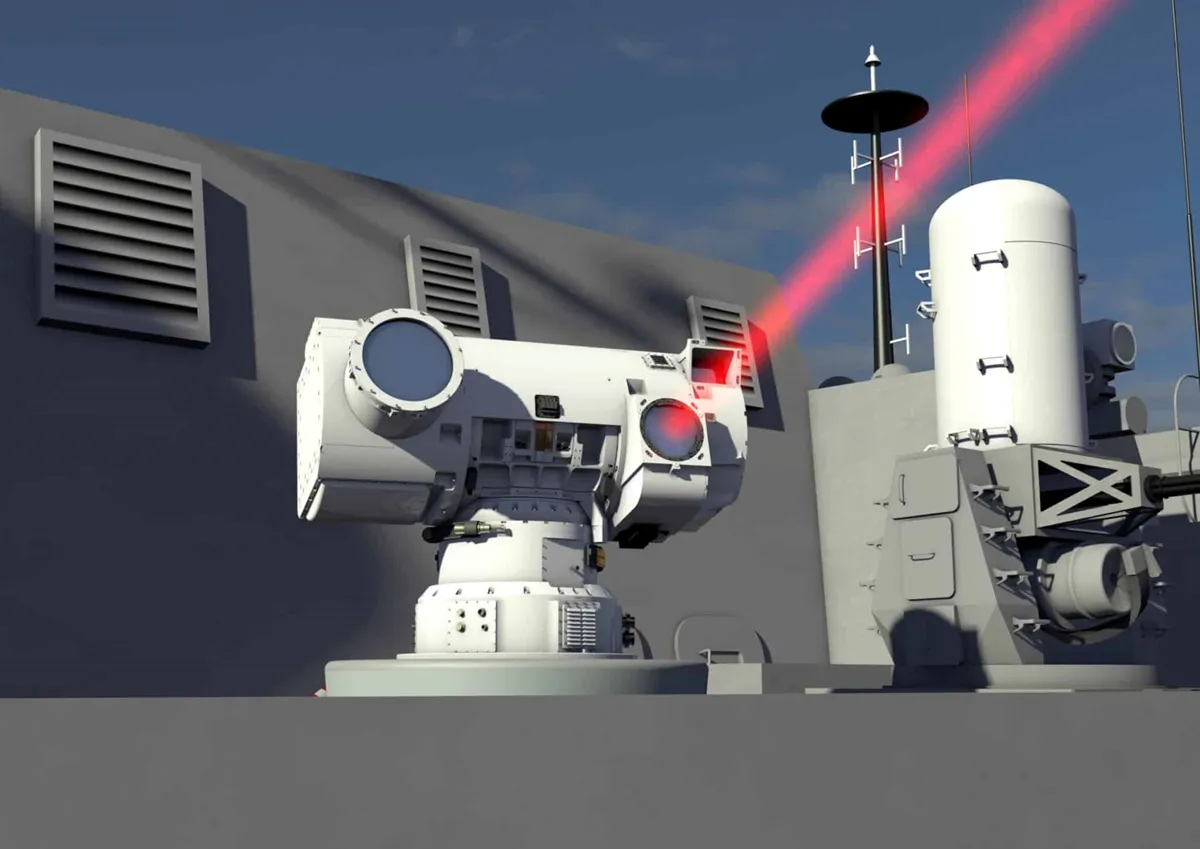
The laser’s energy heats the material. With sufficient power and proper targeting, the beam can damage a plastic or composite airframe, burn through the surface, or disable an optical sensor, electronics, motor, control system, or fuel line.
The laser does not always need to completely burn up the drone. To stop its flight, it is enough to damage a single critical component: the antenna, steering mechanism, motor, camera, or onboard electronics.
The main physical advantage of such a weapon is speed. A laser beam travels at the speed of light, so there is virtually no delay between its emission and impact on the target. The operator does not need to calculate the projectile’s flight path, as is required when firing a cannon.
However, this does not mean that a laser destroys any object instantly. The system usually needs to keep the beam focused on a specific area of the target for a certain amount of time. The stronger the target’s armor, the greater the distance, the worse the weather, or the faster the target is moving, the more difficult it is to accumulate enough energy to damage it.
Why Combat Lasers Have Become Relevant Right Now
The idea of creating laser weapons emerged almost simultaneously with the invention of the laser itself. Even during the Cold War, the U.S. and the Soviet Union explored the possibility of using powerful beams against aircraft, satellites, and ballistic missiles.
However, the first systems were too large, complex, and expensive. They required powerful energy sources, bulky cooling systems, and high-precision optics, which were not always capable of consistently tracking a beam onto a moving target.
The situation changed with the development of solid-state and fiber lasers, batteries, power electronics, thermal imagers, radars, and automated guidance systems. Laser systems became more compact and began to be mounted on trucks, armored vehicles, and ships.
But the main reason for this renewed interest was the widespread emergence of inexpensive drones.
A modern air defense system may expend a missile costing tens or hundreds of thousands of dollars on a drone that costs a fraction of that. If an adversary launches dozens or hundreds of drones simultaneously, it not only attempts to strike targets but also depletes the stockpile of interceptor missiles.
Lasers offer a different cost structure. Once the system is deployed, no new missile is required for each subsequent shot. What is needed is electricity, cooling system operation, maintenance, and component lifespan.
This is precisely why lasers are viewed primarily as a means of countering massed and relatively inexpensive threats: FPV drones, quadcopters, reconnaissance UAVs, loitering munitions, mortar shells, and unguided rockets.
Iron Beam: How Israel Is Integrating Lasers into Its Air Defense System
One of the best-known combat lasers is Israel’s Iron Beam. It is being developed by Rafael in collaboration with the Israeli Ministry of Defense and Elbit Systems.
Iron Beam is not intended to completely replace the Iron Dome, David’s Sling, or Arrow systems. Its purpose is to serve as another layer in a multi-layered air defense system and to engage targets for which the use of expensive missiles is economically unfeasible.
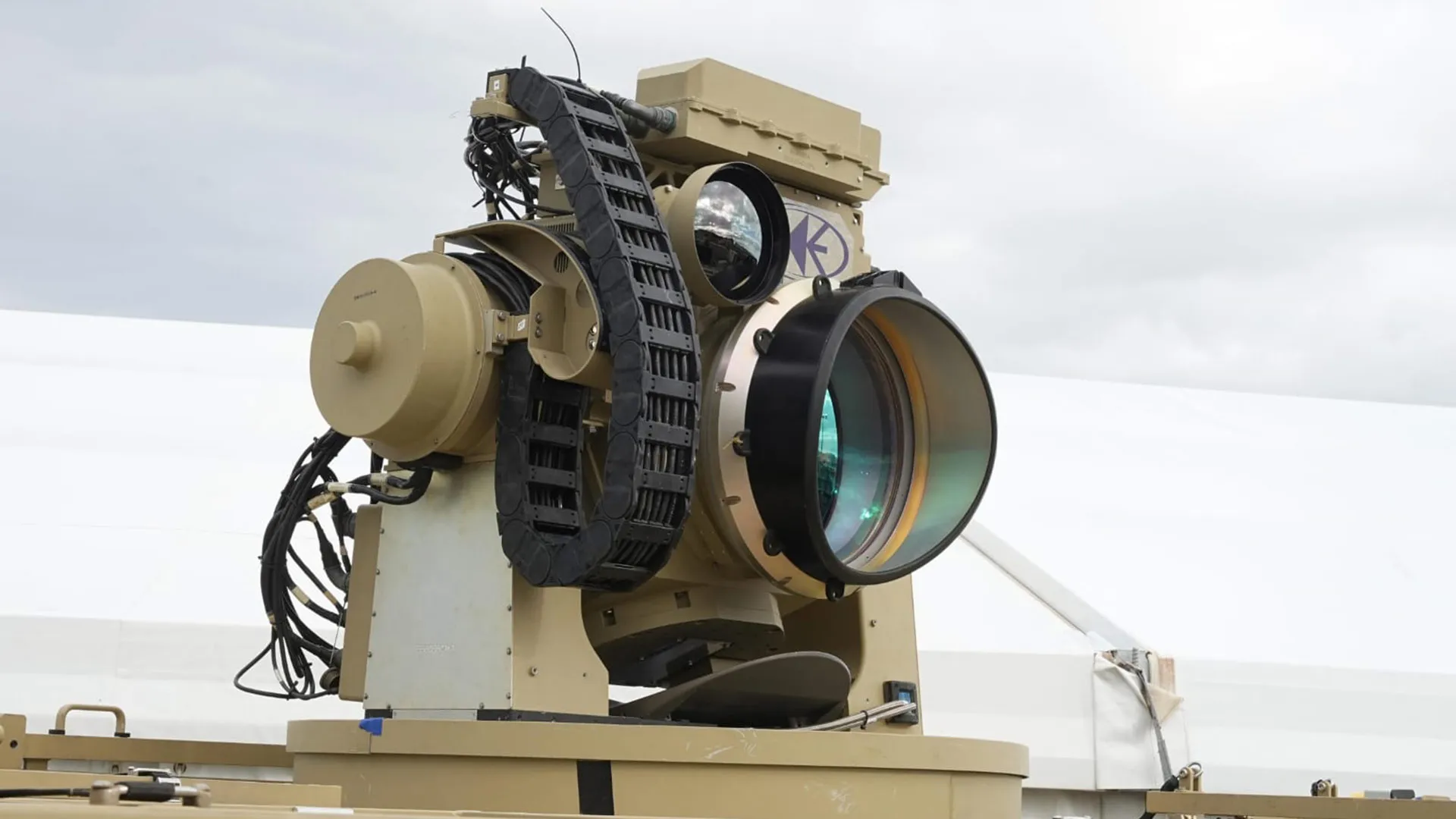
According to the Israeli Ministry of Defense, the ground-based laser system was developed to intercept missiles, mortar rounds, drones, and other aerial threats. Rafael’s official website describes Iron Beam as a 100-kW-class system.
In late 2025, Israel announced the delivery of the first operational Iron Beam system to the military. This marked an important step: the technology, which had been demonstrated primarily during tests for years, began to transition to regular service.
For Ukraine, Israel’s experience is important not only because of the technology itself. Iron Beam demonstrates that lasers are best viewed not as a universal replacement for air defense systems, but as a specialized tool within a larger defense system.
DragonFire: A British Laser That Costs Ten Pounds Per Shot
The United Kingdom is developing its own laser system, DragonFire. The project is led by the British Defense Science and Technology Laboratory (Dstl), with MBDA, Leonardo, and QinetiQ involved in the system’s development.
During testing, DragonFire engaged aerial targets at a test range. The British Ministry of Defense has not disclosed the system’s exact range but emphasizes that the system operates within line of sight of the target.
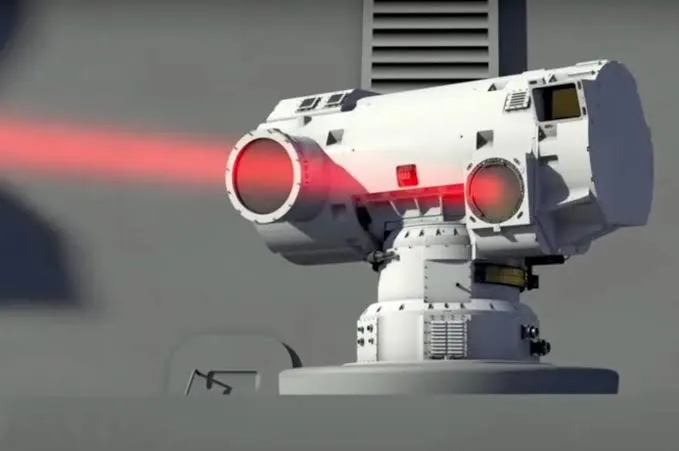
The British government is particularly keen to highlight the system’s cost-effectiveness. According to the UK government, the cost of a single DragonFire engagement is less than ten pounds sterling. This estimate primarily includes the energy required for firing, rather than the full cost of acquiring, repairing, and maintaining the system.
In November 2025, the British government announced that it plans to install DragonFire on Type 45 destroyers in 2027. The system is intended to enhance the ships’ protection against drones and other airborne threats.
HELIOS: Why the U.S. Navy Needs Combat Lasers
The U.S. is developing several directed-energy programs simultaneously. One of the best known is the HELIOS (High Energy Laser with Integrated Optical-dazzler and Surveillance) shipboard system.
It combines a high-energy laser, an optical dazzler, and a surveillance system. HELIOS can be used against drones and small boats, as well as to disrupt enemy optical sensors.
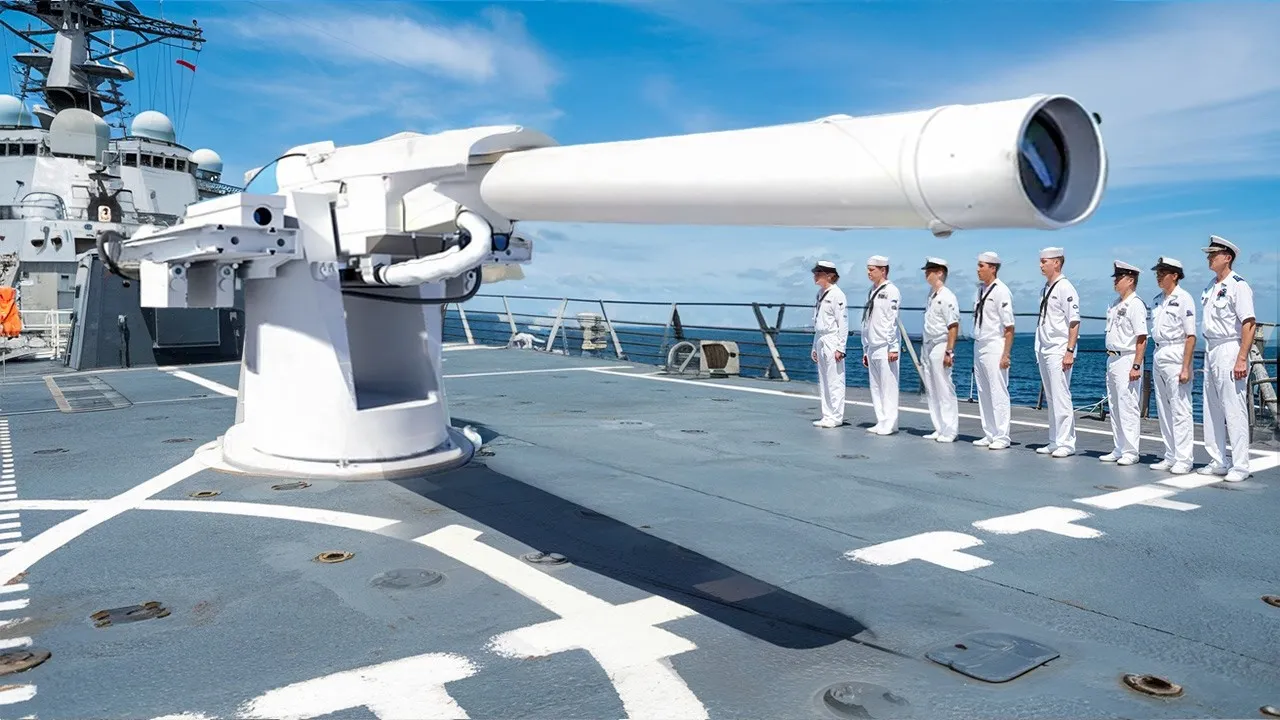
According to the U.S. Navy’s Naval Systems Command, the system was developed as an integrated shipboard weapon to counter UAVs, small surface targets, and reconnaissance sensors.
HELIOS has been installed on the destroyer USS Preble. As early as 2026, the U.S. Navy was already training operators specifically to work with directed-energy systems, indicating a gradual transition from isolated tests to the development of a full-fledged military specialty.
Can a laser shoot down a “Shahed”?
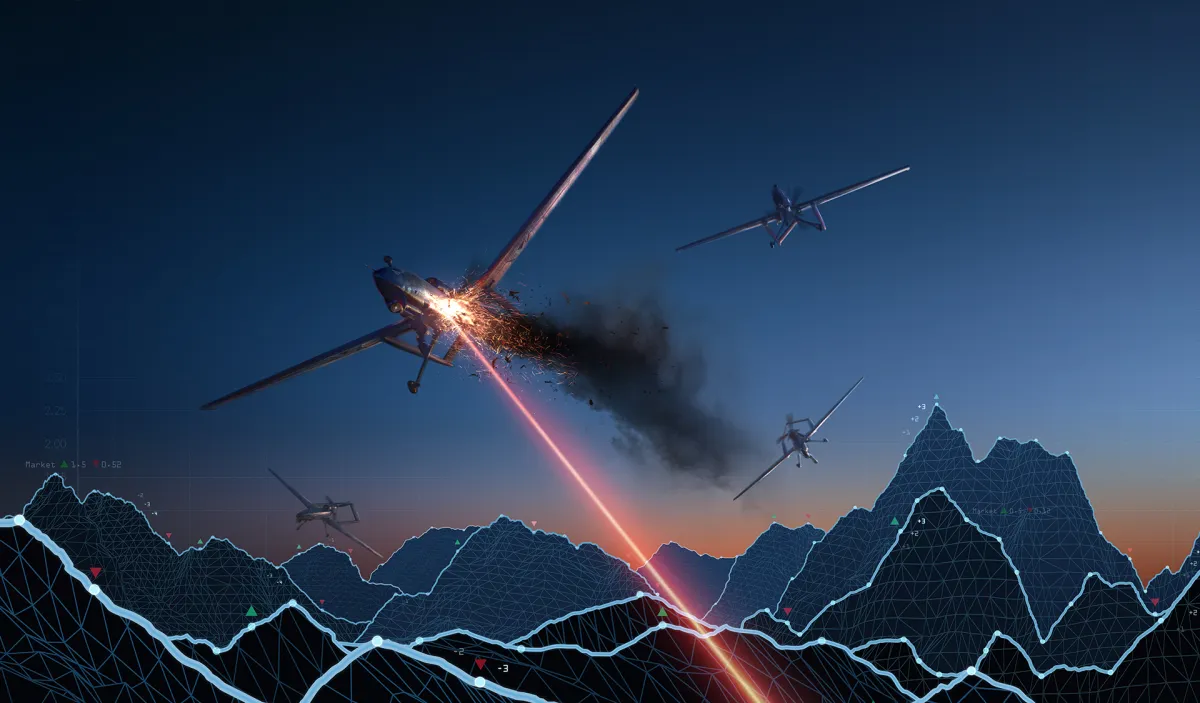
Shahed-class attack drones are a more challenging target than a small quadcopter or FPV drone. They are larger, have an internal combustion engine, a fuel supply, a warhead, and a more robust structure.
However, the “Shahed” also has characteristics that make it a potentially viable target for a combat laser. It flies significantly slower than a cruise missile, does not perform complex anti-missile maneuvers, and can remain within the laser’s field of view for an extended period.
To destroy such a drone, the laser does not necessarily need to vaporize the entire airframe. The beam can be directed at the engine, wing components, control system, optical devices, or fuel system. Damage to any of these components can cause the drone to crash.
However, actual effectiveness will depend on the system’s power, range, targeting accuracy, angle of observation, weather conditions, and the duration for which the beam can remain locked onto the target.
Why a laser shot cannot be called completely free
One of the main advantages of laser weapons is often cited as the extremely low cost per shot. This is indeed a significant advantage, but it should not be oversimplified into the claim that a laser “shoots for free.”
The electricity required for a single pulse may not cost much. However, the system itself remains a complex and expensive setup. It includes a laser module, a generator or battery pack, optics, radar, a thermal imager, a stabilization system, a guidance computer, and a cooling system.
Additional costs arise from repairs, replacement of optical components, maintenance, operator training, and protection of the system itself.
Therefore, it is more accurate to speak not of a “free shot,” but of the low marginal cost of each subsequent interception. Once the system is purchased, striking a new target does not require expending a separate missile costing tens or hundreds of thousands of dollars.
Another advantage is the relatively large ammunition capacity. The number of engagements is limited not by the number of missiles in the launcher, but by the energy reserve, cooling capabilities, and the equipment’s service life.
What are the disadvantages of laser weapons?
The biggest limitation of a combat laser is its dependence on atmospheric conditions. Fog, clouds, heavy rain, snow, smoke, and dust scatter or absorb part of the beam’s energy. This reduces the effective range and increases the time required to engage a target.
The U.S. Government Accountability Office (GAO) notes that directed-energy systems typically have a shorter range than conventional weapons, and fog and stormy weather can reduce their effectiveness.
A laser also requires line of sight. It cannot go around a building, a hill, a tree line, or a dense cloud. If the target disappears behind an obstacle, the beam’s effect ceases.
Another challenge is what is known as beam hold time. The system must precisely track a moving object and maintain focus on a small area of its surface. Platform vibration, a sudden drone maneuver, or a guidance error can compromise performance.
At the same time, modern developers are working on adaptive optics, automatic tracking, and compensation for atmospheric interference. Therefore, rain or dust does not always render the laser completely unusable, but it usually degrades its performance.
Heat also remains a significant issue. Some of the energy is converted into heat within the system itself. After intensive operation, the system may require a pause to cool down. During a massive attack, this can limit the number of targets the laser can destroy in a short period of time.
Where Lasers Could Be Most Useful in Ukraine
In the initial phase, laser systems are unlikely to be deployed along the entire front line or around every city. More likely, they will be used for targeted protection of particularly important facilities.
These could include power plants, substations, command posts, airfields, warehouses, industrial facilities, radar stations, and air defense positions.
Lasers can also complement mobile fire teams. Machine guns and automatic cannons will continue to operate in bad weather or when the target is outside the laser’s effective range. Electronic warfare systems will attempt to disrupt drone navigation, while air defense missiles will be reserved for more complex and dangerous threats.
This could result in a multi-layered system: electronic warfare, interceptor drones, machine guns, anti-aircraft artillery, lasers, and missile systems will not operate in isolation but will complement one another.
Lasers could prove particularly valuable during repeated attacks on a single target. If the system has a stable power supply, adequate cooling, and a good position, it could potentially carry out a significant number of interceptions without the constant resupply of missiles or shells.
Lasers won’t replace the Patriot, but they can conserve missiles for more challenging targets
Combat lasers will not be a complete replacement for traditional air defense systems. They will not solve the problem of ballistic missiles, will not cover the entire Ukrainian sky, and will not perform equally well in all weather conditions.
However, their mission may be different—to take some of the load off machine guns, anti-aircraft guns, and missile systems.
If a laser can reliably shoot down FPV drones, reconnaissance UAVs, and at least some of the “Shaheds,” this will allow Ukraine to conserve its scarce missiles for cruise missiles, aircraft, and other more complex targets.
This is precisely where the main potential of the new weapon lies for Ukraine. We’re not talking about a single “magical” system that will bring the era of drones to an end, but rather the emergence of yet another layer of air defense.




