
Microbial fibers reduced sand’s water permeability sixfold — ScienceAlert
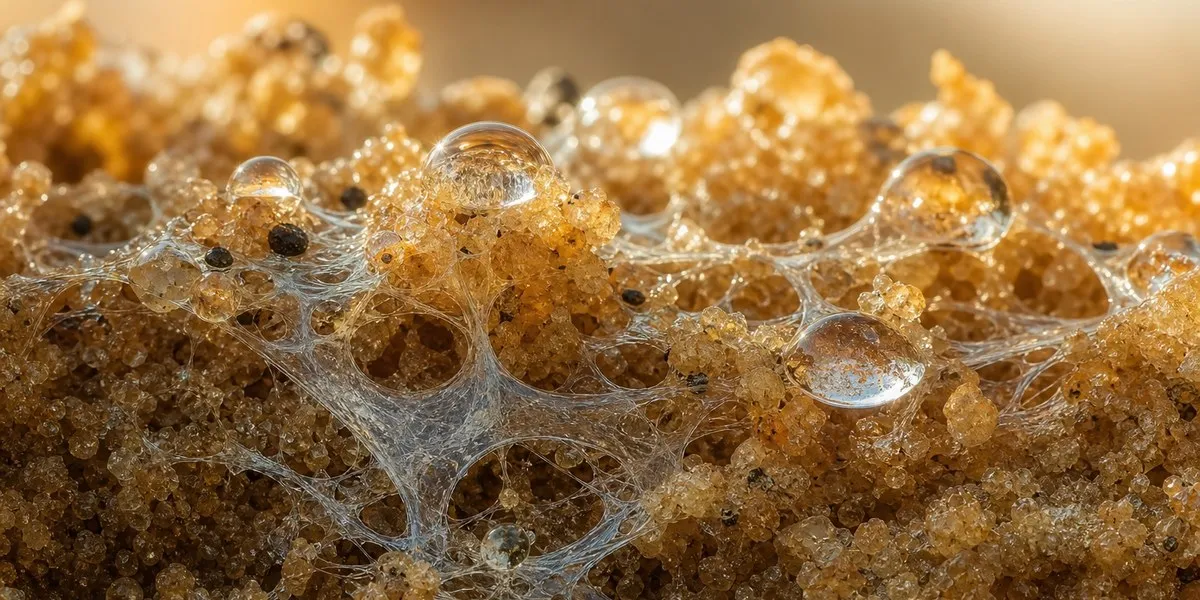
Researchers from Khalifa University in the United Arab Emirates, the Swiss institute Empa, and ETH Zurich tested a method for reinforcing desert sand with fibers produced by bacteria and fungi. In laboratory tests, fibers grown directly in the sand reduced its water permeability by approximately sixfold. This was reported by ScienceAlert.
Microbial fibers between sand grains
For the experiments, the scientists used sand from dunes near the city of Al Ain, as well as standardized laboratory sand for some of the strength tests. After sterilization, nutrient solutions and microorganisms were added to the samples: the cellulose-producing bacterium Komagataeibacter medellinensis and two strains of the fungus Schizophyllum commune.
Microscopic images showed that bacterial cellulose attached to the surfaces of sand grains and connected neighboring grains. Within seven days, a sand column about six centimeters high became strong enough to be removed from the mold, cut into pieces, and placed in water without breaking apart. Samples treated with fungi also bound sand grains together, but proved more brittle.
More current news is available on the UA.News Telegram channel Telegram.
Separate cellulose sheets
In another version of the experiment, the researchers separately grew thin sheets of bacterial cellulose and placed them between layers of sand. These sheets acted as reinforcing material, distributing the load. During a demonstration with a 10-kilogram load, an unreinforced sand cube deformed much more than a sample with cellulose layers.
In a water test, a cellulose sheet reduced the permeability of sand to approximately one twenty-eighth of that of the untreated sample. At the same time, the water-holding capacity of sand with fibers grown between the grains increased from 20.2% to 25.5%.
The authors of the study, published in the journal Carbohydrate Polymers, view microbial fibers as a possible biodegradable alternative to synthetic materials for soil stabilization. However, the research was conducted in a laboratory: the microorganisms were provided with water, nutrients, and access to oxygen. The tests did not assess the cultivation of the cultures or determine how long the material would remain intact in desert conditions.




