
NASA launched Voyager 1 in the United States on September 5, 1977
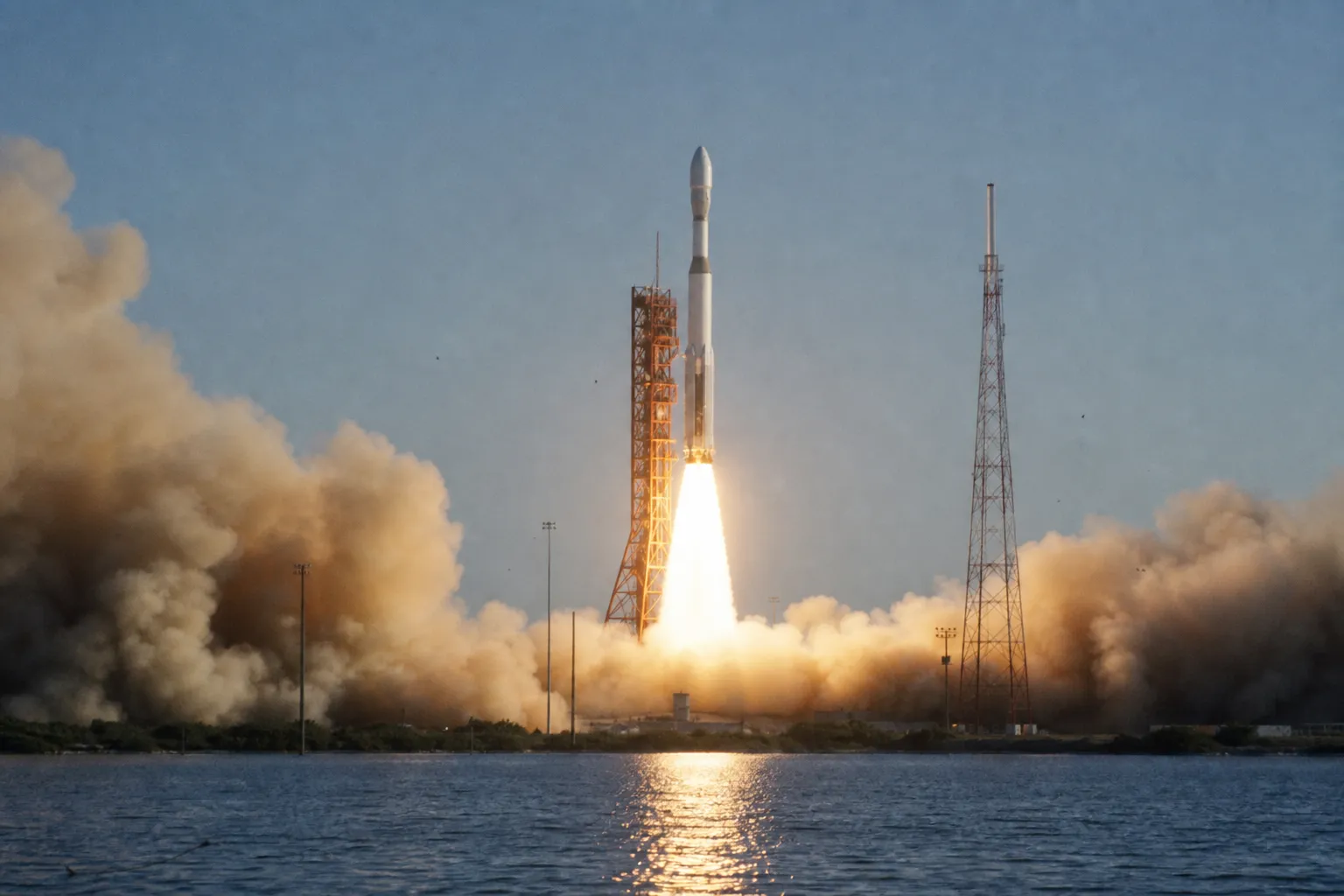
On September 5, 1977, NASA launched the Voyager 1 spacecraft from Cape Canaveral in Florida, United States. The probe was initially intended to explore the outer planets of the Solar System, and after flybys of Jupiter and Saturn, it headed beyond its boundaries.
According to Space.com, Voyager 1 flew past Jupiter in March 1979 and Saturn in November 1980. After its flyby of Saturn, the spacecraft's trajectory changed and it began moving outward from the Solar System.
A mission of two spacecraft
Voyager 1 was part of a mission that included two spacecraft. Voyager 2 launched several weeks earlier and followed a route with flybys of Jupiter, Saturn, Uranus and Neptune. Voyager 1 traveled on a faster trajectory to Jupiter, overtook Voyager 2 on the way and was the first to arrive at the planet for a flyby.
On February 17, 1998, Voyager 1 became the most distant human-made object from Earth, surpassing Pioneer 10. In 2012, it became the first spacecraft to reach interstellar space, although scientists continue to debate the exact location of this boundary.
More current news is available on the UA.News Telegram channel Telegram.
The spacecraft continues operating
Voyager 1 remains NASA's most distant active mission. According to the publication, the spacecraft is 171.6 astronomical units from Earth and continues to collect some data.
The probe is powered by a radioisotope thermoelectric generator whose output decreases over time. Because of this, the NASA team has switched off heaters and unnecessary instruments for decades. Earlier this year, on April 17, NASA ordered the shutdown of an instrument for measuring low-energy charged particles, which had studied the environment of ions, electrons and cosmic rays in deep space for nearly 50 years.
The spacecraft also carries a golden record with images, sounds and greetings from Earth. In about 40,000 years, Voyager 1 is expected to fly near another star system.


