
NASA funds spacecraft concept for mapping minerals on other worlds
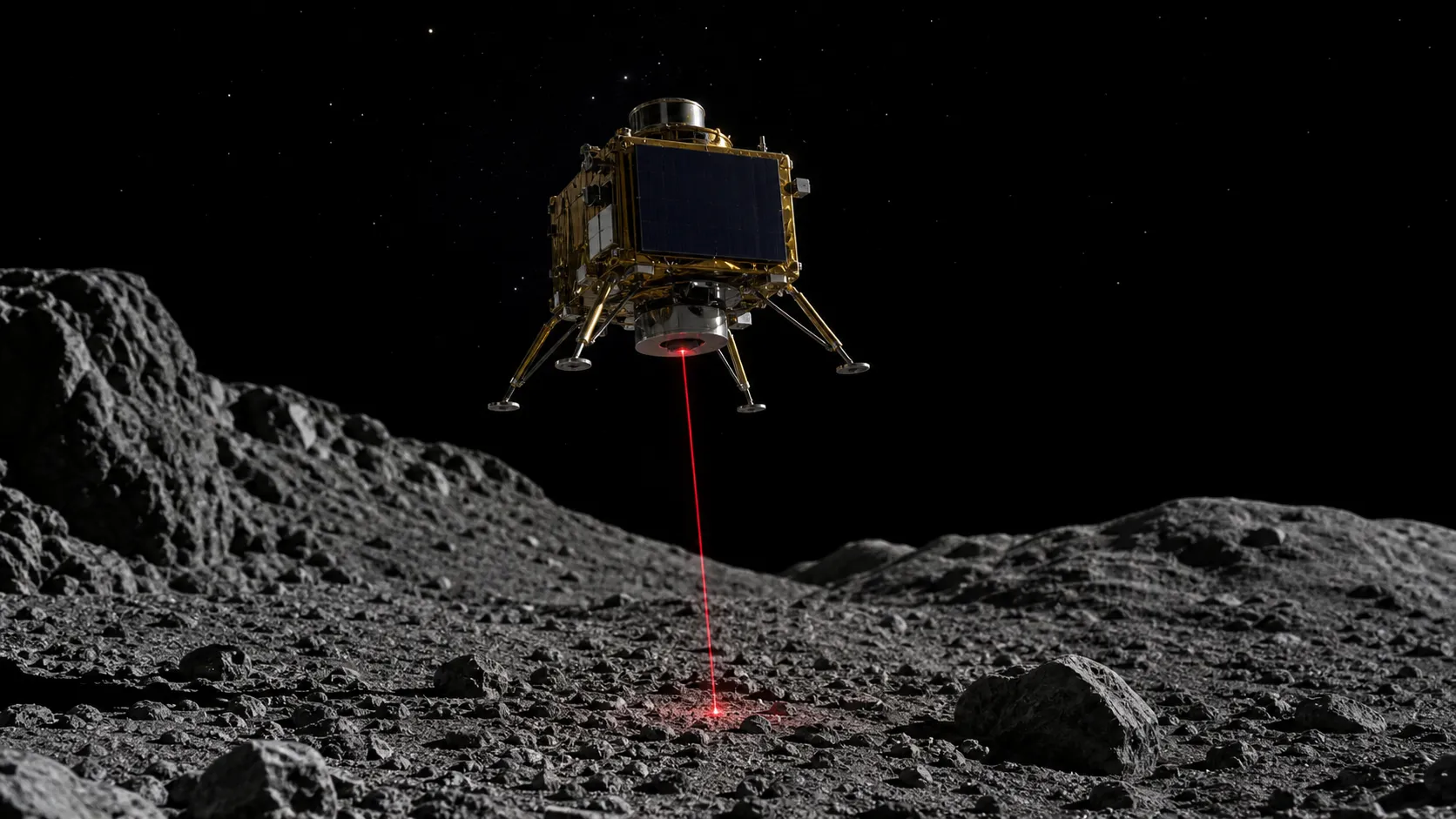
NASA has provided funding for the early development stage of the Interworld Slingshot Resource Surveys concept, which is intended to test the possibility of remotely mapping minerals on the Moon, near-Earth asteroids and Mars’ moon Phobos. The project envisages using a single remote-sensing instrument on a small spacecraft, Space.com reports.
Mission objectives
The project’s principal investigator is SETI Institute research scientist Pablo Sobron. The concept is being considered as a Phase I study for a possible future Discovery-class mission. The spacecraft could potentially visit several celestial bodies and scan their surfaces, including the Moon, a near-Earth asteroid and Phobos.
According to Sobron, accurate data on resource distribution may be important for landing planning. “Landing in the wrong place can cost an entire exploration program or a company, and nobody has enough money to keep sending spacecraft hoping for the best,” he said.
More current news is available on the UA.News Telegram channel Telegram.
Testing Raman spectroscopy
Researchers plan to determine whether Raman spectroscopy can be used from orbit or during a flyby. The method analyzes the weak Raman scattering of laser light directed at a target to determine the molecular structure and composition of minerals. It is already used for close-range research: in particular, NASA’s Perseverance mission uses Raman spectroscopy to search for minerals or water on Mars.
The main technical challenge is the great distance to the surface. According to SETI, Raman scattering is extremely weak: approximately one photon out of 10 trillion undergoes such scattering. Sobron’s previous remote tests reached about 120 meters, while the new work is intended to assess the possibility of useful measurements from a distance of 30–50 kilometers.
The project received a Phase I grant from NASA’s Innovative Advanced Concepts program of up to $175,000 for nine months. The team will study the parameters of photons that the spectrometer will use and detect, laser systems, instrument pointing, as well as the spacecraft’s propulsion systems and orbits. The next stage could be an application for two-year NIAC Phase II funding.


