
Renewable energy could reduce the water footprint of US data centers
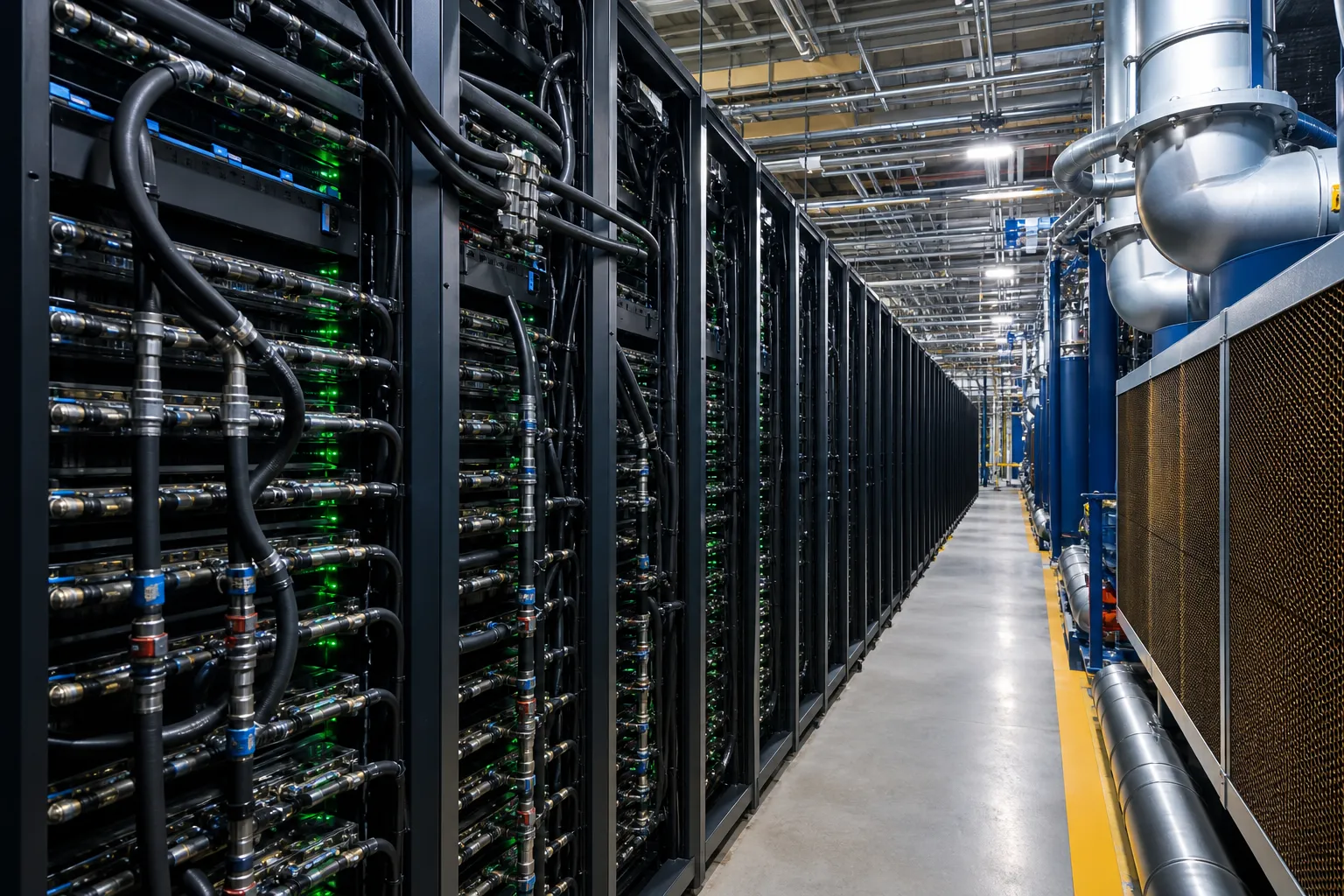
In the United States, the rapid expansion of data centers for artificial intelligence systems is increasing pressure on water resources, especially in arid states, including Arizona and New Mexico. Many such facilities use water to cool servers, while water is also needed to generate electricity from coal and gas.
As Live Science reports, cooling systems at US data centers used about 66 billion liters of water in 2023. This is less than 1% of the country’s total water consumption, but in water-scarce regions, data centers can significantly intensify local water stress.
Cooling and power generation
Processors in data centers can heat up to 176 degrees Fahrenheit and therefore require efficient heat removal. In traditional systems, fans remove heat from server racks, while chilled water helps lower the air temperature inside the building. Heated water is sent to cooling towers, where part of it is lost through evaporation.
Estimates of data centers’ water footprint account not only for cooling but also for water used to generate electricity. At coal- and gas-fired power plants, water is used, among other things, to cool steam after it has turned turbines.
More current news is available on the UA.News Telegram channel Telegram.
Solar and wind energy
According to a projection by the group of Cornell University energy systems expert Fengqi You, by 2030 US data centers could use between 731 billion and 1.125 trillion liters of water annually. The upper end of this estimate roughly corresponds to New York City’s annual drinking water supply volume.
A 2025 study showed that switching to renewable energy sources, improving the efficiency of AI processors, and locating data centers in regions with a lower drought risk could significantly reduce the water footprint. According to You, a combination of such measures could reduce the future water footprint of AI by up to 86%.
Technology companies also use liquid cooling: liquid circulates through pipes in a closed loop and cools processors directly. During extreme heat or high humidity, data centers may require additional water-based cooling systems.




