
Astronomers discover possible exomoon near a brown dwarf — ScienceDaily
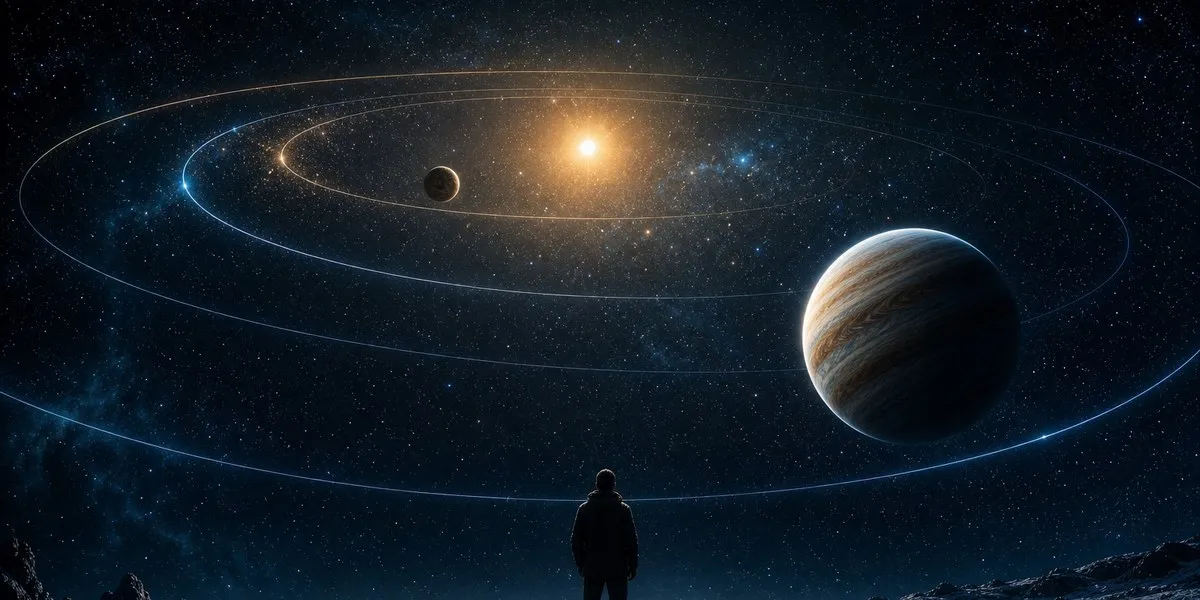
Astronomers have found signs in the CD-35 2722 star system of a massive object orbiting a brown dwarf. If further observations confirm its nature, it could be the first confirmed natural satellite beyond the Solar System, ScienceDaily reports.
An unusual system
At the center of the relatively young system is the star CD-35 2722, with a mass of about half that of the Sun. A brown dwarf orbits it — an object more massive than planets but not massive enough to sustain the hydrogen fusion characteristic of stars.
The newly discovered object, in turn, moves around this brown dwarf. Its mass is at least equal to Jupiter’s mass, while the brown dwarf’s mass is at least 30 times that of Jupiter. Researchers call the object an exomoon, although by its mass it could also be classified as a planet under some classifications.
How the object was detected
The team led by Kevin Hoy, a student at the European Southern Observatory, used the CRIRES+ instrument on ESO’s Very Large Telescope. The study’s results were published in the journal Nature.
More current news is available on the UA.News Telegram channel Telegram.
Astronomers used the radial velocity method and measured slight changes in the brown dwarf’s motion. The gravity of the second body causes the larger object to move around their common center of mass, which appears as fluctuations in its velocity. According to the researchers, the measurements provide strong grounds to suggest the presence of a massive satellite.
Confirmation is needed
Despite the discovery of more than 6,000 exoplanets, astronomers have not yet had a confirmed detection of a satellite beyond the Solar System. Earlier in 2026, another group of researchers reported possible signs of a satellite in the HD 206893 system, but its existence could not be conclusively confirmed then either.
Scientists note that future observations should help clarify the nature of the object in CD-35 2722. The European Extremely Large Telescope, with a 39-meter-diameter mirror, is expected to enable searches for smaller exomoons that are inaccessible to current instruments.




