
Yale researchers find evidence Spinosaurus lived mostly underwater — ScienceDaily
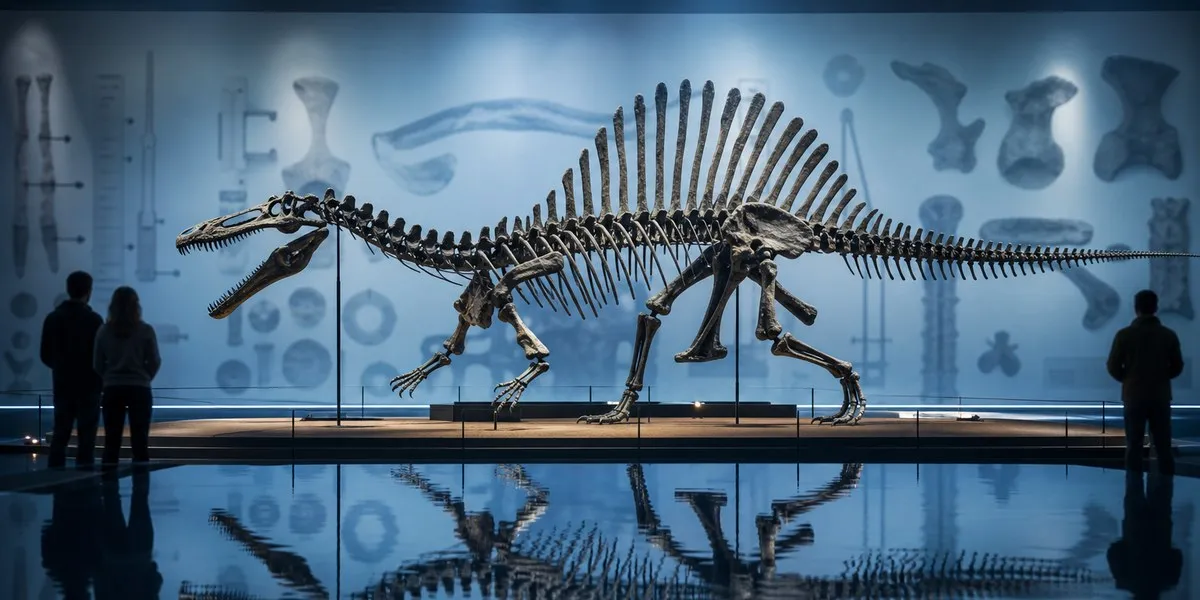
Researchers at Yale University, who analyzed fossil remains and modern animals using machine-learning models, concluded that Spinosaurus spent most of its life submerged in water. ScienceDaily reports on the results of the study, published in the journal Current Biology.
Spinosaurus lived approximately 113–94 million years ago in what is now North Africa. Paleontologists have long debated its lifestyle: some scientists believed the predator hunted underwater, while others suggested it moved along shores and searched for prey in shallow water. Yale’s analysis supports the version that this animal had a much closer connection to the aquatic environment.
More than 11,000 measurements
The study’s authors examined hundreds of modern and fossil specimens from Yale’s Peabody Museum and other collections. They collected more than 11,000 measurements and also used photographs and computed tomography. The resulting data were combined with traditional paleontological methods, machine-learning models, and a statistical approach used by naval forces in the 1940s to assess radar signals.
More current news is available on the UA.News Telegram channel Telegram.
The models were trained on modern animals whose lifestyles are known. The researchers looked for links between skeletal proportions and adaptation to water, then applied these patterns to extinct species. According to the team, the proportions of the forelimbs proved particularly useful for assessing whether an animal had soft-tissue swimming structures and how aquatic its lifestyle was.
Mesosaurs regularly went onto land
Another conclusion concerns mesosaurs, small marine reptiles that lived 290–274 million years ago in the territories of present-day South Africa and the eastern part of South America. Previously, their live birth was sometimes viewed as a sign of a fully aquatic lifestyle. However, the new analysis showed that the structure of their limbs did not correspond to permanent life in water.
According to the authors, mesosaurs regularly moved between bodies of water and land. The study also indicates that all Paleozoic marine reptiles that lived before the appearance of dinosaurs did not completely lose their connection with land and remained amphibious. The team’s models predicted the presence of soft-tissue swimming structures and high or complete aquatic adaptation in animals with an accuracy of more than 90%.




