
In France, researcher uses AI to analyze millions of plankton images
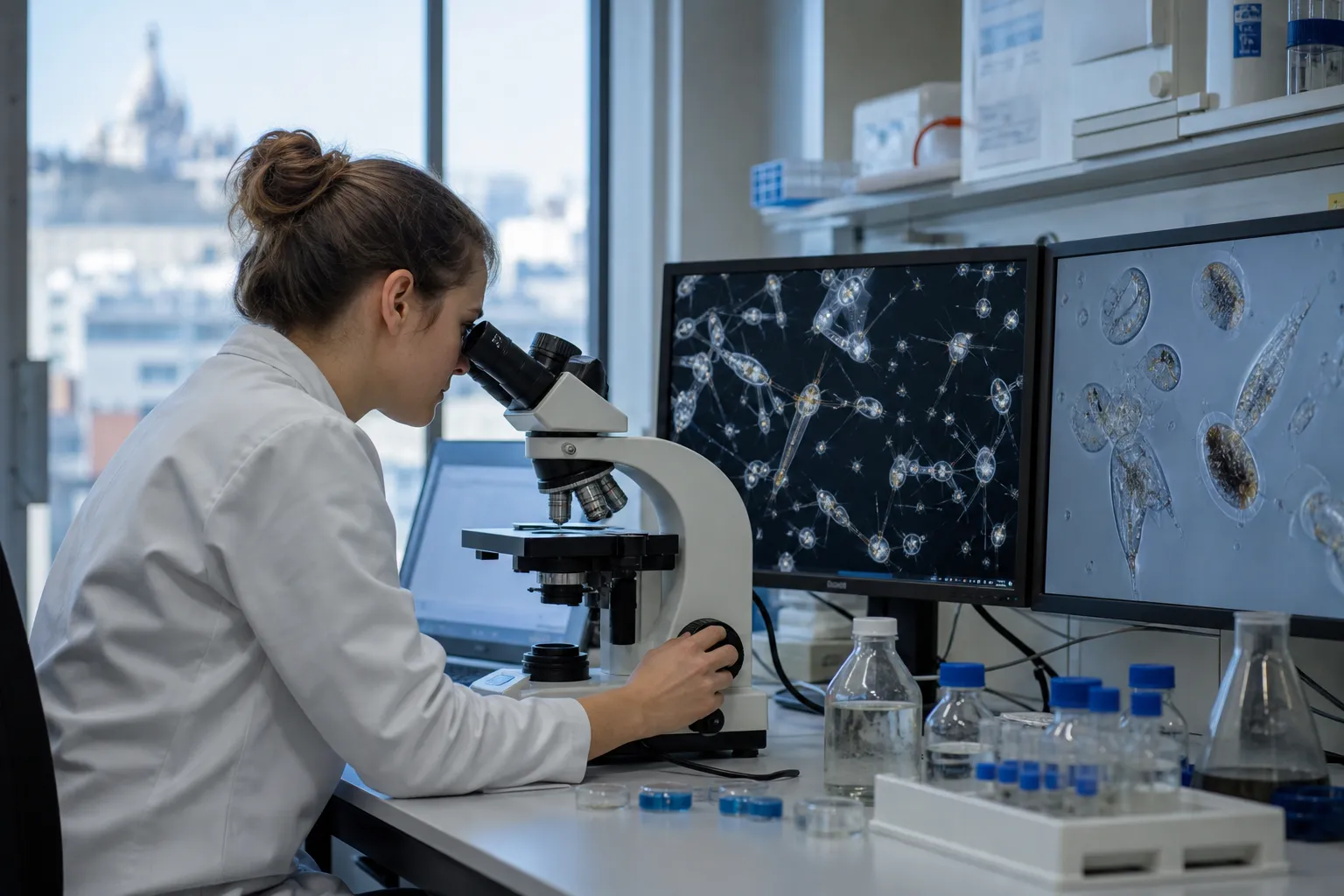
In Paris, French scientist Jean-Olivier Irisson of the Sorbonne is using artificial intelligence to analyze millions of images of plankton. The technology was also developed as part of the EU-funded iMagine project, whose participants studied bodies of water in 11 European countries, Cyprus Mail reports.
Plankton forms the basis of marine food chains and helps remove carbon dioxide from the atmosphere. Its traditional study involves taking water samples, examining them under a microscope, and manually identifying large numbers of organisms.
Millions of plankton images
Irisson's team has a dataset containing 2.2 million images of individual organisms. According to the scientist, it is impossible to classify such a volume manually, while AI makes it possible to do this work much faster.
Irisson noted that tasks that previously required months or even years can take from several days to several weeks thanks to AI. Underwater cameras and environmental sensors accumulate data for years, making it increasingly difficult for researchers to process it without automated tools.
More current news is available on the UA.News Telegram channel Telegram.
iMagine project tools
The iMagine project ran from 2022 to 2025 and brought together specialists in aquatic ecosystems and digital technologies from 11 European countries. It was coordinated by EGI Foundation expert Gergely Sipos. The project developed AI tools for faster processing of large volumes of aquatic data.
In Austria, the software created was used to detect floating litter in lakes and rivers. In other European locations, AI analyzed multi-year image archives from underwater cameras, recognized fish, and distinguished their species. According to Sipos, this helps track changes in ecosystems, the impact of climate change, and the results of restoration measures, including the creation of artificial reefs.
After iMagine was completed, its tools and datasets for training models, including those for recognizing fish species and floating litter, were made available for use by other researchers. Sipos believes that faster and cheaper monitoring can help detect declines in plankton, litter accumulation, oil spills, and coral degradation earlier.




