
A unique 13th-century tombstone was discovered beneath a café in Gdańsk
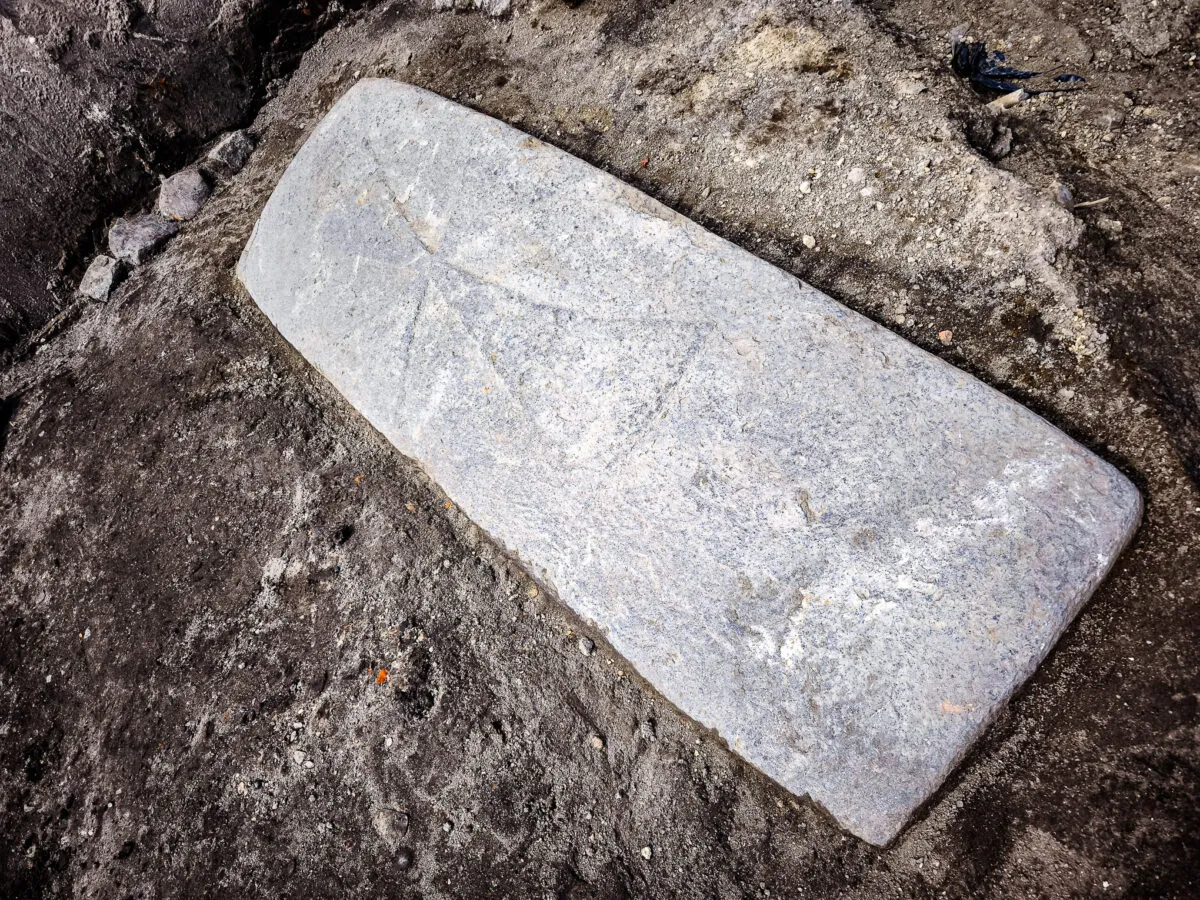
Archaeologists conducting excavations on the site of the former popular ice cream parlor “Miś” in downtown Gdańsk (Poland) have uncovered a massive 13th-century granite slab bearing a carved Latin cross. This discovery marks the first major success of the new archaeological season at the intersection of Grodzka and Sukienna Streets, right in the middle of a medieval settlement.
The new discovery complements last year’s findings, when a luxurious knight’s tomb and the remains of a unique oak church—which claims to be the oldest wooden religious structure on Polish soil—were unearthed at the same site.
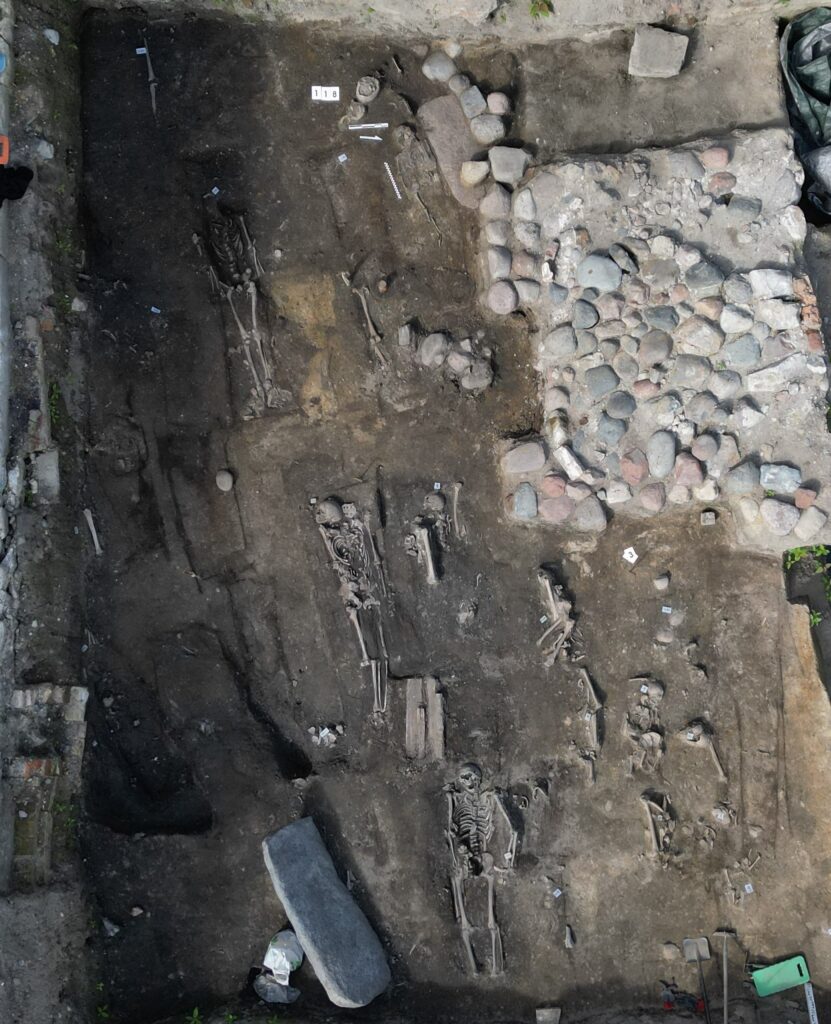
The slab found is already the seventh medieval tombstone discovered at this site, three of which are decorated with crosses. Scholars emphasize that such stone monuments cost a fortune in the 13th century, so only members of the local elite—wealthy merchants, governors, or high-ranking clergy—were buried beneath them, not ordinary townspeople. Although the general public often associates such granite crosses with the Teutonic Order, archaeologists reject this connection. The chronology clearly indicates that the burial dates to the pre-Teutonic era, when the city was ruled by Pomeranian princes, since the Teutonic Knights did not capture Gdańsk until 1308. Currently, researchers hope to find the intact remains of an unknown nobleman beneath the slab.
The foundation of the former candy shop had concealed a vast necropolis for years, where more than 200 graves have been identified to date. The center of this ancient cemetery was a unique church in the shape of a Greek cross, built from hewn oak logs around 1140, as confirmed by precise dendrochronological analysis of the wood. Such an architectural design is extremely rare for this region, and historians suggest that this was the very first church in Gdańsk dedicated to the Virgin Mary. The fact that wooden structures of this age have survived in the center of a modern European city is described by scientists as a rare stroke of luck for science.
Arkeonews reports on this.
In Italy, during the construction of a highway, workers stumbled upon the remains of an ancient sanctuary dating back to the 5th century BCE. The unique discovery was made near the town of Pons, located about 72 kilometers from Venice. After the artifacts were discovered, large-scale archaeological research began immediately at the site.


