
Three scientists receive Nobel for controlling neurons with light — ScienceDaily
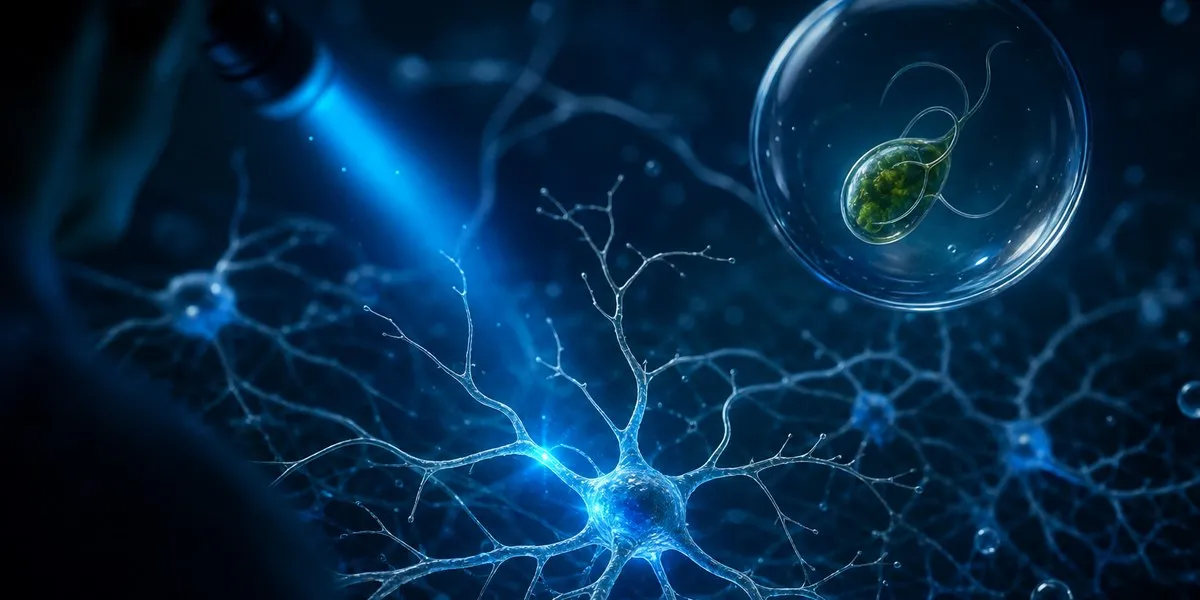
Karl Deisseroth, Peter Hegemann and Georg Nagel received the Nobel Prize in Physiology or Medicine for research into light-controlled ion channels and optogenetics — a method that makes it possible to activate individual nerve cells with light. ScienceDaily reports.
Hegemann of Humboldt University of Berlin and Nagel of the University of Würzburg studied how the single-celled alga Chlamydomonas responds to light. They found that this mechanism is associated with the protein channelrhodopsin. It is located in the outer membrane of the algal cell and contains a retinaldehyde molecule capable of absorbing light.
How light activates cells
When light hits it, retinaldehyde changes shape, causing channelrhodopsin to change as well and opening a channel in the membrane. Positively charged ions, including sodium, can then enter the cell through it, creating a signal for the alga to move.
Scientists applied this principle to nerve cells. To do this, the channelrhodopsin gene is delivered to the required neurons, usually with the help of a modified virus that does not cause disease. The cells then produce the light-sensitive protein and respond to illumination, while neighboring neurons without this protein are unaffected by light.
More current news is available on the UA.News Telegram channel Telegram.
Memory research and treatment possibilities
In experiments with mice, light is directed into the brain through a thin optical fiber. This makes it possible to quickly switch the activity of small groups of neurons on and off and study their role in memory, sleep, sensations or movements.
In 2012, a Massachusetts Institute of Technology team used optogenetics to label cells in the memory center of mice that were active during an experiment involving a mild electric shock. When these cells were activated with light in a different chamber several days later, the animals froze in fear, as if recalling what they had experienced. Deisseroth was among the authors of this work.
Optogenetics is also being tested in early clinical studies involving people with retinal degeneration. Researchers introduce light-sensitive proteins into nerve cells that remain after the loss of rods and cones in order to restore part of vision. The possibility of using the method to treat Parkinson's disease and epilepsy is also being studied.




