
Japan develops transistor that operates at temperatures up to 600°C
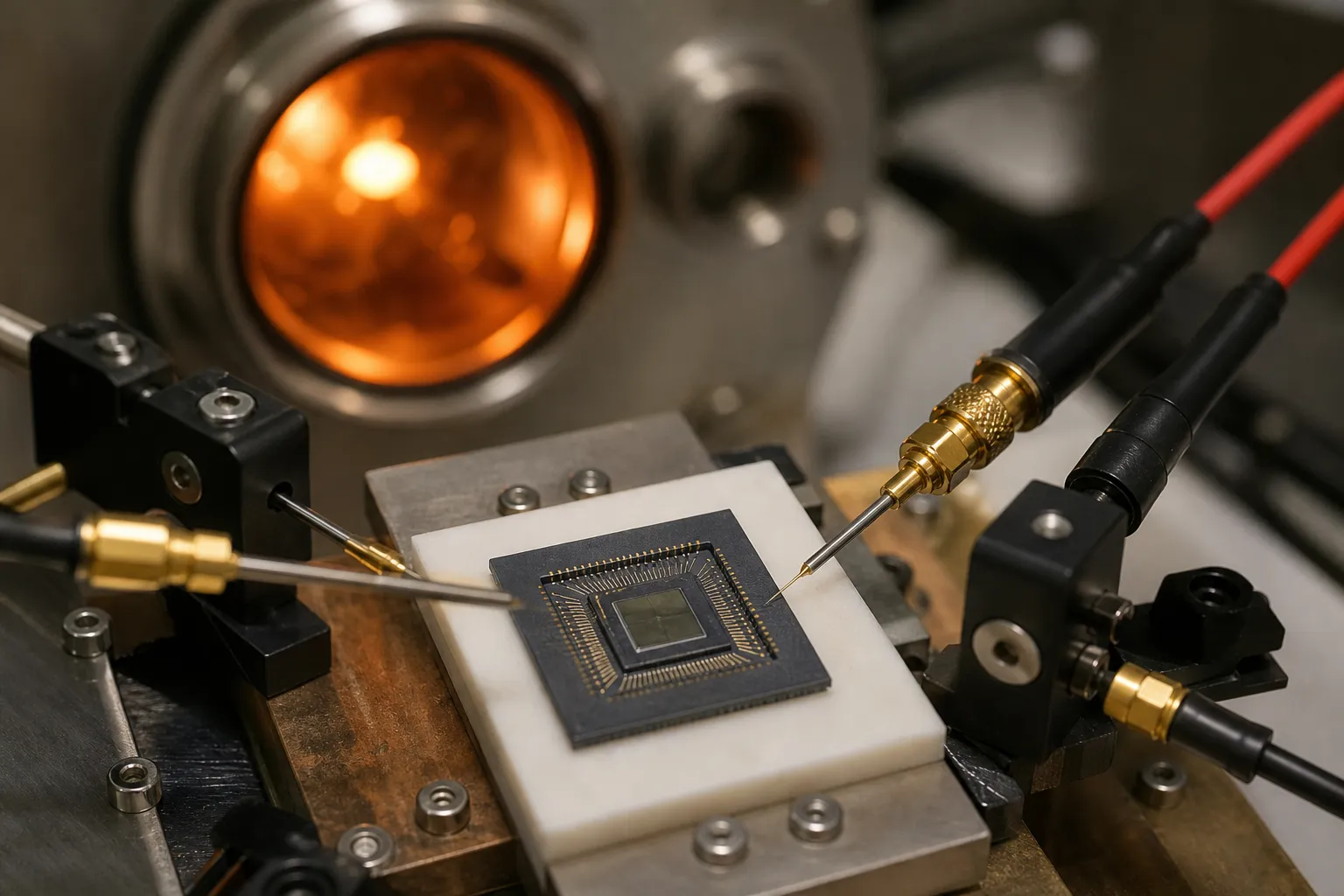
Scientists in Japan have developed a silicon carbide-based transistor that operated stably at temperatures of up to 600°C. The development could potentially be used in landers for exploring the surface of Venus, where temperatures can reach 460°C, Live Science reports.
Resistance to high temperatures
The new device belongs to the class of junction gate field-effect transistors, or JFETs. Such transistors regulate the flow of current using an electric field. They are more difficult to miniaturize than the common MOSFET transistors used in smartphones and computers, but JFETs can produce less noise because their operation does not use an oxide layer.
Silicon carbide has long been considered a suitable material for electronics that must operate in extreme environments. At the same time, previous SiC-JFETs faced insufficient controllability and significant leakage currents. At temperatures above 350°C, a silicon carbide substrate can become less electrically resistive, allowing current to pass even through a switched-off transistor.
More current news is available on the UA.News Telegram channel Telegram.
Bottom-gate design
The team used a bottom-gate design, placing it beneath the conductive silicon carbide channel. This approach is intended to limit the effect of impurity atom penetration on the threshold voltage needed to open the channel. The researchers also formed two semiconductor regions around the transistor, whose boundaries create barriers to unwanted current flow.
During testing, the device was tested at temperatures ranging from room temperature to 600°C. At around 400°C, the threshold voltage error was less than 0.1 volts. A description of the design was published on August 17 in the journal APL Electronic Devices.
In addition to Venus probes, the developers are considering the possibility of using such transistors in jet engines. Before practical use, the device still needs to be integrated into more complex circuits, scaled up to wafer level, and the resistance of the entire electronics package to high temperatures and pressure must be tested.




