
Archaeologists in Cairo have discovered a unique burial hoard belonging to the elite of Ancient Egypt

Archaeologists have discovered a nearly complete set of funerary jewelry and ritual objects in the ancient necropolis of Heliopolis, located within modern-day Cairo. The unique discovery was made by an Egyptian archaeological mission during excavations at the Panchesi cemetery in the Ain Shams district.
In ancient times, this area was part of the Heliopolis necropolis—one of Egypt’s oldest cities and the main center of worship for the gods Ra and Atum. In the later period of Egyptian history, members of the city’s elite were buried here.
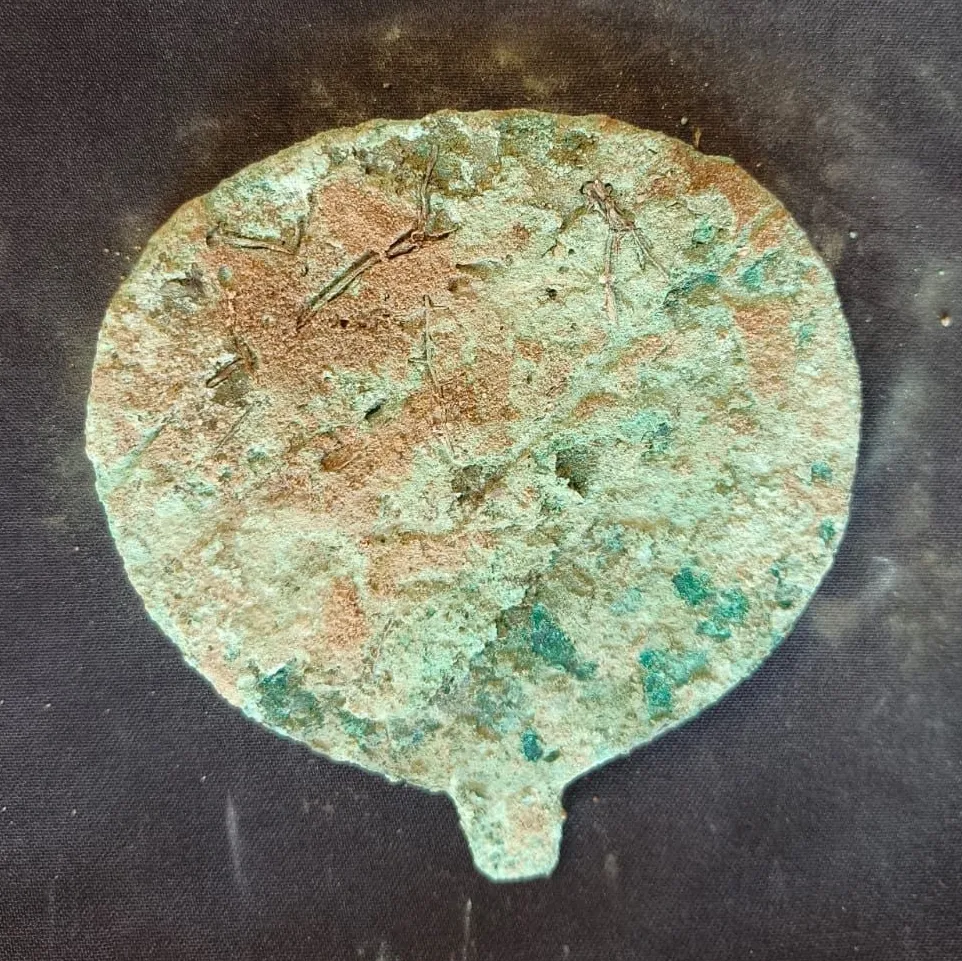
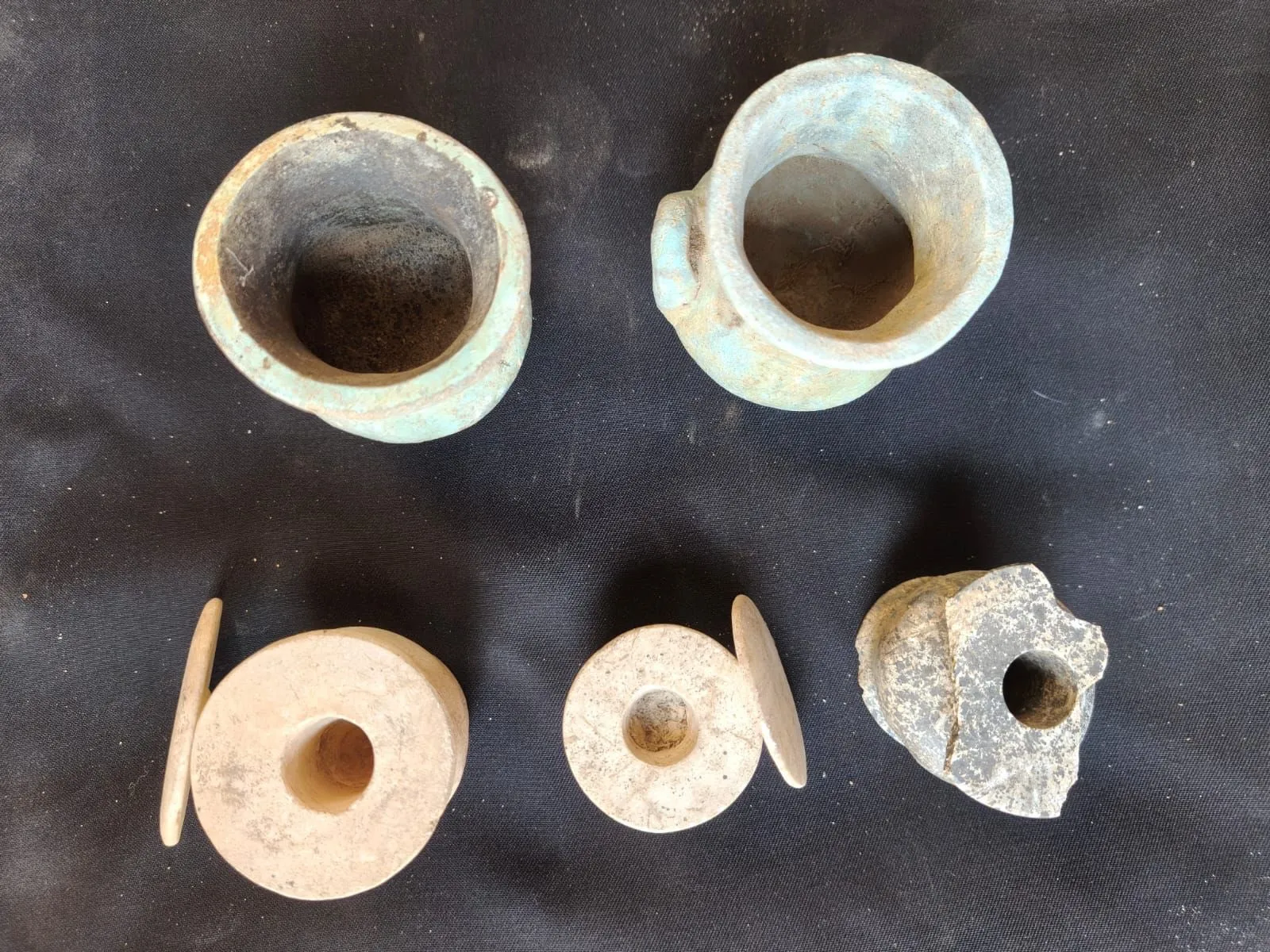
During the excavations, researchers discovered a burial structure made of mud bricks, which contained human remains and a rich collection of grave goods. Among the finds were a copper mirror, five pairs of gold earrings, three cosmetic vessels, two blue faience jugs, and six scarabs, two of which were adorned with gold settings.
Two alabaster vessels for eye makeup, which were preserved along with their lids, particularly caught the archaeologists’ attention. Traces of cosmetics are still visible inside. The third vessel is made of black obsidian, an unusual material for such items.
Amulets in the shape of a duck and the crown of the god Atum were also found, as well as four semi-precious stones, including what is likely agate in a gold setting and a greenish mineral.
In addition, archaeologists uncovered additional burial structures made of clay bricks and limestone, as well as two fragmented coffins—one ceramic and one plaster. One of them contained the gilded remains of a man whom researchers believe to have been a high-ranking military figure.
The discovery will help scientists better understand the burial traditions, religious beliefs, and way of life of members of the Egyptian elite during the late period of Ancient Egypt.
This is reported by The History Blog.
Earlier, during preparatory work for a large-scale renovation of the square in front of Notre-Dame de Paris, archaeologists made unique discoveries spanning nearly two thousand years of the French capital’s history.
In Italy, during the construction of a highway, workers stumbled upon the remains of an ancient sanctuary dating back to the 5th century BCE. The unique discovery was made near the town of Pons, located about 72 kilometers from Venice. After the artifacts were discovered, large-scale archaeological research began immediately at the site.


