
A "skewed" magnetic field has been detected on Saturn: scientists have identified the causes
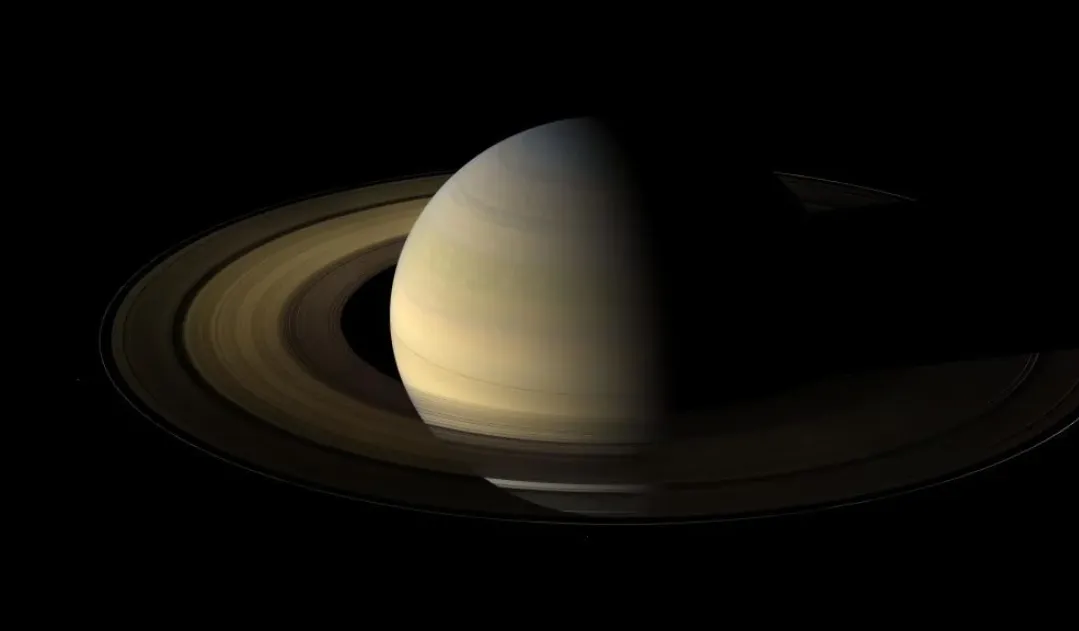
Scientists have discovered that Saturn’s magnetic field exhibits significant asymmetry and a tilt, which distinguishes it from Earth’s.
This is reported by Space.com.
The study is based on data from the Cassini spacecraft, which operated in the planet’s orbit from 2004 to 2017.
Scientists have determined that the region where magnetic field lines bend and direct charged particles into the atmosphere is offset to one side. This indicates an uneven structure of Saturn’s magnetosphere.
Among the main causes of this phenomenon are the planet’s rapid rotation and the influence of its moons.
In particular, Enceladus plays a significant role—an icy moon with a subsurface ocean that ejects water vapor into space. It ionizes and forms plasma, which affects the configuration of the magnetic field.
Researchers note that for gas giants such as Saturn, internal processes are decisive, rather than the solar wind, as is the case with Earth.
In total, scientists analyzed dozens of Cassini flybys through the magnetic cusp, which confirmed the field’s asymmetry.
The results are important for future missions to Saturn and its moons, particularly in the context of searching for conditions suitable for life.
A powerful X1.4-class solar flare occurred on Monday, March 30, 2026, causing radio communication disruptions on Earth and raising concerns regarding preparations for the launch of NASA’s Artemis 2 mission.
On Wednesday, April 1, 2026, NASA successfully launched the Artemis II mission, which became the first crewed flight around the Moon in over half a century.


