
Scientists have reconstructed the face of a victim of the Vesuvius eruption in Pompeii using AI
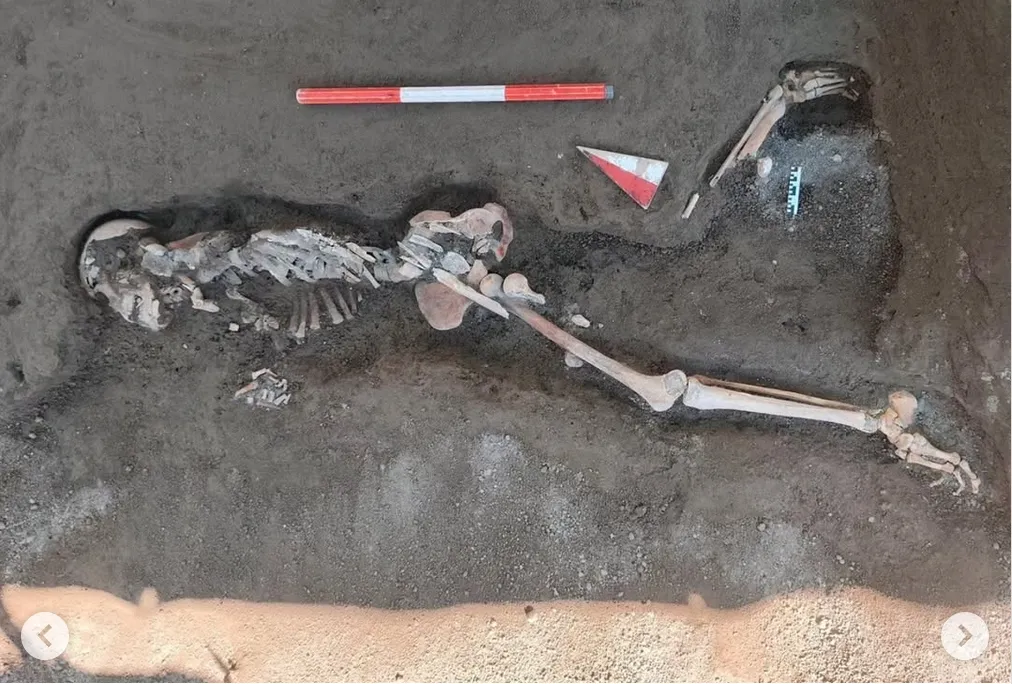
The Archaeological Park of Pompeii, in collaboration with the University of Padua, has carried out a unique project to digitally reconstruct the appearance of a man who died during the catastrophic eruption of Mount Vesuvius in 79 AD. Thanks to artificial intelligence technologies and modern methods of processing anthropological data, researchers were able to transform information from skeletal remains into a realistic portrait of an elderly man.
CBS News reported on this. Gabriel Zuchtriegel, director of the Archaeological Park, emphasized that the current volume of finds is so vast that it is only possible to process and preserve such a massive amount of information with the help of advanced AI technologies.

The man’s remains were discovered during excavations near the Porta Stabia necropolis, outside the city walls of the ancient Roman city. Researchers determined that he, along with another resident, had attempted to flee the disaster toward the coast of modern-day Italy. However, the man died in the early stages of the eruption due to a heavy fall of volcanic debris. During the excavations, archaeologists discovered that in the final moments of his life, he held a terracotta mortar above his head, attempting to shield it from lapilli—small, red-hot stones. Such behavior among the townspeople is also described in detail in the historical accounts of an eyewitness to those events, the Roman writer Pliny the Younger.
Near the deceased, experts found his personal belongings: an oil lamp, a small iron ring, and 10 bronze coins, which help historians better understand the daily lives of Pompeii’s residents. The fact that the body was found near the city gates supports the theory of mass casualties occurring as people were leaving the city. In addition, researchers highlighted the findings of last year’s studies, which showed that some of the surviving residents later attempted to return to the ruined city of Pompeii because, due to poverty, they lacked the financial means to start a new life in other regions of the Roman Empire.
Pope Leo XIV will present the first encyclical dedicated to artificial intelligence and its impact on humanity at the Vatican, which will address the protection of human dignity in the context of technological change.
Scientists have created an artificial intelligence system capable of detecting pancreatic cancer a year and a half before an official diagnosis, effectively “spotting” the disease where doctors cannot yet see it.


