

There is a sort of “measuring stick” for the overall level of education worldwide. It is called PISA, which stands for the Program for International Student Assessment. This is an international study of educational quality coordinated by the Organization for Economic Cooperation and Development. Every three years, 15-year-olds in dozens of countries around the world take the same tests, testing not so much their knowledge of formulas or dates as their ability to think, comprehend what they read, perform calculations in real-life situations, navigate scientific concepts, and so on. This is not a typical test, but rather an “X-ray” of the education system.
And just a few days ago, on September 8, the latest results were released—for 2025. For Ukraine, they are once again disappointing, and to say that is an understatement. Ukrainian students continue to lag behind their peers from other European countries, and this gap is widening. Moreover, they aren’t falling behind by some abstract number of points: according to PISA’s own estimates, we’re talking about years of schooling—years that can never be recovered.
How exactly is this gap forming, why is it so deep, and what can be done about it? UA.News political analyst Mykyta Trachuk, together with education experts, took a closer look at the situation.
Numbers That Send a Chill Down Your Spine
The average score for 15-year-old Ukrainian students on the PISA-2025 is 448 points in science, 431 points in math, and 418 points in reading. By comparison, the average scores in Western countries are 482, 463, and 461 points, respectively. The difference is 34 points in science, 32 in math, and 43 in reading. On the PISA scale, where 20 points are roughly equivalent to one year of schooling, this means that the average Ukrainian teenager knows and can do about as much as their peers in Western countries knew at least 1.5 to 2 years ago. The gap is actually the widest in reading.
But that’s not even the worst part. The worst part is how many children don’t even reach the basic level. According to PISA-2025 data, 46% of Ukrainian teenagers do not reach the basic proficiency level in math, 45% in reading, and 35% in science. Simply put: nearly one in two 15-year-old Ukrainians cannot read or do math properly. 56% of students do not reach the basic level in at least one of the three subjects, and nearly a third fail in all three.
These are not isolated cases, but a systemic problem. And it is an absolute disaster.
Only a handful of students—just a few percent—have reached the highest levels (Levels 5 and 6), where students are able to analyze complex texts, evaluate the reliability of sources, and solve non-standard problems: 2.6% in math, 2% in science, and 0.7% in reading. To reiterate: less than one percent in reading literacy.
The study also revealed a gap that has existed for a long time but has now reached a critical threshold: the gap between urban and rural areas. In large cities, the average score in math is 460, while in rural areas it is 400. In reading, the scores are 454 versus 386. In science, they are 481 versus 416. A difference of 60–68 points equates to three or more years of schooling. By comparison: in 2018, this gap was two years. And this is no longer simply educational inequality, but a genuine chasm between urban and rural children, which determines whether a person from a rural area will have a chance at a decent life.
Finally, the study’s data is perfectly illustrated by the fact that this year, nearly 40,000 (!) applicants failed the National Mathematics Test. That’s more than 12% of all those who took the test. Even education experts in the field say that the problem lies not so much in the test’s difficulty as in gaps in basic knowledge that children should have mastered as early as grades 5 and 6. These include fractions, percentages, standard word problems, and so on. In other words, the system is failing at the most basic level.
Why this happened and why children aren’t becoming “strong” amid the war
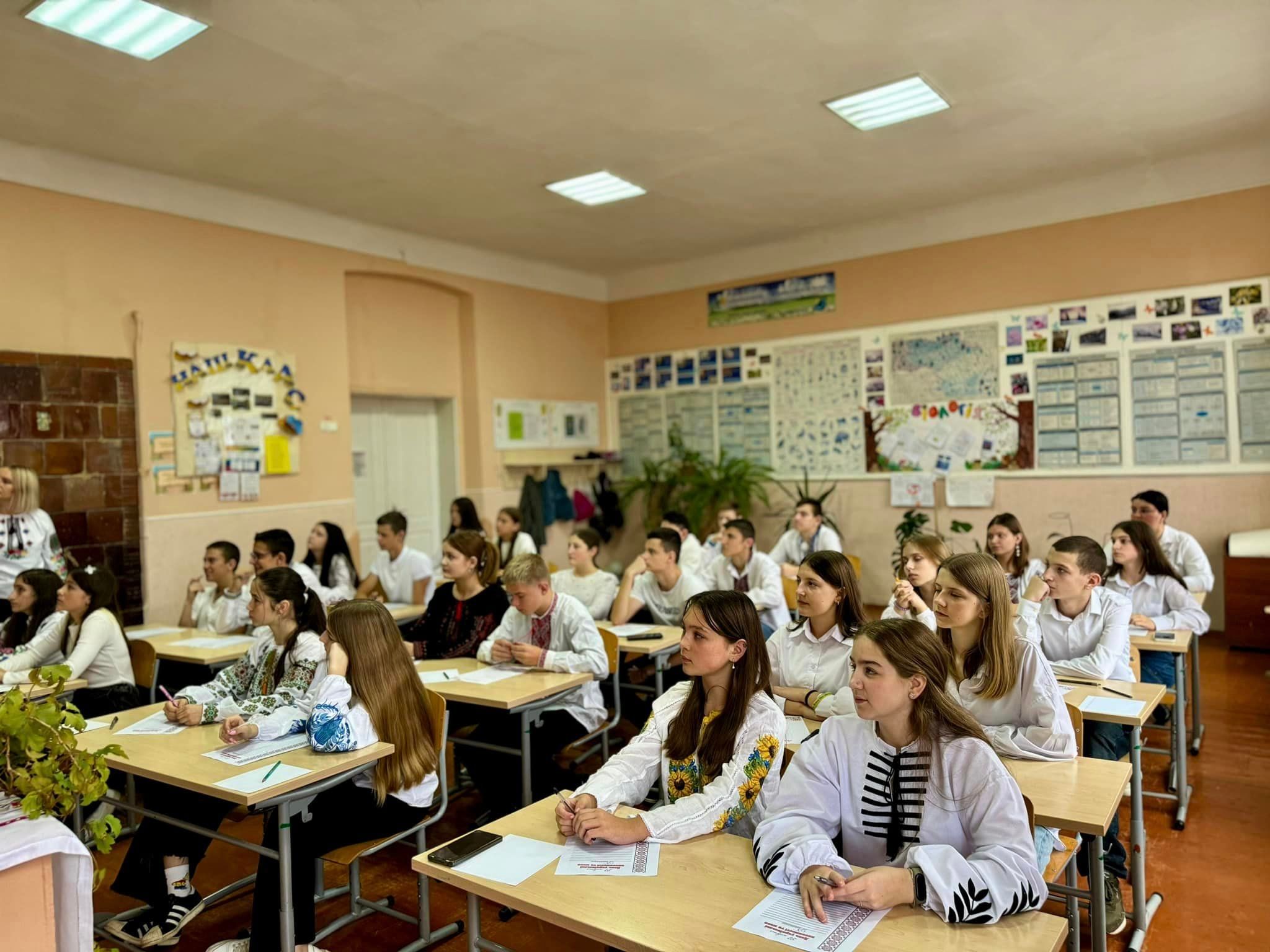
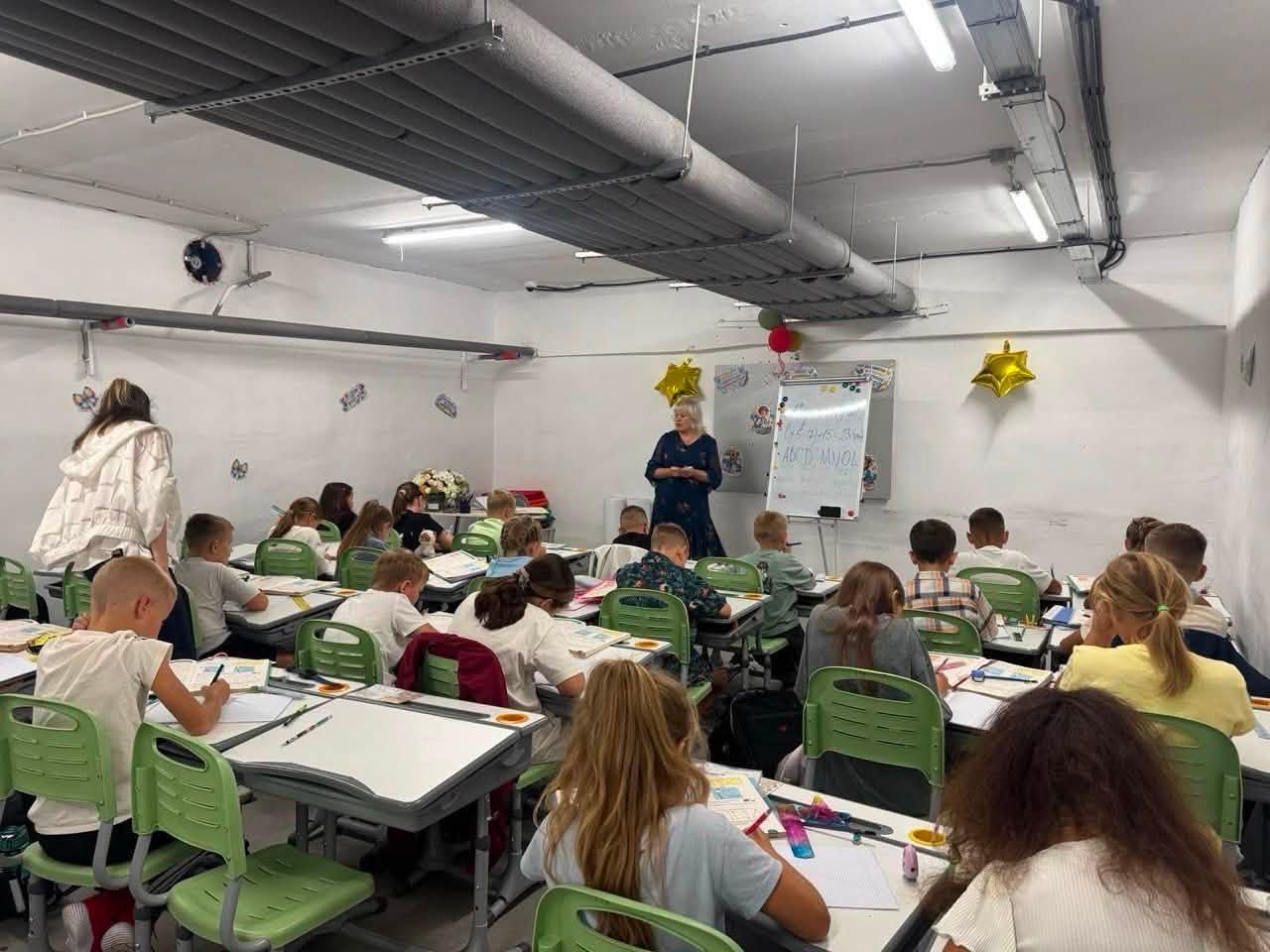
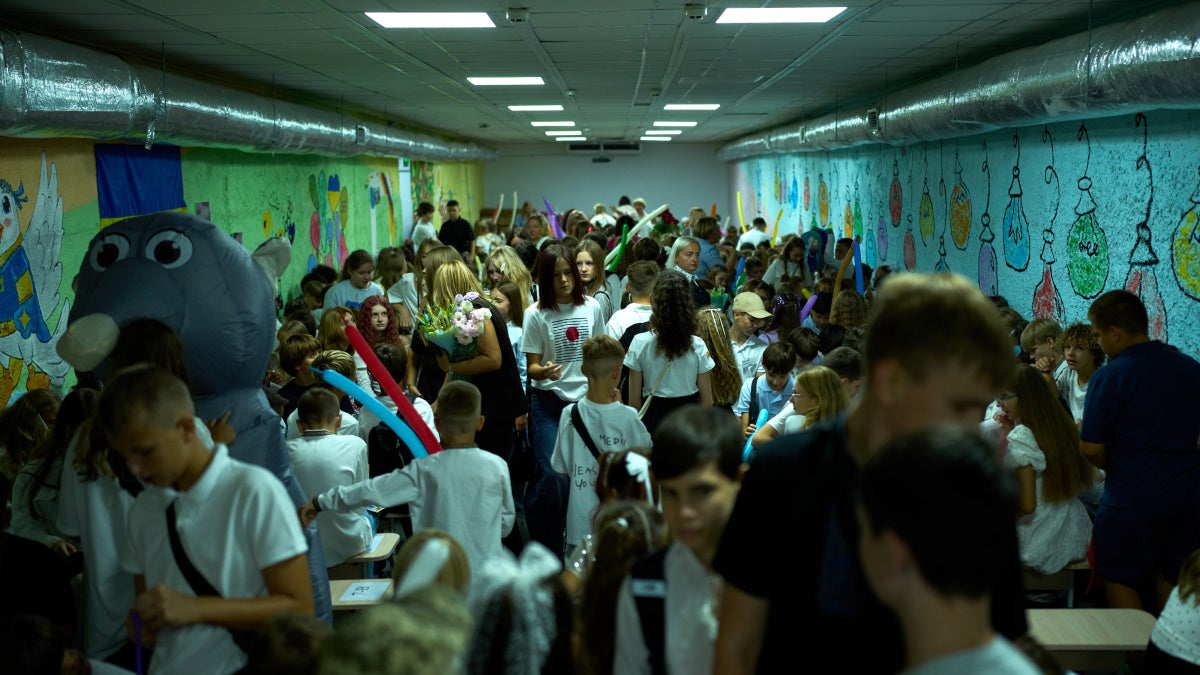
It’s been 10 days since the new school year began. And this is yet another year when normal schooling—which is the direct guarantee of any child’s successful future—is under severe strain. Children are either doing remote learning or sitting in basements during endless air raid alerts. Children have already gotten used to the idea that school is a laptop screen. This lack of a normal school experience has been going on since the coronavirus pandemic began—that is, since 2020. And now, just to put it into perspective, it’s already 2026. For a child who is currently 14–16 years old, this is essentially half of their conscious life.
In Ukraine, some officials say that children who study under shelling, in basements, or through distance learning “will become stronger” and will become a “generation of winners.” They claim this builds character, that hardships make them better, and so on. However, this is, to put it mildly, complete nonsense, and the PISA-2025 results confirm this thesis with hard data.
In general, this Nietzschean idea—“what does not kill us makes us stronger”—is one of the most harmful and absurd ideas in the history of philosophy. Friedrich Nietzsche himself, incidentally, tellingly ended his life in a psychiatric clinic in a state of complete dysfunction and total personality breakdown. What doesn’t kill us doesn’t make us stronger. It leaves us traumatized (physically and spiritually), turns us into emotional wrecks and depressed neurotics with poor social adaptation and impaired cognitive skills. And in some ways, this affects children even more than adults.
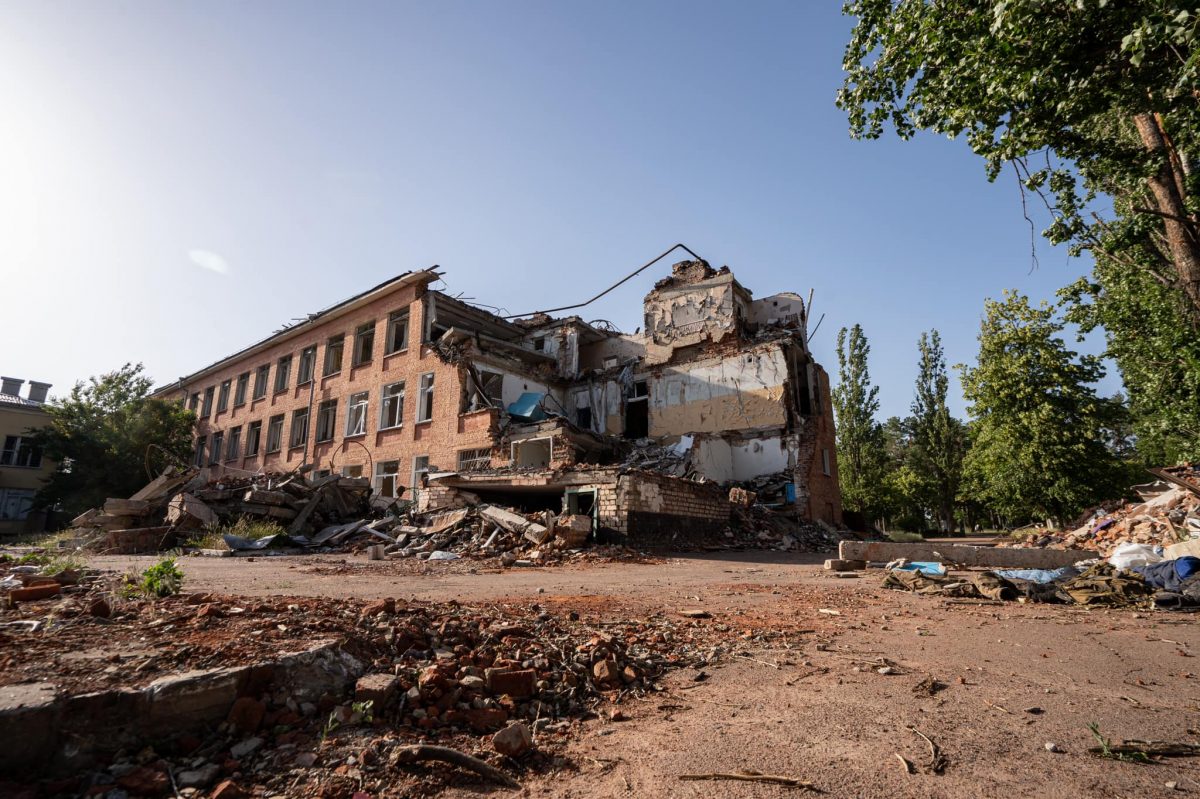
Studying in a basement amid the sounds of explosions does not make a child strong. It makes them depressed and neurotic. Distance learning, which prevents socialization—and socialization is the primary purpose of school—does not make a teenager resilient. It makes them socially and emotionally maladjusted. All of this “state of emergency,” which has been going on for six years now, impairs students’ cognitive skills, fosters anxiety, nervousness, and depression, as well as an inability to form social relationships. And this is not a hypothesis, but literally what PISA-2025 empirically confirms: the results have not returned to 2018 levels; they remain at a significantly lower level.
And once again, the biggest decline over these years has been in reading: a drop of 48 points compared to 2018. Reading is not just a skill—it’s the foundation of all learning. If a child does not understand what they read, they will not understand the instructions in a math problem, will not grasp a history passage, will not be able to write a coherent essay, and so on. In other words, this causes a cascade effect that intensifies with each passing year.
Ukrainian children are already, on average, two years behind their European peers—as PISA reported as far back as 2022. Since then, nothing has improved; in fact, things have only gotten worse. And this isn’t because our children are “dumb” or “lazy.” That is absolutely not the case. The problem lies not with the children, but with the inhumane conditions around them. When there are no decent conditions, there is no decent education. And without decent education, there is no future—neither for the individual child nor for the country as a whole.
What to do about this and why education issues concern everyone
The first thing to understand is that PISA isn’t some abstract ranking for the sake of ranking. It’s about real-world issues: whether a child from a Ukrainian village will be able to get into college and not get kicked out after the very first exam period, or whether a teenager who has studied online for six years will be able to find a job that requires teamwork, negotiation, presentations, discussions, and so on. It’s about whether Ukraine will even have doctors, engineers, and teachers in 10–20 years—or whether it will be forced to “import” them. PISA doesn’t just measure knowledge; it measures a country’s ability to replenish its human capital. And this ability is rapidly declining.
Second—and this is the hardest part—we must abandon the rhetoric that justifies inaction. “There’s nothing we can do; there’s a war in the country”—this is not an argument, but an excuse and a way to shirk responsibility. The war does indeed pose unprecedented challenges, but it has been going on for 4.5 years now and may last just as long or even longer. The war does not prevent us from building underground schools in Kharkiv, just 20 km from the front lines. It does not prevent us from training teachers to work with traumatized children. It does not prevent us from implementing psychological support programs, which are no less important than math lessons. It doesn’t prevent us from acknowledging that distance learning cannot be the primary form of education for children—it can only be a temporary, necessary measure, not something that drags on for 6+ years.
And yes, a child’s safety comes first. But safety without education is merely physical survival, with no chance of a decent life once the war ends.
Third, we need to stop talking about “educational losses” as something abstract that we’ll eventually “catch up on.” No, we won’t catch up. The years lost to brain development between the ages of 10 and 14 cannot be made up for by catching up at 16–18, or can only be made up for very partially and through extremely hard work on oneself. This isn’t the same as missing two weeks of school because of the flu—it’s like “forgetting” about the foundation and then trying to build a house right on bare ground. We must acknowledge the scale of the problem and start working on basic skills immediately, without waiting for the war to end—which, in any case, we don’t know when it will happen or if it will ever happen at all.

Thoughts from Educators
Galina Shcholok, a top-tier teacher and vice principal at a school in Barvinkove (Kharkiv Oblast), notes that students at her high school were not involved in conducting this study. However, the data seems accurate to her.
“I’m afraid that in our region (Izyum District, Kharkiv Oblast), the situation could be even worse, because we don’t have the opportunity to switch to in-person learning. How can we ‘save a generation’? The answer seems obvious: end the war and return to in-person learning. But, unfortunately… So one solution is catch-up programs to make up for lost learning, which are already being implemented with the support of NGOs and charitable foundations in schools during after-school hours. However, due to the security situation, these programs cannot reach 100% of students. Attending extra classes amid daily shelling, power outages, and sirens is a true feat of Ukrainian teachers, students, and parents. And here, we’re talking about a child’s intrinsic motivation and common sense in assessing the situation. In addition to academic knowledge, psychosocial support is critically important: children traumatized by war and chronic stress are simply unable to effectively absorb the material, so students’ mental health must become a fundamental prerequisite for resuming education. The realities of life are forcing parents and children to turn to tutoring services. Perhaps, in the future, private tutoring schools will rival public schools in the effort to save education,” says Galina Shcholok.
Natalia Agulova, a top-tier teacher-methodologist with 30 years of experience who lives and works in Kharkiv, says: In her opinion, global education as a whole is declining, especially when analyzing countries’ average scores in reading, math, and the natural sciences. However, Ukraine’s problems are also evident.
“The results of our country’s teenagers in 2025, despite the terrible challenges of the war, are more or less stable. Since the COVID-19 pandemic and the early years of the war, teachers have mastered a multitude of tools that have made it possible to conduct both remote and in-person instruction even under these dire conditions. But the fact that 45% of Ukrainian adolescents—and I say this as a teacher of Ukrainian language and literature—do not reach the basic level in reading is truly very important and serious. This involves processing information and the ability to draw conclusions. It’s a major problem because it’s not just about students’ academic performance. The consequences are much broader, and this bodes poorly for the future. This is precisely the problem we’re trying to address at my school.
I’d also like to note that basic reading skills are directly linked to families’ socioeconomic status, which is also a focus of the PISA study. And, of course, the socioeconomic status of Ukrainian families has been deteriorating in recent years. Finally, I’d like to say that discussions of the PISA results are always very active among professional teaching circles. And educators, taking into account the PISA results and the realities of the teaching they do, have the opportunity to reflect on certain important issues and make adjustments to their daily work so that next time, perhaps even just a little bit, but these results might be better,” noted Natalia Agulova.
In
summary, the problems facing the education sector affect everyone, if we consider the country as a living society. A society that allows itself to lose an entire generation due to poor education—even during wartime, even for objective reasons—dooms itself to a very long and difficult recovery later on, if, again, that “later” ever comes at all. Post-war recovery will require rebuilding not only bridges, houses, and factories, but also people. Without this, there is no future.
So PISA-2025 is not yet a death sentence, but it is certainly a diagnosis of an illness that won’t “go away on its own,” like a cold. This diagnosis requires not silence, not underestimation, but concrete action here and now.




