
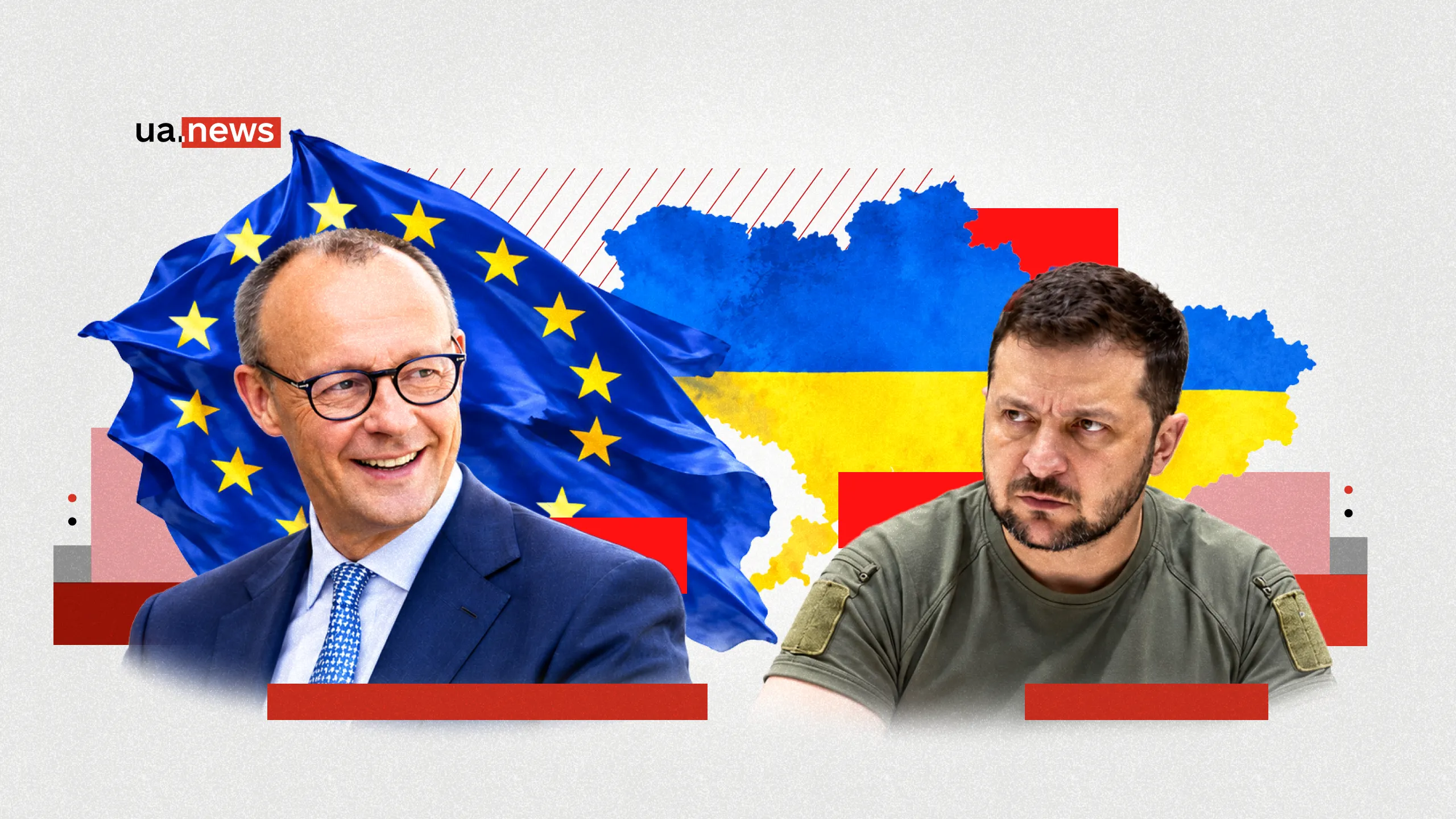
On Sunday, October 4, German Chancellor Friedrich Merz arrived in Kyiv on an unannounced visit. He held talks with President Zelenskyy. According to media reports, the head of state demanded that the German leader ensure Ukraine’s full-fledged accession to the European Union as soon as possible. Merz, however, refused once again, emphasizing that he is offering Ukraine the idea of “associated membership”—and, incidentally, this is not the first time he has made this offer. However, Zelenskyy once again refused, stating that Kyiv needs full membership, not half-measures or any interim formats.
What exactly is “associated membership” in the EU? Is it suitable for Ukraine? Why do we actually need full membership? UA.News political analyst Mykyta Trachuk, together with experts, examined the issue.
What Is Associated Membership and Where Did It Come From?
At first glance, the concept of “associated membership” sounds respectable: like a stepping stone on the path to European integration, something halfway between a partnership and full membership. But if you look into the European Union’s founding documents, a simple and inconvenient truth emerges: “associate membership” does not exist in reality. It is not a legal category, but a political concept that has no legal status whatsoever. Neither the Treaty of Rome, nor the Maastricht Treaty, nor the Treaty of Lisbon, nor any other treaties contain any mention of such a form of integration. There is no defined set of rights and obligations, no place within the EU’s institutional structure, and so on.
The idea of associate membership arose as a compromise: a way to avoid making clear promises to Ukraine while at the same time not completely disappointing those who are waiting for accession. In this context, associate membership appears to be a way for EU bureaucrats to defer the decision to future generations of politicians, without taking on any obligations here and now.
According to the German plan, which Merz sent to EU leadership back in May 2026, an “associated member” would have the right to participate in meetings of ministers and heads of state—but without the right to vote. The country would also be excluded from decisions regarding the EU budget. In other words, Ukraine would have to sit at the table, listen, and perhaps even speak, but without influencing decisions that directly affect it—while still having to comply with those decisions. Let’s be frank: this is a way to keep Ukraine in the EU’s “waiting room” for another decade.
There are no historical examples of associate membership. Turkey applied for EU membership back in 1987 and, over all these decades, has still not become a member of the Union. Israel has, for almost its entire history, built relations with the EU based on a “integration without membership” model: deep economic ties and participation in programs, but no political rights. Switzerland has the most developed system of sectoral integration outside of membership, but it is fully integrated into Europe both geographically and economically. None of these examples constitutes associate membership in the sense currently being offered to Ukraine. They are simply various forms of neighborly relations and/or cooperation.
A particular irony is the proposal to grant associate member status to Canada—yes, the very same Canada that is located on another continent, thousands of kilometers from Europe. The proposal was made by Ursula von der Leyen and caused some surprise even in Brussels. Apparently, no one really has a clear idea of what such “membership” for Canada in the EU would look like. Canada itself, by the way, also reacted with restraint. And in general: offering any form of membership in the union of European states to a country that is, after all, located in North America is, to put it mildly, an unusual idea. It makes far more sense to integrate Ukraine: a country that borders five EU members, has long been part of the European economic and security space, and is fighting for European values, among other things.
Why associate membership isn’t right for Ukraine
The answer to this question is very simple: because it’s a half-measure. Associate membership is a kind of ersatz, a simulacrum of real membership—a form without substance. Yes, it is a certain status, but without the right to vote, without real influence, and without the ability to defend its own interests within the very institutions where Ukraine is invited to “just sit in.”
It’s worth recalling the price Ukraine has paid—and continues to pay—on its path to EU membership. In the years since the Maidan, following the annexation of Crimea and the full-scale invasion of 2022, Ukraine has already endured more grief and loss than all EU countries combined throughout the bloc’s entire history. All of this is, in part, the price of the European choice and the aspiration to be part of Europe, rather than a “gray zone” and an eternal frontier between East and West.
Yes, many questions remain unanswered: Why did things have to unfold exactly this way? Why did it turn out this way and not any other? Was it worth it? But that’s not the point right now. The point now is that, after all this, offering Ukraine half-measures means either openly mocking it or, just as blatantly, failing to understand the extent of the sacrifices and suffering that the people and the state have endured—and continue to endure—on this path.
There is another aspect that makes associate membership particularly unacceptable for Ukraine. The problem is that this status cannot be legally enshrined. It does not exist in EU treaties. This means that if there is a change in government in Berlin (which is entirely possible, given the situation in Germany) or in Brussels, Ukraine could be left without even this status—that is, without any guarantees or safeguards.
What is being proposed now is not a step toward membership. It is a trap that creates the appearance of progress when, in reality, it amounts to standing still.
Finally, even the name itself is problematic. Ukraine already has a full-fledged Association Agreement with the EU—a document that governs political, economic, and trade relations with the EU, signed back in June 2014. Proposing yet another vague “association” without any legal guarantees of its continuity and without any real benefits is just one option. It’s like offering someone who already has a train ticket another ticket—but without a seat, without the right to board, and without any guarantee that the train will ever arrive at the station.
Why Ukraine Isn’t Actually Being Admitted to the EU
The above highlighted Kyiv’s position, which is most likely shared by the majority of Ukrainians. However, in addition to the domestic perspective on the issue, there is also the EU’s position. And it is quite pragmatic: the European Union simply does not see Ukraine as a member right now—period. Why this is the case is a topic for a separate article. There is a vast range of reasons, including purely financial and economic ones. But the key reason remains political.
Without the unanimous agreement of all bloc members, without a political decision, no one is admitted to the EU. And there is no political decision, nor will there be one anytime soon. Within the EU, the popularity of Euroskeptics and right-wing populists is growing steadily; they generally consider the bloc’s expansion eastward to be a major mistake. So, in this context, there is certainly no talk of admitting Ukraine at this time.
But the key issue, of course, is something else. One cannot ignore the elephant in the room: the war with Russia continues in Ukraine and is becoming increasingly large-scale and bloody. As long as the war is raging in Ukraine, no one will accept it anywhere, ever. This is simply a given. Any accession to the European Union is possible only after the hostilities have ended. Because if Ukraine were admitted to the EU right now, tomorrow it would turn out that Russia and Europe are already at war with each other. For incompetent European politicians who are afraid of their own shadows, this is like a nightmare with a fever of forty degrees.
Therefore, as long as the war continues, Ukraine will not be admitted to the EU. The only way forward for integration, for a European future—or indeed any future at all—is an end to the war. Not some vague “associated membership,” not just any “special status,” not “new forms of integration,” and so on. Only a complete end to the war, followed by full, unconditional membership: with the right to vote, access to all policies and institutions, a seat at the table where decisions are made, and so on.

Expert
Opinions
Political scientist and director of the Institute of World Policy, Yevhen Magda, is convinced that Ukraine’s problem lies in the fact that the Ukrainian political leadership does not fully appreciate Germany’s role and position within the European Union.
“It’s quite difficult to demand anything from Merz in the current situation, because his political position is very fragile right now, and the situation is difficult. He acted courageously by traveling to Ukraine amid a rather complicated political situation at home. Demanding something from Merz regarding European integration—so that we immediately become an EU member—is, in my opinion, simply unrealistic, and in this case, there’s not even anything to discuss. The Ukrainian authorities must understand that any progress begins with doing our “homework,” not with loud demands on our partner, who is already extending a helping hand to us under very, very difficult circumstances. They’re meeting us halfway, yet we want them to solve our problems for us as well. That’s not how politics works in Europe,” Yevhen Magda asserts.
Political analyst and director of the “Third Sector” Center, Andriy Zolotaryov, notes: it is not for nothing that politics is called the art of the possible. It was precisely with this proposal that German Chancellor Friedrich Merz arrived in Kyiv—a man who is already a “lame duck” back home — not only is the AfD opposition demanding his resignation, but an internal revolt is also brewing within the Christian Democratic ranks. This is a consequence of Merz’s critically low approval ratings and catastrophic defeats in two German federal states.
“On the one hand, this move—the proposal for associate membership—gives Zelenskyy the opportunity to show at least something; but on the other hand, such a push toward Ukraine is unlikely to work in terms of Germany’s domestic political agenda. Still, for Kyiv, it’s an opportunity. An opportunity to at least get something precisely because it is associate membership. This is, of course, a stopgap measure, but it opens the door for Kyiv—or at least cracks it open. Kyiv can get a foot in the door and actually gain something from it. We see that there is no consensus on Ukraine’s full membership in the EU. No matter how much those who support Ukraine might wish for it—unfortunately, this prospect is hardly feasible at the moment.
However, associate membership opens up certain European markets to Ukrainian producers—though the question is how many of those producers will remain. And most importantly: it significantly expands the legal status of Ukrainian citizens within the European Union. They gain almost everything except political rights. And that is precisely why this would be a good thing, given that once the war ends, another 1–2 million people will likely leave Ukraine. That is why I believe it would be politically prudent for Zelenskyy to agree to Mertz’s proposal after all. But our president takes the “all or nothing” approach. And we’ve seen this situation many times before: instead of taking the bird in the hand, in our pursuit of the bird in the sky, we end up losing much more,” says Andriy Zolotaryov.
According to the expert, this is exactly the case with the issue of associate membership. It’s clear that this doesn’t solve the problem for Ukraine. It’s clear that over 70% of Ukrainians support joining the European Union. But associate membership is better than nothing, the political analyst is convinced.
“I believe it’s worth agreeing to this,” Andriy Zolotaryov concluded.
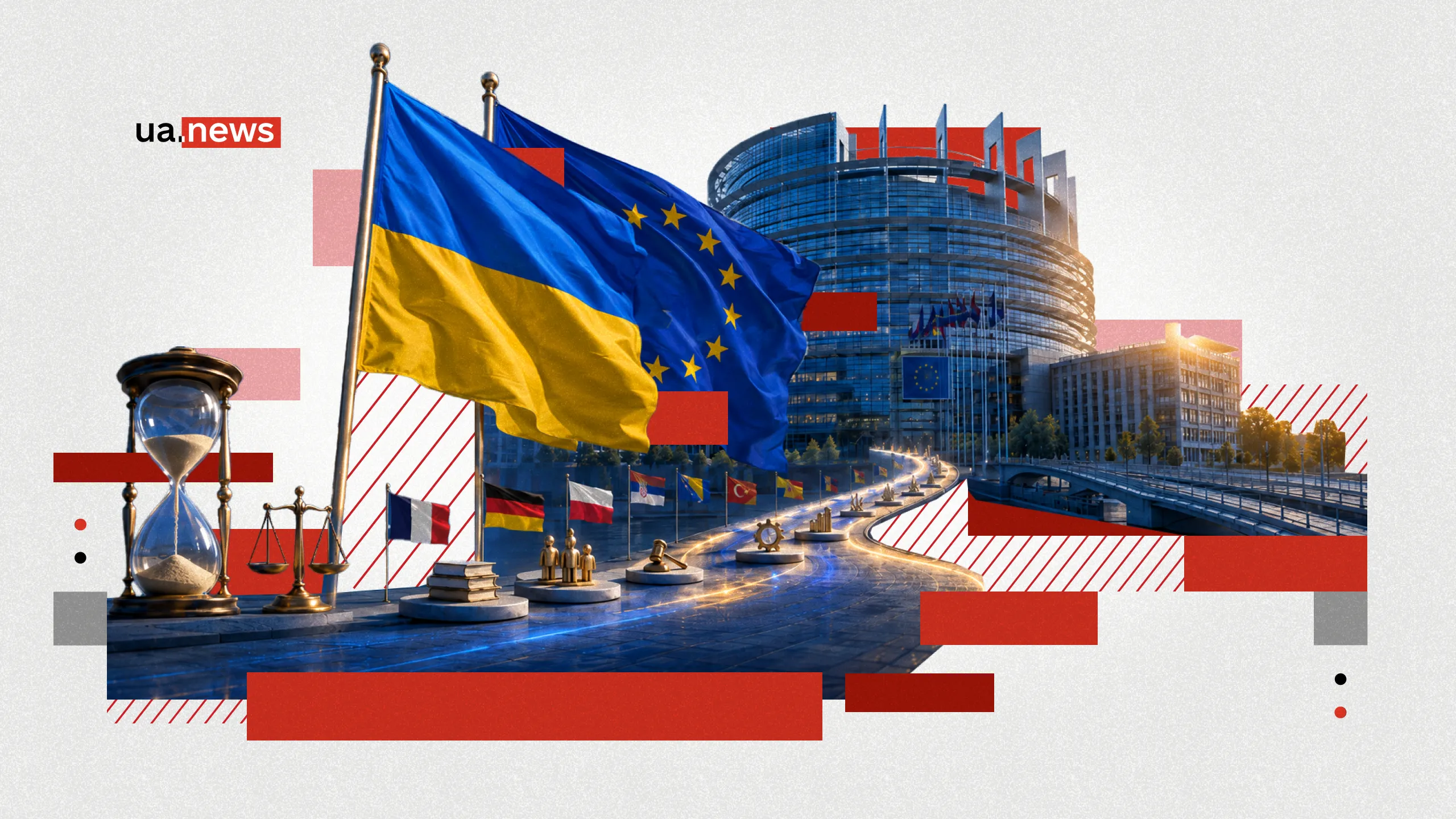
In summary, associate membership is a concept that may sound like a compromise, but is in fact an excuse disguised as a proposal. It is not a step toward the EU, but rather the opposite: a way for Europe to avoid taking that step. For Ukraine, which has paid—and continues to pay—the highest price for its European choice, such a proposal is not merely unacceptable—it is, in a sense, even insulting.
But the problem is not merely that associate membership is unsuitable for Ukraine. The problem is that no form of membership is currently on the agenda, because membership requires peace. War is the wall standing between Ukraine and the EU. As long as that wall stands, any talk of “associate membership,” “phased accession,” or “deeper integration” remains nothing but empty rhetoric.
The only real path to the EU for Ukraine is peace, which will allow it to preserve its statehood, sovereignty, and right to a European future. And only then will full membership be possible: without half-measures, substitutes, or simulacra. Because Ukraine does not deserve “associate membership.” Ukraine deserves the real thing.




