
Parents Should Not Have to Pay for Internet Access in Shelters — Ministry of Education and Science
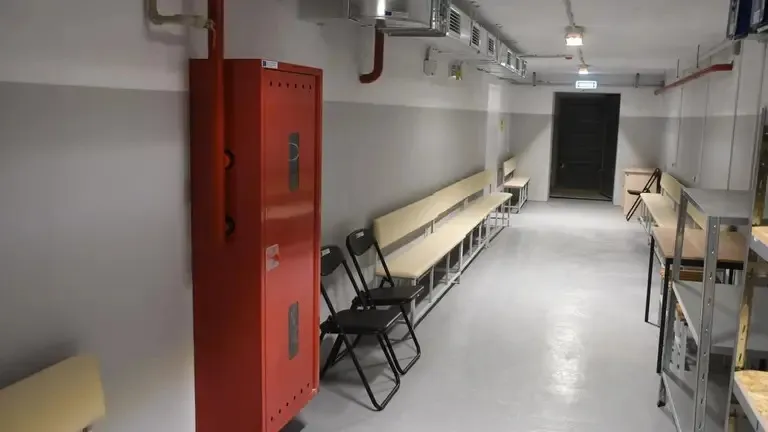
Schools in Ukraine must be provided with a stable internet connection in shelters, and parents should not have to pay for this connection themselves. Local communities are responsible for providing basic amenities to educational institutions, said Andriy Butenko, head of the Ministry of Education and Science. If there is no internet connection in a shelter, parents and teachers are advised to report the problem to the local education authority.
The issue of internet access in school shelters has become particularly important because, during air raid alerts, students and teachers may spend a significant portion of their school time there. According to Andriy Butenko, head of the Ministry of Education and Science, the school itself is responsible for ensuring reliable internet access in such facilities.
Responsibility for the logistical support of educational institutions lies with local communities. It is their responsibility to provide schools with the necessary conditions for operation, including stable internet access in shelters. “The community provides logistical support for school operations, and the community has the necessary funds for this,” Butenko explained.
Therefore, if there is no internet in a shelter, parents do not need to find the funds to install it on their own. First and foremost, the issue should be reported to the school administration and the relevant local education department.
Do Schools Need Starlink?
Butenko also commented on the possibility of installing Starlink in school shelters. According to him, satellite internet is not necessarily the best solution for such facilities. Many schools already have internet access. Therefore, it is easier to extend the existing network to the shelter than to install a separate satellite communication system there.
In addition, Starlink’s bandwidth also has its limitations. If there are many people in the shelter at the same time and everyone is using the network, the load on the connection can be significant.
Butenko also emphasized that internet access in shelters should have been available earlier. In other words, this is not a new, optional service for individual schools, but a necessary condition for the normal operation of an educational institution.
What to Do If There Is No Internet in the Shelter
If students go to a shelter during an air raid alert and there is no internet connection there, those responsible for the school should be notified. This can be done by both parents and school staff. First and foremost, you should contact the school administration. If the issue isn’t resolved at the school level, the information can be forwarded to the local community’s education department.
It is up to local authorities to determine why the internet is not working in the shelter and what needs to be done to restore service. This includes, in particular, technical work, equipment, and payment for services. The Ministry of Education and Science urges people not to ignore such problems. If the relevant authorities are aware of the issue, they can assess the situation and find a way to resolve it.
Parents, teachers, and local authorities must work together
Butenko emphasized that problems in schools should not remain solely the responsibility of the school administration. They must be resolved collectively—with the participation of teachers, parents, local education authorities, and the Ministry of Education and Science.
According to him, parents and teachers should report any problems that arise in schools. This applies not only to the internet but also to other issues related to learning and the conditions under which children spend their time at school. “We must all work together—teachers, parents, local education authorities, and the ministry—to solve these problems,” noted the head of the Ministry of Education and Science.
At the same time, the ministry continues to implement state programs to support educational institutions. These include programs to develop laboratories and fund various educational areas through subsidies.
The Ministry of Education and Science Wants to Discuss the Problems of Kyiv Schools Separately
Separately, Butenko announced that he plans to discuss problematic issues with the principals of Kyiv schools. These discussions will focus on situations arising directly within the capital’s educational institutions. Such meetings should help better understand which problems schools cannot resolve on their own. Afterward, it will be possible to determine which issues fall under the responsibility of city authorities and where the Ministry of Education and Science’s involvement is needed.
The issue of internet access in shelters, however, remains primarily the responsibility of local communities. Therefore, if a school lacks internet access in a shelter, parents should not raise funds on their own but should instead contact the school administration and the local education department. This was stated by Andriy Butenko, head of the Ministry of Education and Science, during a televised marathon.
The Ministry of Education and Science has prepared recommendations for schools to help them organize instruction during prolonged air raid alerts, power outages, and other crisis situations.




