
On May 26, Ukraine commemorates one of the most important victories of the Cossacks - the Battle of Korsun
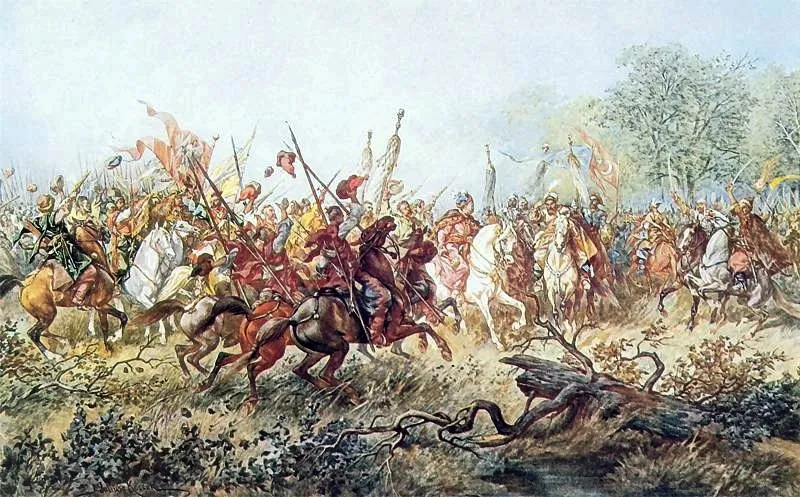
On May 26, Ukraine commemorates one of the most significant victories of the Cossack army—the Battle of Korsun in 1648. It was after this battle that Bohdan Khmelnytsky’s uprising escalated into a large-scale national liberation war that engulfed nearly all of Ukraine.
The Battle of Korsun took place on May 25–26, 1648, near the modern city of Korsun-Shevchenkivskyi in the Cherkasy region. It was one of the key battles of the National Liberation War led by Bohdan Khmelnytsky.
Prior to this, the Cossack army had already won a victory at Zhovti Vody. The Polish authorities still hoped to quickly suppress the uprising, but the situation began to rapidly spiral out of control. After the defeat at Zhovti Vody, Polish troops under the command of Mykola Pototsky and Martin Kalynovsky retreated closer to Korsun. It was there that Bohdan Khmelnytsky decided to launch a new battle.
Khmelnytsky lured the enemy into a trap
The Ukrainian army acted very strategically. The Cossacks, together with the allied Crimean Tatar units of Tugay-Bey, used the terrain to their advantage and set up an ambush in the Gorokhova Dibrova area. The Polish army was moving through narrow, marshy terrain. At that moment, the Cossacks blocked the path with carts and launched an attack from the flanks.
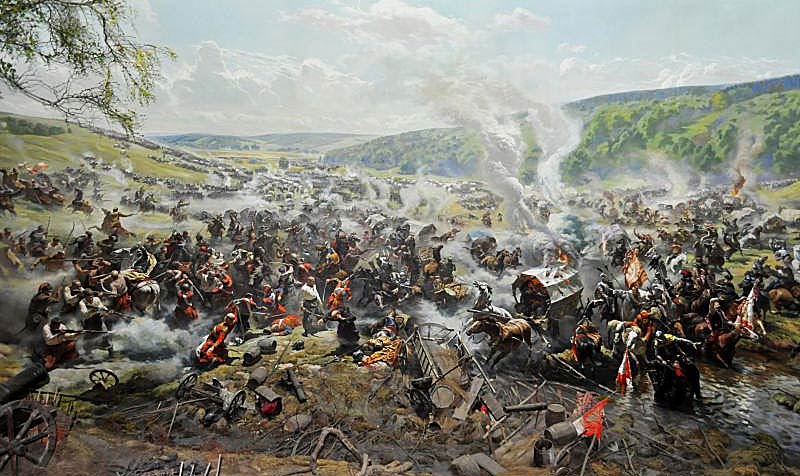
Historians write that the Polish army effectively found itself in a deadly trap. Panic ensued, the columns became disorganized, and the cavalry lost the ability to maneuver effectively. The battle lasted several hours and ended in the complete rout of the Polish forces.
Polish commanders were taken prisoner
After the battle, both of the main Polish commanders—Mikołaj Potocki and Marcin Kalinowski—were taken prisoner. For the Polish-Lithuanian Commonwealth, this was a massive blow, not only militarily but also politically.
According to various estimates, the Polish army lost thousands of soldiers, cannons, supply wagons, and weapon stockpiles. Part of the army managed to escape, but the main forces were destroyed or captured. The Institute of National Remembrance notes that the victory at Korsun demonstrated that the Cossack army was capable of defeating one of the strongest armies of the time.
After Korsun, the uprising spread across nearly all of Ukraine
It was precisely after the victories at Zhovti Vody and Korsun that the uprising began to spread rapidly across Ukrainian lands. People supported the Cossacks en masse; peasants, townspeople, and the Orthodox nobility joined the army. Historians believe that the Battle of Korsun was a turning point in the war. It significantly boosted Bohdan Khmelnytsky’s prestige and consolidated his power. Following this victory, what would later be called the Hetmanate—the Ukrainian Cossack state—began to take shape.
The battle is still studied as an example of military mastery
The Battle of Korsun is often cited as an example of a brilliant military operation. Historians highlight how Khmelnytsky utilized the terrain, the speed of his troops’ movement, and the element of surprise.
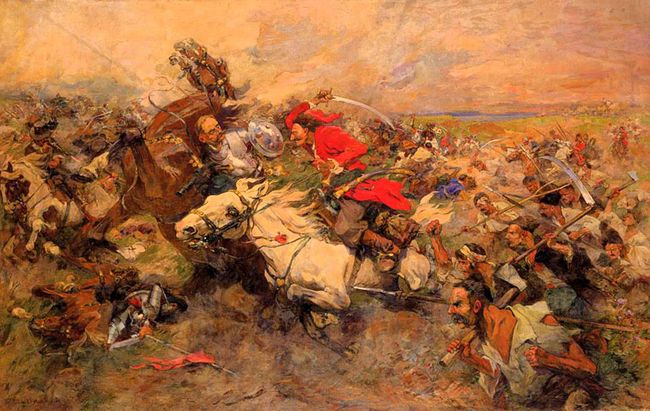
In many works, this battle is cited as one of the most successful operations of the Cossack army in the 17th century. “Do not fear a stronger enemy—fear a smarter enemy”—this is how the tactics Khmelnytsky employed at Korsun are often described today.
Why this battle is still remembered today
For Ukraine, the Battle of Korsun is not just a page in a history textbook. It is a symbol of the struggle for freedom and an example of how Ukrainians were able to unite at a decisive moment.
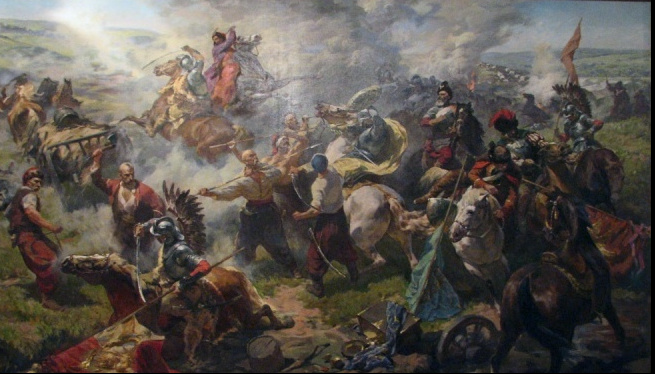
Today, a century after those events, Korsun remains a reminder of one of the greatest victories of the Ukrainian army. And the name Bohdan Khmelnytsky remains one of the most famous in Ukrainian history.


