
"Dirty Millions" and the Boomerang Effect: Why Social Media Shows No Sympathy for the "Office King" Murdered in Bali

The story of 28-year-old Ukrainian citizen Igor Komarov, which began as a luxurious vacation on an exotic island, ended with a gruesome discovery on the east coast of Bali. In mid-February, the man was kidnapped, and later local residents discovered his dismembered remains. This incident shocked not only the Indonesian police but also the international community, revealing the brutal reality of criminal conflicts on the “paradise island.”
According to official investigation data, Komarov’s abduction occurred on Sunday, February 15. Law enforcement was officially notified of the incident that same day. However, the situation reached a critical point on February 21, when a video surfaced online in which the Ukrainian man reported the kidnappers’ demand—a $10 million ransom. The footage clearly showed signs of brutal torture on his body. As local police spokesperson Ariy Sendi later reported, Komarov was killed shortly after this video was recorded.
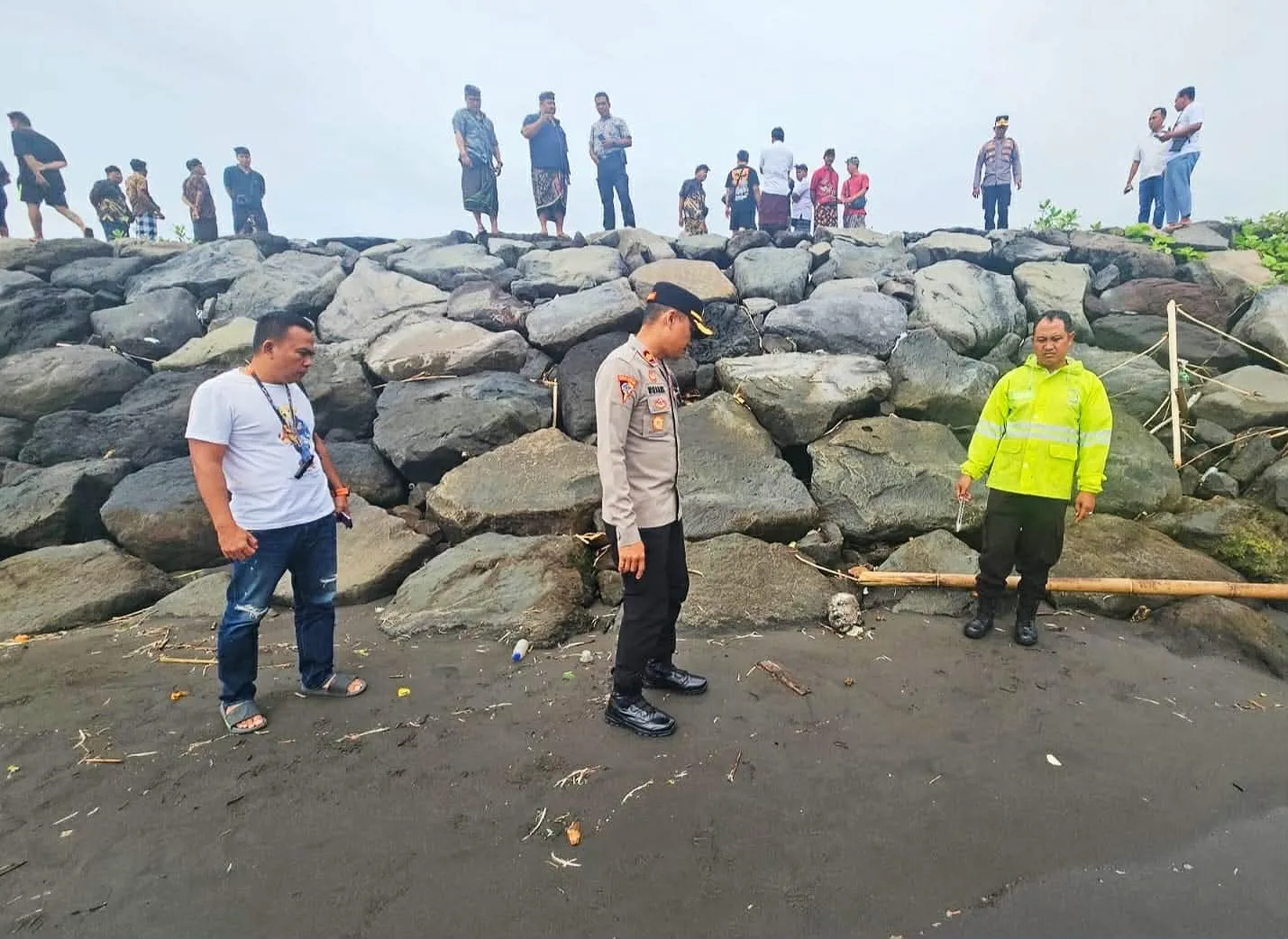
On Thursday, February 26, the Ukrainian man’s dismembered body was found on the beach. According to the forensic medical examination, death occurred at least three days before the body was found, as the remains already showed signs of decomposition. This timeline indicates that there was virtually no chance of survival—the kidnappers acted quickly and ruthlessly.
The investigation is currently ongoing. Law enforcement officials have managed to detain one suspect who played a key role in planning the attack: he was the one who rented the vehicle using a forged passport. In addition to him, six other foreigners are involved in the case and have been officially placed on an international wanted list. The Bali police have already submitted a request to Interpol to issue “red notices” for their arrest. According to operational intelligence, four of the suspects have already managed to leave Indonesia, attempting to evade justice abroad.

The Reels Trail
There is speculation that the smartphone in the hands of the 23-year-old influencer served as the perfect beacon for the killers. While blogger Eva Mishalova was diligently documenting her every move in Bali, she had no idea that she was not just livestreaming a luxurious lifestyle, but providing a detailed guide for those who were already out to get her boyfriend, 28-year-old Igor Komarov.
Shocking video
On February 22, a video that instantly went viral shook the media landscape. Viewers were confronted with Igor Komarov, once a successful member of Dnipro’s “celebrity” scene: deep bruises under his eyes, a bandaged hand, and the labored breathing of a man in shock. He appealed to his relatives for help, mentioning a critical blood infection and a catastrophic lack of time. In criminal circles, such messages rarely mark the beginning of a negotiation process; more often, they signal that the limit of trust has been exhausted. The ransom amount was stated clearly—“$10 million.”
The Figure of Komarov and the Shadow Empire of “Offices”
To understand where the kidnappers’ financial appetites come from, we must return to the Ukrainian city of Dnipro, the very “capital of offices.” Investigators openly refer to Komarov as the descendant of a local influential figure. He was not among the usual freelancers or IT specialists. His biography is closely intertwined with the activities of the “offices”—a large-scale network of illegal call centers engaged in fraud. In archived videos, Komarov himself confirmed that he had been running such an operation since 2021, receiving half of the net profits. This well-oiled scam machine, despite myths about exclusively targeting Russian clients, was just as actively draining the bank accounts of European citizens and Ukrainians.
The Disappearance of an Acquaintance
During his trip to Bali, Igor was also accompanied by Yermak Petrovsky, the son of the well-known Dnipro entrepreneur Alexander Petrovsky. According to media reports, both men were abducted at the same time, but Petrovsky somehow managed to escape from his captors. The details of his escape remain a closely guarded secret.
The Structure of the “Office” Mafia and Government Cover-Up
Illegal call centers are not amateur startups, but full-fledged criminal corporations with strict hierarchy. To prevent visits from law enforcement, a system of systematic bribes was established: open sources cite amounts of around $1,000 per month from each unit, which allegedly went to the accounts of representatives of the Department of Strategic Investigations. The illicit funds were quickly laundered through the real estate market, luxury cars, and the legal restaurant business. However, the loyalty of local law enforcement did not guarantee protection from international criminal groups, which had full information about the suspects’ actual wealth.
A “Vanity Fair” Amid the War
While Ukraine is enduring the horrors of a full-scale war, Komarov and his girlfriend, blogger Eva Mishalova, have set up a zone of absolute comfort for themselves in Bali. Their daily life has turned into a nonstop digital spectacle: tours of three-story villas costing $5,800 a month, displays of Louis Vuitton accessories, designer clothing, and Rolex watches worth $50,000. This ostentatious luxury merely creates the illusion of invulnerability and omnipotence. In reality, it served as the perfect marker for professional kidnappers.
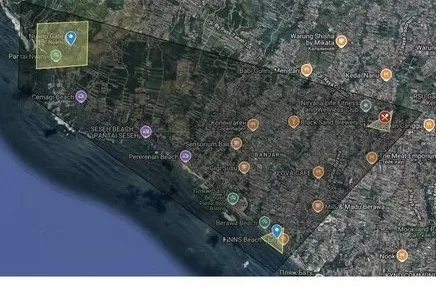
The geolocation trap: how social media gave away the target
The smartphone, which was Eva Mishalova’s primary tool for earning a living, turned into a tracking device. The blogger documented her every move in detail, accompanying her posts with precise geolocations and recognizable facades of her home. Criminal groups didn’t need expensive spy tech—it was enough to simply follow her Stories. The last photo with a clear indication of her location, posted shortly before the attack, became a fatal mistake that led the criminals right to the villa’s door.
Insta-Killer: How Eva Mishalova “Led” the Assassins
Professional analysts, including Vladimir Martinenko, author of the channel “My Experience, Cases, Situations,” have proven: the kidnappers didn’t need satellites or bugs. All they had to do was follow Eva Mishalova. Her pathological obsession with flaunting luxury turned an ordinary smartphone into a high-precision weapon in the hands of the killers.

As Martinenko notes, “Mademoiselle’s careless behavior” and her digital hyperactivity became a perfect case for OSINT intelligence. She literally served up every inch of their private space on a silver platter.
Chronology of a Digital Suicide
The trap began to close as early as the airport, and from there, Eva took the killers on a veritable sightseeing tour:
- January 9: The very first geotag—the village of Canggu. The search area narrowed.
- Details: A photo with a cocktail, where the “Luna Beach Club” logo is clearly visible on the coconut, and a video from “Atlas Beach Club.” Unique landscape features in the background allowed their routes to be verified down to the minute.
- "Everyday" leak: Even unpacking groceries from the "Pepito" supermarket became a clue. Analysts determined that there is only one such store in the area.
A tour of hell
But the real “gift” for the investigators was the villa tour. Eva, trying to impress her followers, filmed everything: from the front door to the bedroom interior. She captured unique paintings, light fixtures, and the layout of the windows.

Martynenko demonstrated how easily these images could be matched to listings on Booking.com. A search for “villa canggu bali” and a Google image search using fragments of the interior revealed the exact address of the “Coco Jungle Canggu Villas” (or a similar one in that complex). What Eva considered content for “successful success” was, for the kidnappers, a clear floor plan of the premises with marked entrances and exits.
The Price of Stupidity and Vanity
The smartphone, which this “smart girl” never parted with—not even in bed—became the main tool for the murder of her own husband. The kidnappers simply sat in her Stories, mapping out the layout and calculating the best time to strike. The thirst for likes proved stronger than the instinct for self-preservation. While she was primping in front of the camera, the killers already knew which door they would enter to turn her “paradise life” into a bloody denouement.

“I don’t think I need to explain anything, do I?” Martinenko asks rhetorically, posting footage where the interior from Eva’s Stories matches the photos of the rented villa 100%. Stupidity is also a weapon, and in this story, it proved deadly.
A Nighttime Incident in the Jimbaran District
Late on the evening of February 15, 2026, the Jimbaran area is usually quiet. At around 10:20 p.m., Igor Komarov, along with Roman Salin and Yermak Petrovsky, set out on motorcycles. According to local media reports, it looked like a typical evening ride. Komarov was bringing up the rear. His friends didn’t notice Igor was missing until some time later, when the light from his headlight finally faded into the darkness. When his companions turned back, they found only Komarov’s abandoned belongings.
Strange behavior of those around him
Roman Salin filed a report with the police, while Yermak Petrovsky vanished without a trace from the public eye, despite reports that he had escaped captivity. At the same time, a truly surreal situation was unfolding on Eva Mishalova’s social media: while her common-law husband was being held hostage, she continued to post entertaining content and advertisements. Her own sister later described this public silence regarding the tragedy as a “professional necessity” to pay for a nanny’s services. This stark contrast between mortal danger and promotional content sparked a wave of outrage and confusion online.
Interpol’s Position
The lack of official information gave rise to numerous rumors on Telegram channels. Commentators put forward theories about a conflict between the Ukrainian and Russian intelligence services and even about the involvement of presidential offices. However, the Bali police quickly debunked these rumors: there were no secret commando units on the island. The case was treated as a purely criminal matter following standard procedures for coordination with Interpol, without any political or geopolitical undertones.
A dying plea
The video appeal leaked online came as a shock. Igor Komarov looked battered: broken limbs, chest trauma, and visible signs of torture. The man, barely clinging to consciousness, begged his family for financial help, claiming that only money could buy him his freedom. “Please send the money... I won’t leave you in debt”—these words were Komarov’s last public statement. It was a classic act of psychological terror, where the price of life was equivalent to $10 million.

The theory of collecting a shadow debt
In the criminal world, such ransom amounts have a specific rationale. Given the millions flowing through the fraudulent schemes Komarov ran, analysts lean toward the view that this was no random attack. The kidnappers likely had precise information about his assets and used physical coercion as the sole tool to recover debts or redistribute shadow assets.
The Investigation
Indonesian police found leads in vehicle rental logs. The arrest of a foreign national, S.N., in a neighboring province proved to be a breakthrough: he had rented a car using forged documents. The route of the “Toyota Avanza” led detectives to a remote villa in the Tabanan area, where the hostage was likely tortured. Traces of blood found at the scene and in the car became irrefutable evidence that the tragedy had occurred.
A Horrific Discovery on the Coast of Keteweli
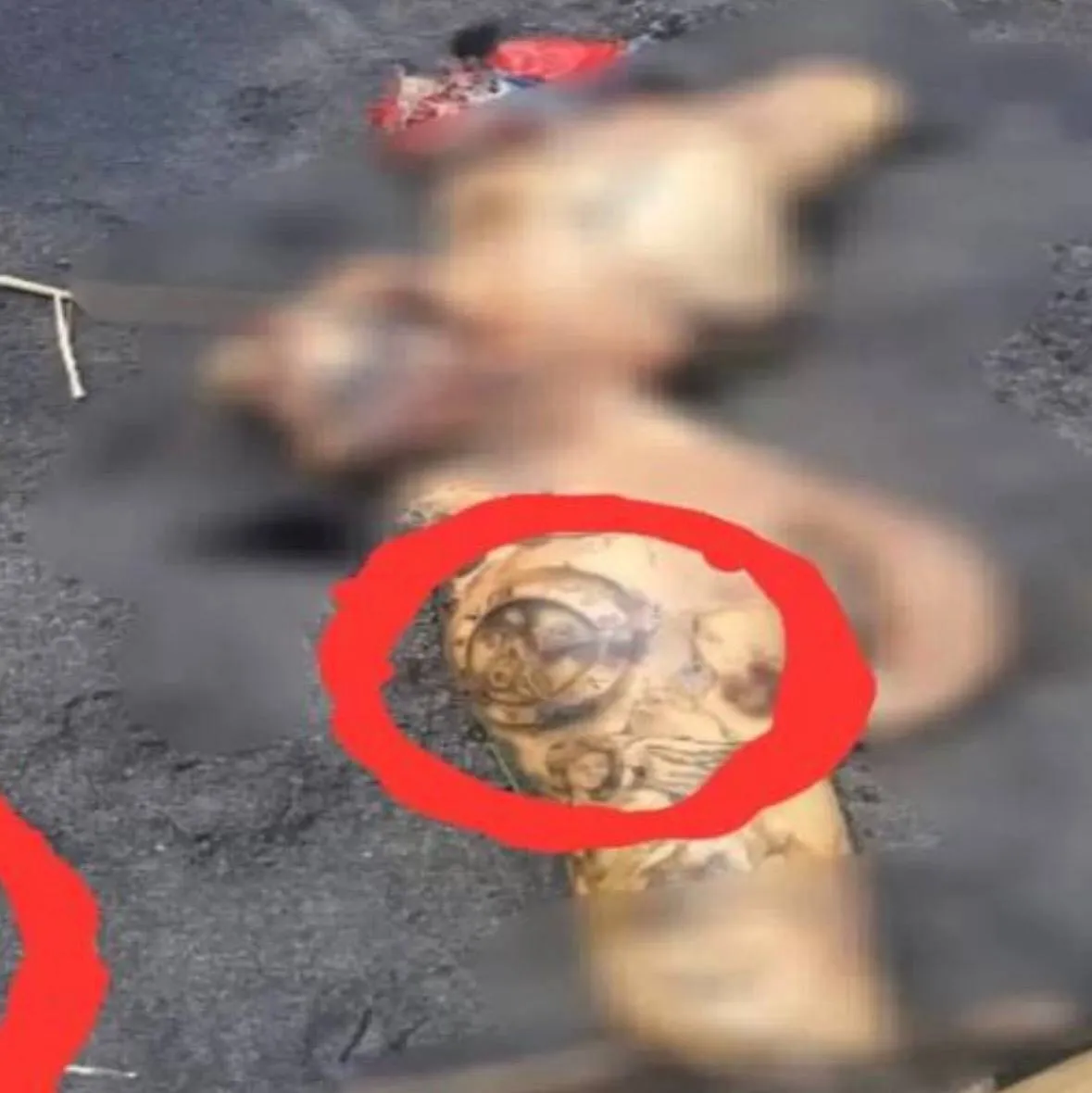
On February 26, 2026, residents of the Gianyar district came across human remains washed ashore by the sea. The extent of the damage was so severe that visual identification proved impossible. The police proceeded with extreme caution, awaiting the results of laboratory tests. Only after DNA was collected from Komarov’s mother in Ukraine did Jakarta’s forensic experts confirm a 99.99% match. All hope of rescue was finally extinguished.
The Escape of the Perpetrators and an International Manhunt
After confirming the victim’s identity, Indonesia issued a warrant for the arrest of six foreigners. However, with access to significant resources, some of the suspects managed to leave the country and flee to Malaysia. Interpol’s “Red Notice” served as a formal epilogue, which, however, does not guarantee swift justice. The criminals vanished into the Asian region, leaving behind only a bloody trail on the paradise island.
Karma and the Public Verdict
The conclusion of this story sparked not sympathy but a heated debate in Ukrainian society about the “law of the boomerang.” Most commentators did not see Komarov as a victim—they saw him as the mastermind of schemes who profited off ordinary people. The case became a vivid illustration that “dirty millions” come at an invisible cost. You can rent the most expensive villa and wear a Rolex, but your immunity ends where the past catches up with you on the ocean shore, turning your life into nameless remains, identified only by a DNA code.
Earlier, the information space was shaken by a statement from blogger-investor Andriy Trushkovsky. He claimed that the business of his ex-wife, Sabina Musina, was allegedly founded on money stolen from “Ukroboronprom.”
This refers to the international chain of beauty salons GBar, which Sabina Musina owns together with another entrepreneur, Lera Borodina. In response to Trushkovsky’s accusations, they threatened to file a lawsuit for defamation. However, according to the blogger, the scandal has now apparently led to a breakdown in the business partnership between the chain’s owners.
Also, last October, Konstantin Cherednichenko, the ex-husband of G.Bar founder Sabina Musina, was placed on an international wanted list


