
Budanov explained why holding elections during a war is dangerous
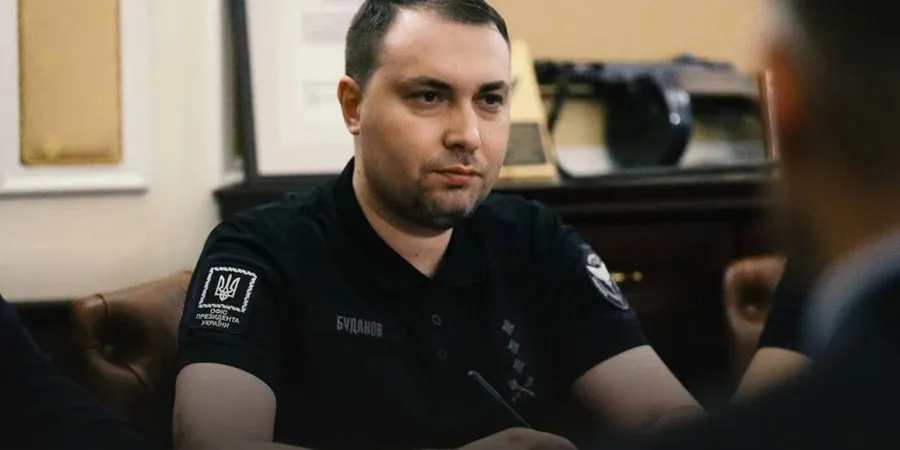
Kirill Budanov, head of the Office of the President, believes that holding elections in Ukraine during a full-scale war is not advisable. According to him, not all citizens will be able to vote, which could cast doubt on the election results and exacerbate internal conflicts.
According to the head of the Presidential Office, it is impossible to ensure equal voting conditions for all citizens during wartime. Some people are abroad, some live in occupied territories, and voting may also be problematic for residents of frontline areas. “Elections during a war, in principle, cast doubt on their results. This is logical, because not everyone can vote under normal circumstances, and questions immediately arise as to why some people voted while others could not, how many people were actually unable to vote, and so on,” Budanov noted.
He believes that such elections could spark disputes over their legitimacy. According to Budanov, this could deepen divisions within society and create problems for the state itself. “And in a society that isn’t exactly united, this provides a basis for a region to break away, simply saying, ‘Sorry, we’re for Ukraine, but we don’t recognize any of this, and until things are sorted out, we’ll be a sort of autonomous entity. And here, everything will be as it is—this is Ukraine, we recognize everything, but only for ourselves. That is precisely the path to the state’s breakup,” said the head of the Presidential Office.
When asked whether this means that the war must first be ended before elections can be held, Budanov replied in the affirmative. “Yes. We all need to unite to end the war. After that, we’ll move forward with all the necessary processes,” he emphasized.
Budanov recalled the events of 1918
Speaking about the possible consequences of political confrontation during the war, Budanov recalled the events of 1918. He noted that following the Ukrainian Revolution of 1917–1921, various political forces and centers of power operated simultaneously in the country. According to Budanov, the struggle between them ultimately weakened Ukrainian statehood. “Several leaders emerged at the same time, each claiming to be the only one who was right, the only one who knew what to do, the only one capable of bringing about change and doing something good for the country and society… Ukraine was torn apart, and it was absorbed by present-day Russia,” he said.
Budanov believes that modern Ukraine must take this historical experience into account. “It’s all the same. Society is demanding what I would call not evolutionary but revolutionary changes in the midst of an open war. The last time we tried to do this was precisely then. As for how it all ended—let everyone read about it,” added the head of the Presidential Office.
According to him, the main task now must remain ending the war and preserving the country’s unity. After that, in his view, it will be possible to move on to the electoral process and other political changes.
Fedorov had previously called for elections
The debate over the possibility of holding elections in Ukraine during the war intensified following a statement by former Defense Minister Mykhailo Fedorov. On the evening of August 18, he published a video address in which he stated the need to hold elections in Ukraine.
Fedorov emphasized that Russia should not be the one to decide when Ukrainians will be able to elect their government again. He also called for a broader discussion on the future of Ukrainian democracy and the state. Thus, positions on holding elections during the war remain divided. Budanov advocates first ending the war, while Fedorov calls for discussing the possibility of holding elections right now. Kirill Budanov spoke about this in an interview for a telethon on August 28.
The Armed Forces of Ukraine need to mobilize at least 30,000 people every month, said Kyrylo Budanov, head of the Office of the President. He also acknowledged that this number is large, and that changing approaches to conscription is unlikely to reduce the actual need for personnel.


