
Harassment and Discrimination at Grinchenko University, as Revealed by an Audit

A gender audit at Borys Grinchenko University identified dozens of cases of harassment, cyberharassment, and complaints of discrimination; however, following the release of the results, the university has taken virtually no public action or implemented any systemic solutions. Formally, the report exists and the figures have been announced, but the answer to the question “what next” remains up in the air, writes Glavkom.
Boris Grinchenko University of Kyiv conducted a gender audit—a document intended to reveal how students and faculty actually feel at the university, whether there are instances of discrimination, and how often situations arise that go beyond mere “offensive jokes” or everyday conflicts.
The results were difficult to ignore: hundreds of responses, dozens of reports of harassment, cyberbullying, and various forms of psychological and physical pressure. But the key question arose immediately after the report’s publication—why did this data remain merely a document rather than serving as the basis for investigations or personal decisions?
What the audit revealed
According to the published research materials, students reported 111 cases of harassment in various forms, another 34 incidents of cyberharassment, and 38 cases of threats or the use of physical force.
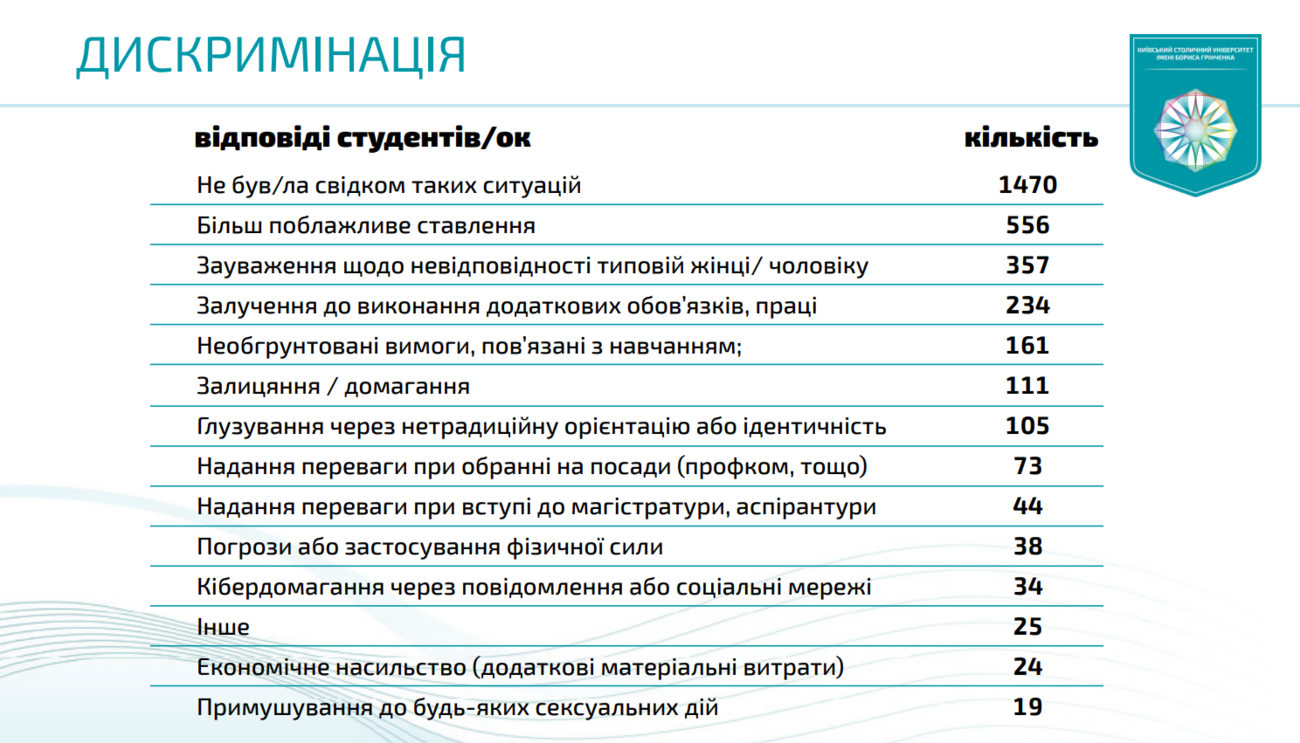
These figures do not appear to be isolated incidents—rather, they point to a recurring problem that exists across various university settings, including classrooms, dormitories, and online communications. Separately, in the surveys, students described instances of inappropriate behavior by faculty members, including sexist remarks and comments that devalue the role of women or reinforce stereotypes about students.
Among the responses provided were the following statements:
“Sexist remarks by faculty members, belittling women’s contributions and skills in the professional field”;
“You need to raise children and take care of your husband, not go out there to work”;
“Inappropriate jokes about female students, and differences in how the future of male and female students is discussed.”
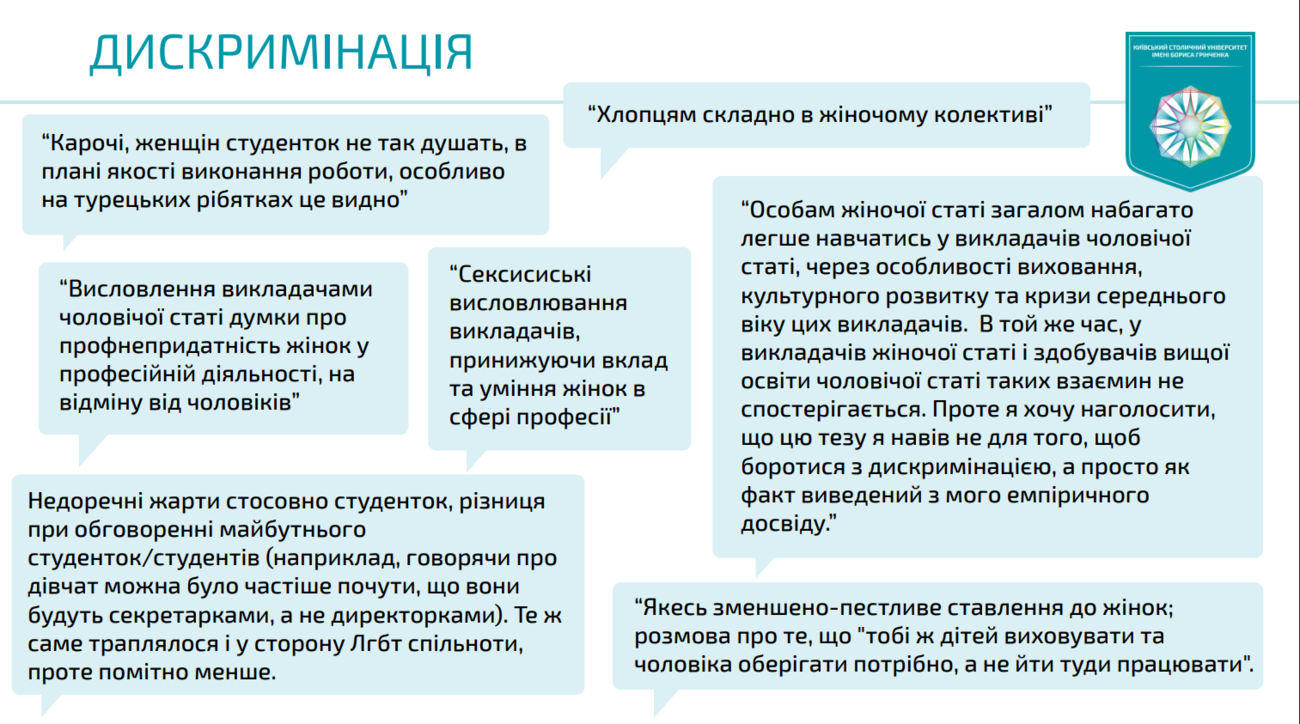
Complaints were also recorded regarding unequal treatment of male and female students during the educational process and grading.
Why This Did Not Become a Scandalous Investigation
Despite the scale of the recorded responses, the university positions the gender audit as a research tool, not as an inspection or official investigation. That is why, as the administration explains, the results do not automatically trigger disciplinary proceedings against specific individuals.
The university’s vice-rector and Kyiv City Council member Alla Shlapak emphasized that participation in the audit was voluntary and the questionnaires themselves were anonymous, making it difficult to identify specific cases. “This is research, not an inspection. The gender audit does not serve as grounds for any investigations. It is a scientific study,” she explained.
At the same time, the university acknowledges that the data obtained served as the basis for developing internal documents and plans, but not for publicly disclosing the results of specific incidents.
How the university plans to respond
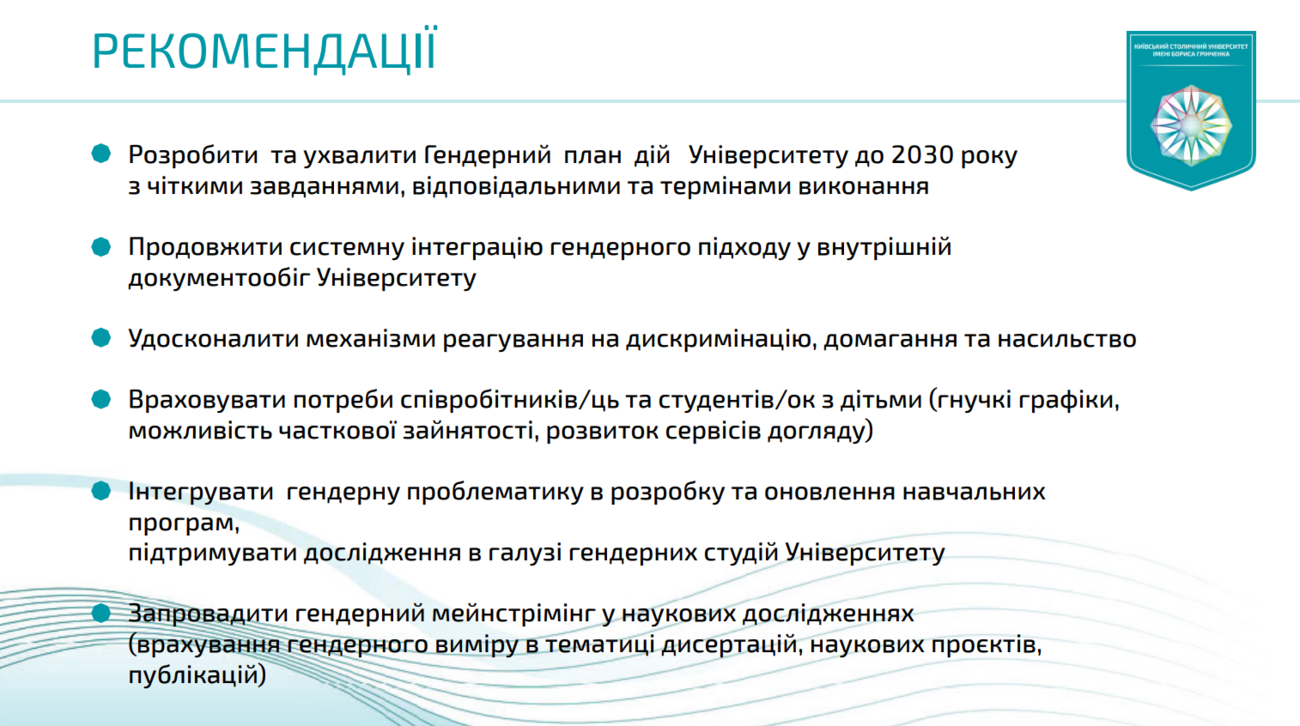
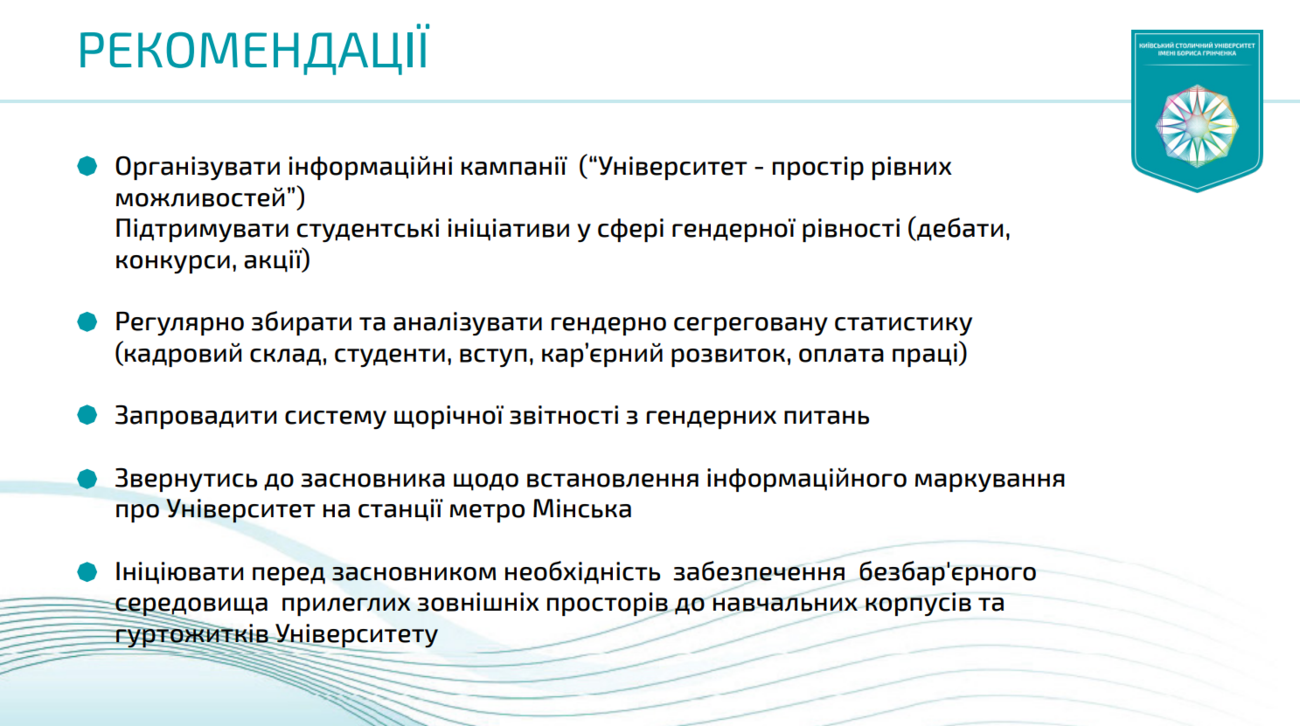
Following the audit, the university announced the creation of working groups and the development of a gender action plan through 2030. It also pledged to improve mechanisms for responding to complaints, increase the gender sensitivity of educational programs, and implement new internal procedures. Among the recommendations published in the report:
- develop a gender action plan for the university through 2030;
- improve mechanisms for responding to cases of harassment and discrimination;
- take into account the needs of students and staff with children;
- integrate a gender perspective into curricula and research.
The university also reports holding regular meetings with relevant departments and the work of committees tasked with responding to such cases.
The question that remains unanswered
Despite these formal steps, the main focus of the discussion revolves around what actually happened with the audit results in practice. Were there internal investigations? Did anyone face disciplinary action? Has actual behavior in classrooms changed? There are no public answers to these questions.
The university emphasizes that it has committees and channels for complaints, and students can report incidents directly through the administration’s public contact information. But critics point out: the very fact that the report contains a large number of complaints indicates not just isolated incidents, but a need for a systemic response that goes beyond administrative measures.
Context of the Problem
The situation at Hrinchenko University is not unique—the issue of harassment and discrimination in Ukrainian universities has increasingly come to the public’s attention in recent years. In some cases, this leads to high-profile scandals and criminal proceedings, but in most situations, the problem remains within the education system.
In this case, the gender audit served more as a mirror that revealed the scale of the phenomenon, but did not become a mechanism for resolving it.


