
This winter, Russia is counting on being able to “break” Ukraine through large-scale attacks on its energy infrastructure. President Volodymyr Zelenskyy recently made this statement. Earlier, Russian dictator Vladimir Putin directly confirmed that he had ordered the Russian armed forces to prepare for attacks on Ukraine’s energy sector.
At the same time, the Ukrainian president noted that the U.S. would like to see an end to the reciprocal strikes by Russia and Ukraine on each other’s energy facilities. Zelenskyy himself is “skeptical” about this possibility. Washington remains equally skeptical, according to reports in Western media, including Axios.
In an interview with that publication, the Ukrainian president noted that U.S. officials would like to reach agreements on de-escalation regarding energy facilities, as well as grain, oil, and gas exports. In reality, however, it seems that none of the parties seriously believes in the possibility of an “energy truce”—although the Americans are still making some efforts to implement this idea.
How likely is it that a moratorium on attacks on the energy sector will be reached during the 2026–27 season? Is there at least a theoretical possibility of this, or does it remain pure fantasy? UA.News posed these questions to experts. Read more in our article.
Ukraine’s energy facilities will become Putin’s number one target: military expert Oleg Zhdanov
I think you’d have to be extremely naive to expect Putin to agree to even a partial ceasefire at least until the end of this year. Just look at all his recent speeches: he’s “riding high on victory.” He’s emboldened by his “victories”—claiming that his army is advancing every single day, that they’ve already taken Svyatogorsk, for example, even though they haven’t even come close to it yet, and so on. Putin has once again refused even his best friend, Trump, to end the war here and now.
So there will be no ceasefire. On the contrary: I am certain that Ukraine’s energy facilities will become Russia’s number one target as soon as the temperature drops and the cold weather sets in. There is information, reported by Russian “Z-war correspondents” themselves, that Moscow plans to strike our key substations so that the system automatically triggers rolling blackouts and thus becomes destabilized. So that’s the situation, and I wouldn’t expect anything else at this point.
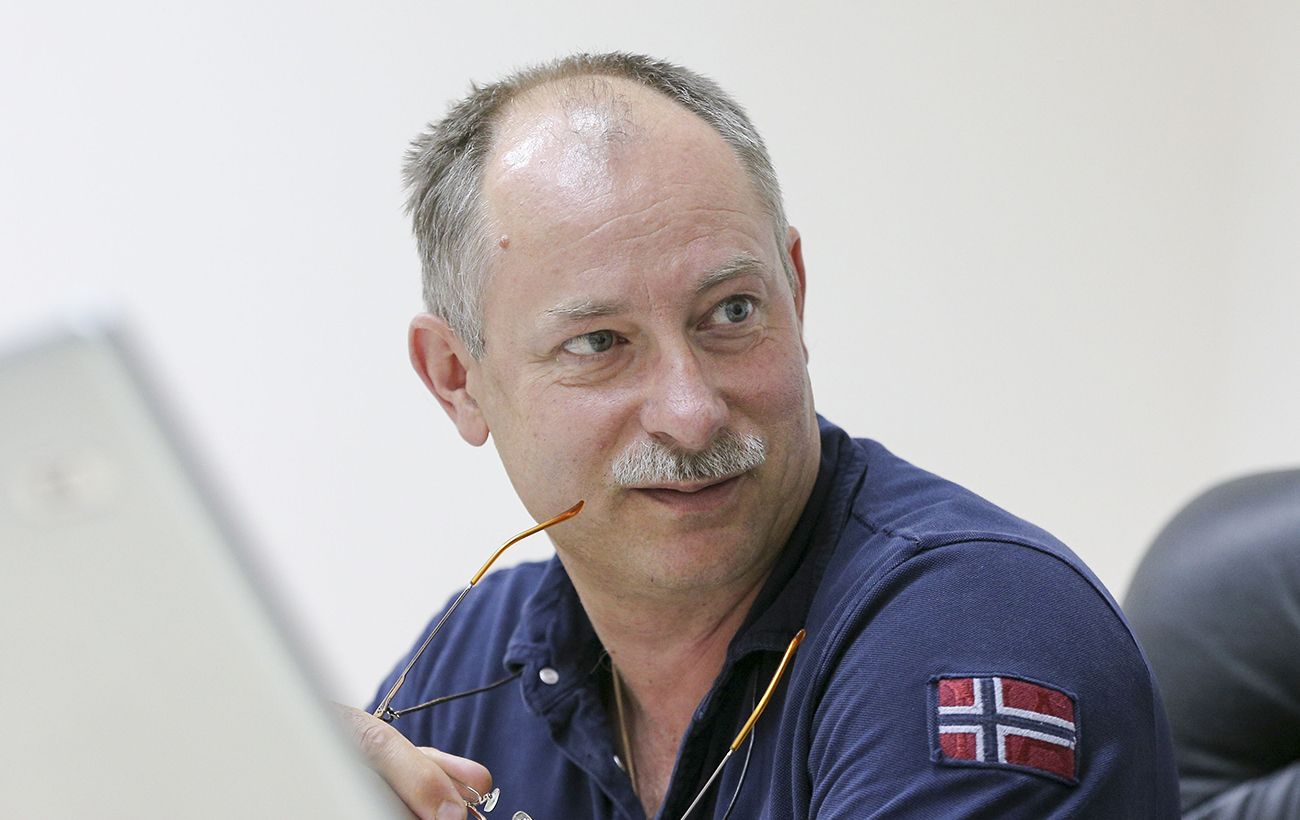
Putin Has Chosen Escalation Again: Military Expert Igal Levin
Could Russia and Ukraine theoretically reach an energy truce this winter? Well, theoretically, anything is possible. Theoretically, it’s possible for one side to keep firing while the other doesn’t. But we all understand that it doesn’t work that way. What’s more: Ukraine has offered Russia similar types of truces many times. Ukraine would refrain from launching deep strikes against Russia, and Russia would do the same in return. But Moscow refused every single time. Every single time.
We understand that this is their deliberate strategy for this winter: to make winter unbearable for Ukrainians. In fact, they try to do this every winter, so all of this will simply happen yet again. And the Russians won’t stop their attempts. That’s why I think it’s futile to hope for any kind of ceasefire. Putin has once again chosen escalation over de-escalation.
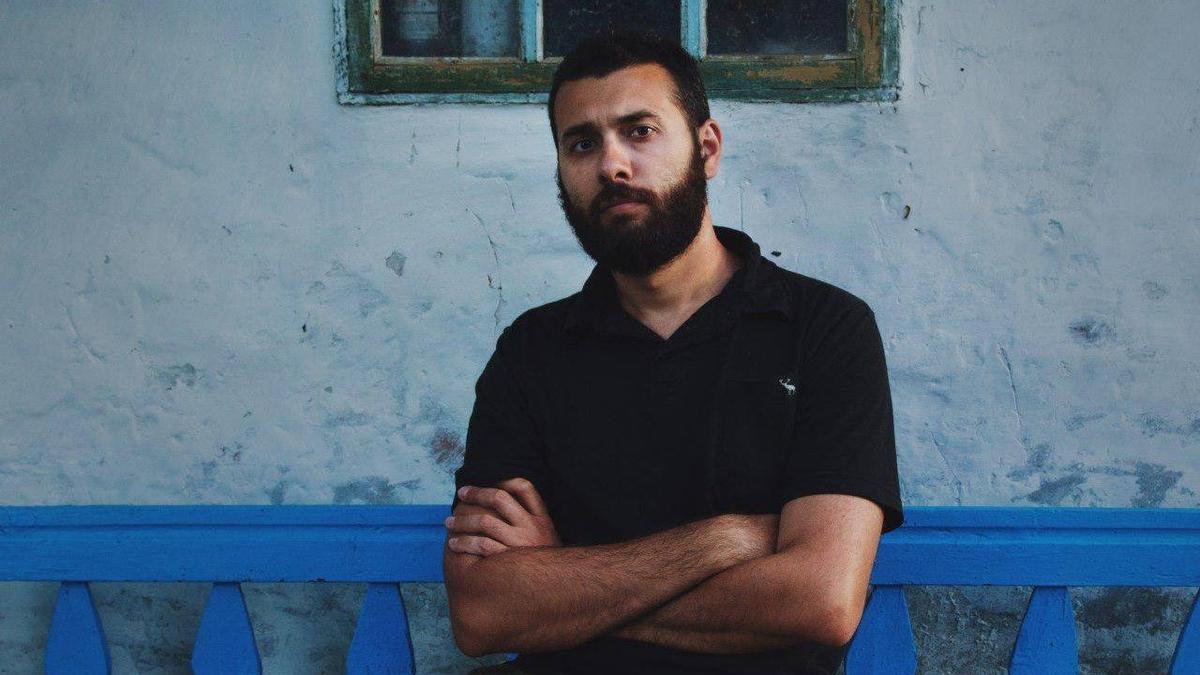
Russia will not give up on the most effective period for strikes: political analyst Maksym Honcharenko
To put it briefly: there is almost no chance of a full-fledged “energy ceasefire” this winter. Such prospects appear in the optimistic forecasts of our Western partners, but reality tells us otherwise. And while it’s still possible to speculate about specific agreements, a comprehensive solution involving a temporary halt to hostilities is a far too unrealistic scenario.
Why is this the case? First and foremost, because of Russia’s strategic logic. Energy blackmail is a tried-and-true tool for the Russian Federation, one that Moscow has been using throughout the years of its full-scale invasion. The goal is to undermine Ukraine’s negotiating position and weaken it on diplomatic and domestic humanitarian fronts. Ideally, Russia wants to see a society exhausted by the energy crisis and a collective desire to “stop all this at any cost.” Winter is the period when this strategy is most effective. Strikes against the energy sector are more severe, so Ukrainian society suffers more devastating losses. Russia will not pass up the most effective time to strike, even under pressure.
The second reason is a lack of trust. Even if formal agreements are reached by both sides, there will still be a high risk of provocations. Each side will accuse the other of violating the moratorium. As a result, we will see retaliatory strikes or preemptive measures. One way or another, the agreements—even if both sides have agreed to them—will be violated due to “local skirmishes,” and the chain of “retaliations” will nullify any peace initiative.
However, is this initiative hopeless? No. Ukraine has had experience with local agreements. A striking example is the temporary ceasefire around the Zaporizhzhia Nuclear Power Plant (ZNPP) initiated by the IAEA. But this still involves local solutions within a narrow timeframe, rather than a comprehensive halt to shelling.
It would be more realistic for Ukraine to count on a winter support package from partner states. For example, strengthening air defense, increasing arms deliveries, or providing financial aid. These are the kinds of things that parties with a direct interest in Ukraine’s stability can offer. There is also a possibility of targeted agreements (for example, regarding the protection of nuclear power facilities). But for now—nothing more.

There is a
chance for a truce, but it’s not that simple: Ruslan Bortnik, director of the Ukrainian Institute of Politics
A ceasefire in the energy sector as a whole can be achieved, but it cannot follow a linear pattern. To put it simply, exchanging ports for ports, energy facilities for energy facilities, or airspace for airspace is virtually impossible. After all, Russia believes it holds the upper hand. It has more ports, greater airstrike capabilities, and a larger territory—not all of which we can target, nor can we strike all of Russia’s energy facilities.
That is precisely why a linear exchange—let’s say, “let’s work out an energy ceasefire”—such ceasefires are impossible. They are possible only if they are part of an additional agreement with the U.S.: for example, the U.S. would ease sanctions on Russian energy exports for the duration of the truce, or conversely, compensate Ukraine with additional Patriot missile systems. In other words, a “balancing stone”—an additional counterweight—is needed to balance the interests and capabilities of the parties. Only then would energy truces, air truces, and so on be possible. But to level the scales, additional steps are needed from the U.S. or Europe—greater involvement in this process—so that the parties can find a balance between themselves.
A simple, linear exchange for a ceasefire doesn’t work, because Russia is convinced that it holds the upper hand in both military capabilities and international trade. And it is not as critically dependent today on Ukrainian strikes, or on blocked ports in the Azov or Black Seas, or on agricultural exports, as Ukraine is. Therefore, the chances for some kind of ceasefire will remain, especially until the U.S. election is over. But the fate of this ceasefire lies in the hands of the U.S., Europe, China, and external actors who have significant influence over both Russia and Ukraine.

The
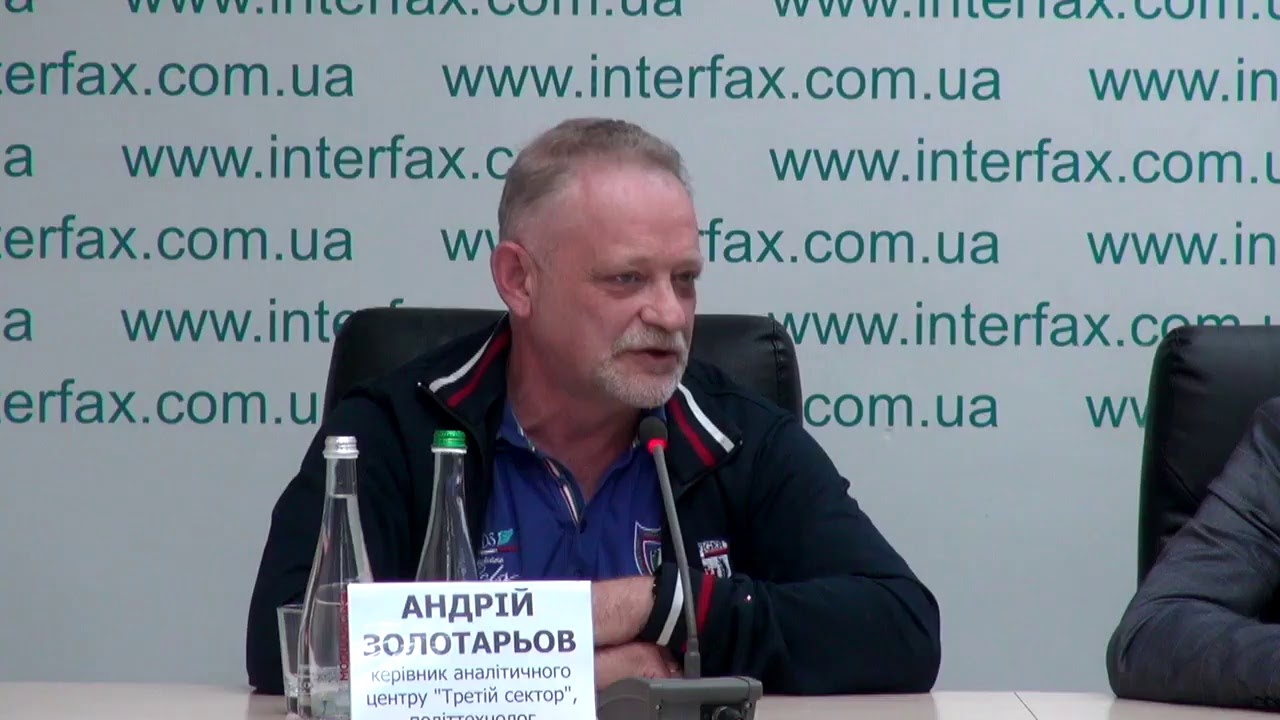
threat of a “black winter” is not hypothetical: Andriy Zolotaryov, head of the “Third Sector” Center
During Witkof and Kushner’s visit to Kyiv and Moscow, the possibility of a sectoral ceasefire—covering the energy sector and grain exports—was indeed discussed. This is precisely because the issue of global food security is urgent.
On the one hand, energy is indeed a vulnerability for Ukraine. And given that the Russians have plenty of additional weapons—from “Iskander” missiles to cruise missiles—the threat of a “black winter” is not hypothetical. And here, Ukraine has a certain interest. But from the Russian side, it must be said that strikes on Russian oil refineries, the energy sector, and logistics simultaneously could create a domino effect for Russia’s rear.
A new wave of attacks on the energy sector could affect not only businesses and ordinary residents but also hospitals, water supply systems, and communications. That is precisely why strikes on Russian power plants could lead to widespread disruptions if several facilities are damaged. Certain regions risk facing prolonged power outages, as is currently the case in Crimea. Furthermore, Ukraine’s expansion of its long-range capabilities and the development of its own ballistic missiles pose a new level of threat to Russian rear-area targets.
That is why there is a certain likelihood that such an energy-sector ceasefire will be reached. But the chances of this are quite slim. I wouldn’t say there are none at all, but they are slim. And perhaps during the trilateral meeting mentioned by Kushner and Witkoff, this issue might make some progress. On the other hand, perhaps something will be discussed during Zelenskyy’s visit to the United States for the UN General Assembly session, perhaps during a meeting with Trump. We’ll see.
The main thing is that the likelihood of this scenario could increase if a proposal regarding the venue and timing of such a trilateral meeting is put forward fairly soon. Whether it’s Switzerland, Turkey, the United Arab Emirates, or Saudi Arabia—these countries are not considered to be supporting one side or the other in this war.




