
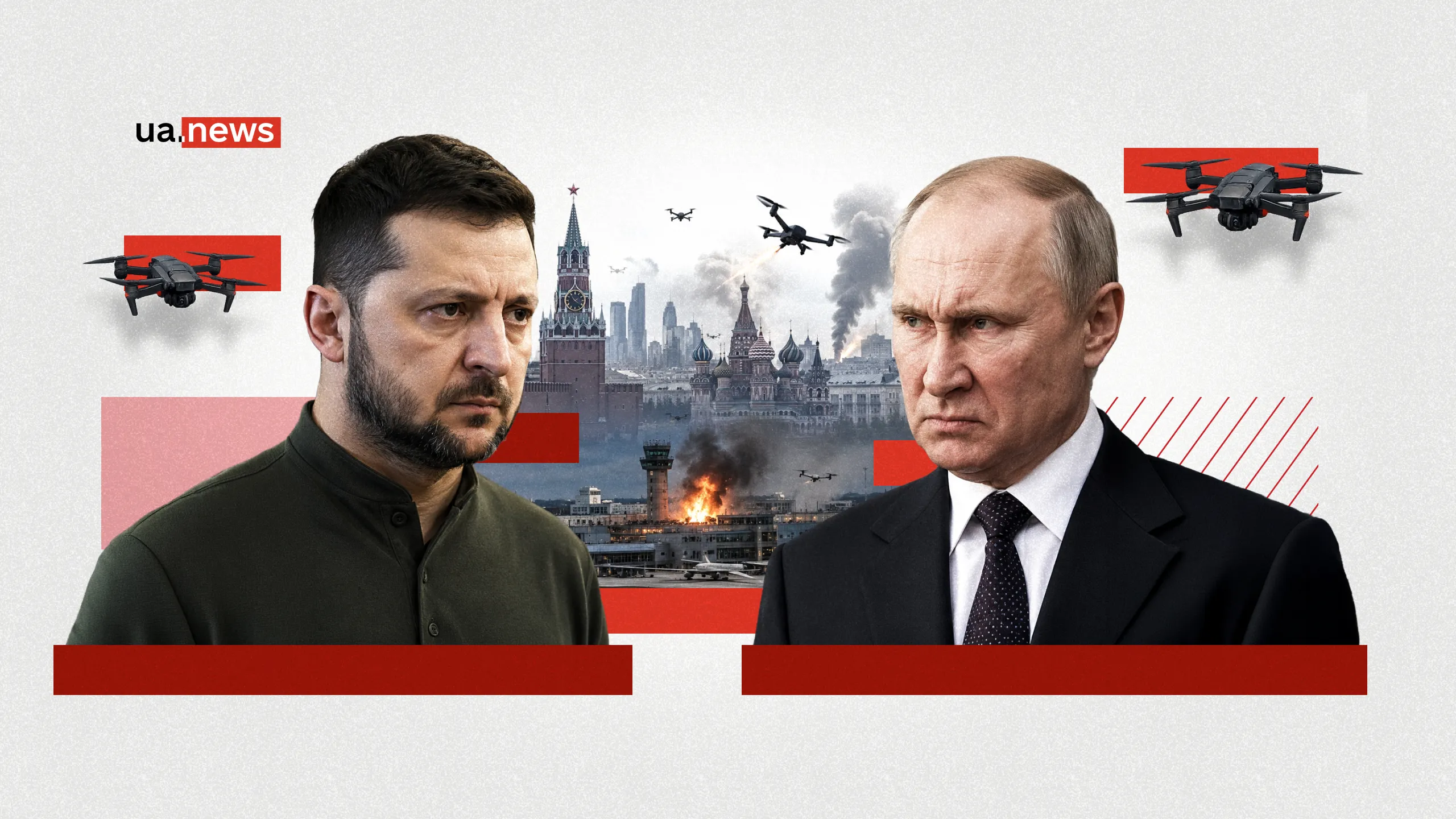
Recently, the war in Ukraine has ceased to resemble even that brutal reality to which everyone had more or less grown accustomed over the past few years. It has very quickly entered a new phase, where the boundaries between the front lines and the rear, between military and civilian targets, have been completely erased. This is most evident in Kyiv, which, just like Kherson, Kharkiv, or Sumy, now lives around the clock to the sound of air raid sirens and explosions. At the same time, Russia is systematically targeting all kinds of warehouses—from food distribution centers to logistics hubs for household appliances. As a result, shelves in many Ukrainian supermarkets are now half-empty or even completely empty.
Peace talks, which have been on hold since February, have finally become a thing of the past. Both sides are openly preparing for new, even larger waves of attacks against each other. Indeed, yesterday President Zelenskyy made an unprecedented statement that “the Russian sky belongs to Ukrainian drones.” He warned both Russian and, above all, international civil aviation against flying in Russian airspace. This was a clear hint at preparations for operations against Russian airports.
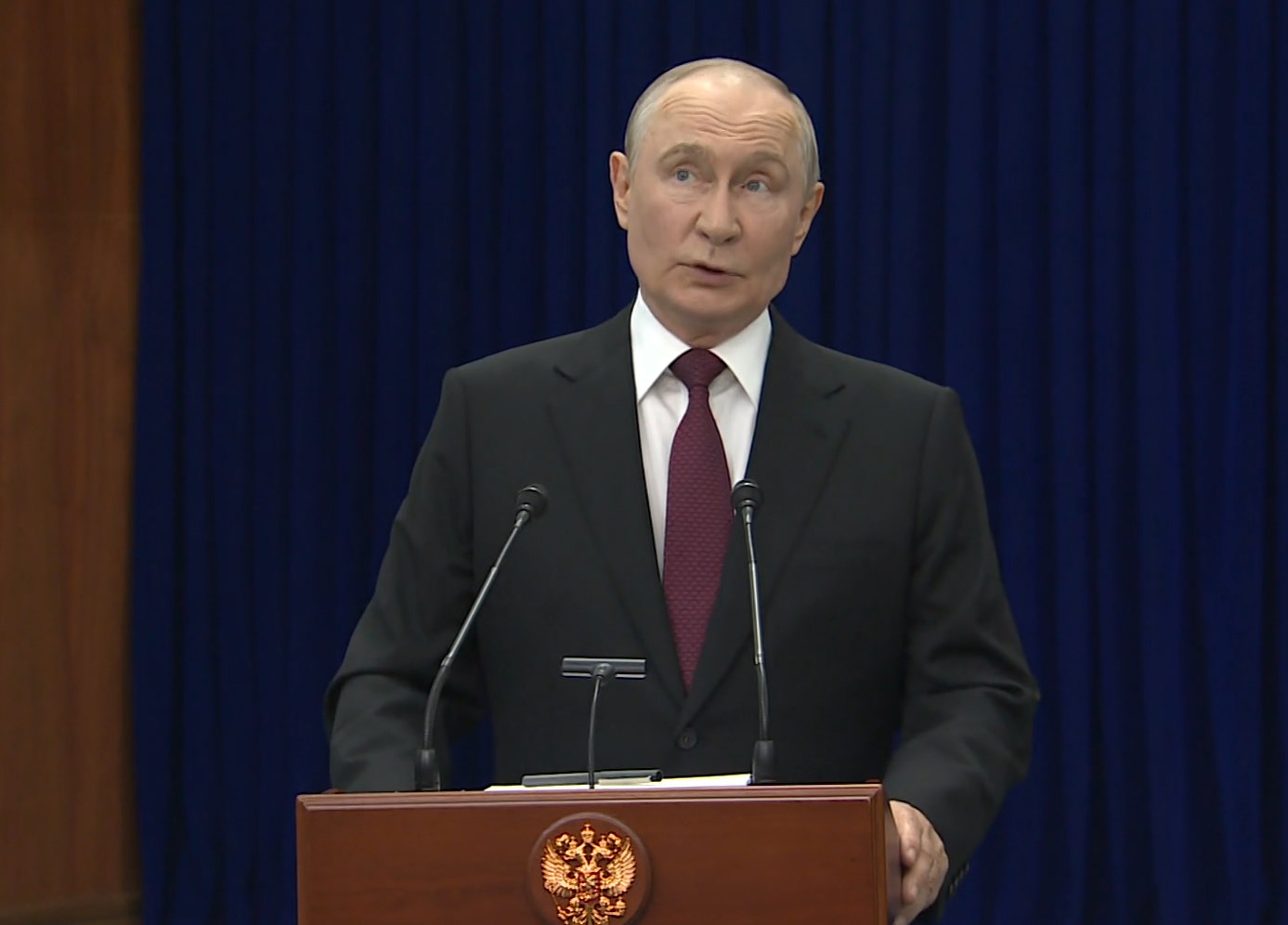
The Kremlin’s reaction was unusually swift. That same evening, Putin appeared before the press, calling such statements “terrorism,” declaring that “there are no negotiations with terrorists,” and promising to “find a way to respond.” As the first act of this “response,” he ordered the resumption of massive attacks on Ukraine’s energy infrastructure—attacks that had not occurred for nearly half a year.
What lies behind all these statements and developments? How is a war of “controlled chaos” escalating into uncontrolled and total chaos? Is it possible to stop one step from the brink and return to the idea of negotiations and diplomacy? UA.News political analyst Mykyta Trachuk, together with experts, examined the issue.
Airports as a New Target: Is Operation “M&Ms” Working?
To understand the meaning of Zelenskyy’s statement, we must look back at recent leaks in Western media. These reports concerned the alleged existence of a plan within the Ukrainian leadership for an operation codenamed “M&Ms.” The idea was to paralyze air traffic within Russia—or at least in its key cities, Moscow and St. Petersburg—through continuous UAV attacks. In other words, to do essentially the same thing that the Russians are currently doing to Kyiv.
According to Western media reports, Zelenskyy initially reacted to the idea with skepticism. After all, if a civilian aircraft carrying ordinary people were shot down as a result of such an operation, the international reaction could be catastrophic for Ukraine. Kyiv certainly does not need its own “Malaysian Boeing.”
But yesterday’s statement by the head of state effectively confirmed that this scenario had been on the table, waiting for the right moment. The question arises: why now?
The first and most obvious answer: it’s a reaction to Russia’s relentless rocket and drone terror. Kyiv has, objectively speaking, not yet figured out how to deal with such attacks or how to deliver a proportionate response. Meanwhile, fear, anxiety, exhaustion, and a sense of helplessness are building up among the public. Against this backdrop, a potential attack on key Russian airports appears to be an attempt to demonstrate strength and regain the initiative by mirroring the suffering of millions of people on the other side of the border.
A second possible response may lie on the international stage. Yesterday, Germany officially accused Russia of orchestrating a sabotage attack against an airplane at the Leipzig airport. Berlin was supported by other European capitals as well. It is quite possible that Zelenskyy decided to “join” this case, so to speak—especially considering that it involved a Ukrainian aircraft at a German airport.
However, the main question is not about Zelenskyy’s motives, but about the feasibility of this threat. Is Ukraine technically and economically capable of sustaining a continuous drone “harassment campaign” against dozens of airports across the Russian Federation at once—including in St. Petersburg and Moscow, Russia’s most heavily defended cities? It is difficult to give a definitive answer at this point, but it is safe to say that nothing of the sort has been observed before. This is extremely difficult in a purely practical sense. However, the very fact of the Ukrainian president’s statement could serve as a psychological weapon against foreign carriers: Turkish, Chinese, Emirati, Kazakhstani, and others. It’s still difficult to draw conclusions here—we’ll see what happens in the near future.

The Kremlin’s
Response: “Terrorism” and Betting on an Energy Collapse
Putin’s reaction was unusually swift: it was as if the Kremlin had been just waiting for an excuse. The Russian dictator personally addressed the press and issued a public response. In particular, Putin called such plans “terrorism” (although, aside from statements, no actions have been taken yet—and who would even say such a thing?), declared that “the Russian Federation does not negotiate with terrorists” (which did not prevent Moscow from negotiating, for example, with the “Taliban”) and threatened Ukraine with new massive strikes on its energy infrastructure, stating that he had already issued the relevant order.
Accusations of “terrorism” coming from the Kremlin leader’s mouth seem, of course, particularly cynical, given Russia’s constant terror. This is an attempt to legitimize any future actions against Ukraine and to justify both its own, even more brutal, strikes and its unwillingness to negotiate—as if to say, “With whom? With ‘these Kyiv terrorists’?” Although it’s worth noting that during wartime, airports are considered legitimate military targets: Russia itself attacked every single Ukrainian airport without exception at the very start of its full-scale invasion. Furthermore, the Ukrainian side has specifically emphasized that civilian aviation is not a target of potential strikes.
The question on everyone’s mind right now is: How exactly will Putin respond? The news of the resumption of massive strikes on the energy sector is likely just the first, most predictable step. Some, in a panic, have once again begun talking about a nuclear threat, but even in response to potential attacks on airports, a nuclear strike remains unlikely—at least, that’s what we’d like to believe.
Most likely, Moscow will resort to the methods it is already using, but on a much larger scale. The strikes will become even more widespread (though, one might think, how much more widespread can they get!) and will also target new critical infrastructure facilities. These include water supply and wastewater systems, sewer networks, and so on. We should not rule out the demonstrative use of new types of weapons, such as the “Oreshnik,” as a tool of intimidation.
Putin also issued direct threats against Britain and Europe as a whole. However, Russia will most likely not dare to directly attack NATO territory—the cost of such a move could be too high.
Europe at a Crossroads
The most dangerous aspect of the current situation for the world lies not in the confrontation between Kyiv and Moscow (which primarily affects Ukrainians, but by no means the world), but in Europe’s potential involvement. Zelenskyy’s statement regarding Russian airports—regardless of whether it was coordinated with the Europeans or not—puts them in an extremely awkward position. Moscow could interpret attacks on Russian airports as a joint Ukrainian-European action, especially against the backdrop of the Leipzig scandal.
There is clearly a powerful lobby in the Kremlin advocating for tougher pressure on Europe, based on the assumption that Europeans are not willing to risk a nuclear apocalypse for Ukraine’s sake. Therefore, sooner or later, Moscow may resort to issuing ultimatums. This is a dangerous game, as this calculation could prove to be wrong. But if the situation appears to be such that Kyiv and Europe were the first to escalate the conflict—and Moscow is skillfully using its information resources to portray it that way—then the likelihood of drastic steps by Russia increases.
Thus, European leaders find themselves in a trap. On the one hand, they cannot publicly support strikes on airports, especially if something were to happen to a civilian aircraft or ordinary passengers. On the other hand, they cannot openly condemn Ukraine either. Most likely, the West’s reaction will be, as always, lukewarm and restrained: calls for limited de-escalation—which no one will heed anyway—and, at the same time, continued funding for a war that constantly gives rise to new and similar challenges.

Expert
Opinions
Political scientist and head of the Institute of World Policy, Yevhen Magda, is convinced that these two things must be kept separate: Zelenskyy’s statements and Putin’s statements
“Volodymyr Zelenskyy’s statement that Russian airspace is open to Ukrainian drones serves as a warning not only to Russian civilian airlines but also to those foreign companies that continue to fly to Russia. And there are such companies. Meanwhile, what Putin said at a press conference for the Russian media—note, only for the Russian media; no foreign media were present— despite the fact that they call the SCO an influential international organization—well, what Putin said is an example of creating a parallel reality. These are stories about things that don’t exist and cannot exist. An example of how a person simply projects his delusions onto reality. And he does so quite consistently, brazenly, and cynically. There’s really no need to even draw comparisons here, because when the leader of an aggressor country calls the country that is the victim of aggression a “terrorist,” it is, to a large extent, simply a condemnation of the system of international relations. We must understand this, take it into account, and draw the appropriate conclusions. Unfortunately, the international community continues, to a large extent, to view Putin as a partner. And that is very bad. But the fact that Ukraine is exercising its right to self-defense, as defined by international law, is a normal process, and it will continue to do so. No one should have any doubts on this matter,” Yevhen Magda is convinced.
Political scientist and head of the “Penta” Center for Applied Political Studies, Volodymyr Fesenko, views the statements by the leaders of Ukraine and Russia as a reflection of the escalation of a war that had already begun even without these statements.
“We’ve heard—and from Zelenskyy in particular—that there’s no reason to expect the Russians to agree to peace talks. Russia is preparing for an escalation of the war. All of this is confirmed by intelligence data, specific statements, and, most importantly, concrete actions. We see this every day, including new tactics in the air war. Zelenskyy’s words about closing Russian airspace are a kind of instrument of cognitive warfare. An attempt to demonstrate to the Russians that we, too, have an asymmetric response to Russian aerial terror. You’ve caused us so many problems with constant air raid alerts and the destabilization of normal life in the capital, so we’ll make things just as bad for you—but in a different way.
Putin says this is state terrorism and so on—but in Russia itself, they’re laughing at this. People in their social media circles are laughing: they say, “We can do anything, but the Ukrainians can’t do anything”—is that how it goes? And who shot down the Malaysian Boeing back then? So what’s the big deal? Putin is accusing Ukraine of doing exactly what Russia has been doing for a long time. Moreover, Zelenskyy specifically stated that Kyiv has no intention of threatening civilian aircraft; instead, the focus should be on attempting to halt regular air service as such. Although I don’t know to what extent we have the resources to do that. “In other words, this is a form of asymmetric response to Russian terror,” noted Volodymyr Fesenko.
To sum up, the key conclusion from this entire situation is as follows: the war is rapidly entering a completely uncontrolled phase. What is happening now can hardly even be called a “controlled escalation”—it appears (almost) uncontrollable. It is rather systemic chaos, where each side acts with the logic of escalation for escalation’s sake.
Things are flying constantly, flying everywhere—anything that can fly is flying anywhere—just to inflict as much damage as possible on ordinary people. Political dialogue has been completely destroyed, diplomacy lies in ruins, and the leaders’ statements are as direct and unambiguous as possible, leaving no room for retreat. This has long since ceased to be merely a war over something specific: for example, territory, resources, or some vision of the future. What is happening resembles a war against peoples, a war against normal life and the future as such—a war for war’s sake, where the sole objective is not victory on the battlefield, but the creation of unbearable living conditions for the enemy.
And a very difficult fall and winter lie ahead. A winter without light, without heat, and perhaps, in the worst-case scenario, even without water or sewage services for millions of Ukrainians. A winter when millions of Russians, too, may finally experience this kind of “life” to the fullest—for the first time in all these years. And all of this is happening against the backdrop of a complete absence of any peace initiatives.
To stop at the edge of the abyss, to halt this train car hurtling at full speed down the tracks toward the void, to simply sit down at the negotiating table and put an end to the constant terror against one another—right now, this seems like a utopian fantasy. No one will take the first step back, just as no one will take a step toward the other side. Under the current circumstances, this seems even more fantastical than the arrival of aliens or time travel. That is precisely why the spiral of violence will continue to escalate—all the way to the point of no return, which will inevitably come sooner or later and whose consequences will be irreversible for everyone.


