
What religious holiday is celebrated on July 11?

On July 11 according to the New Julian calendar, the Orthodox Church of Ukraine commemorates Saint Olga, Princess and Equal-to-the-Apostles. She was the first female ruler of Kievan Rus’ to embrace Christianity and did much to spread the new faith.
On this day, believers reflect on her life, pray to the saint, and extend greetings to all women named Olga. In folk tradition, this holiday has also been associated with omens, fieldwork, and special traditions.
On July 11, the Orthodox Church of Ukraine, following the New Julian calendar, honors the memory of Saint Olga, Grand Princess and Equal to the Apostles—one of the most important figures in Ukrainian history. She became the first female ruler of Kievan Rus’ to embrace Christianity and began spreading the new faith long before the Baptism of Rus’.
It was thanks to her efforts that the foundations were laid for the future baptism of the state, which was later carried out by her grandson, Prince Volodymyr. On this day, all women named Olga also celebrate their name day.
Who Was Princess Olga?
According to historians, Olga was born around 910. Her Varangian name, Helga, meant “sacred.” She became the wife of Prince Igor of Kyiv, and after his death in 945, she effectively took charge of Kievan Rus’, as her son Sviatoslav was still a minor.
During her reign, the princess proved herself to be a strong and far-sighted ruler. She streamlined the tribute collection system, strengthened the state, developed diplomatic relations, and worked to consolidate Kyiv’s power. One of the most significant events in her life was her baptism.
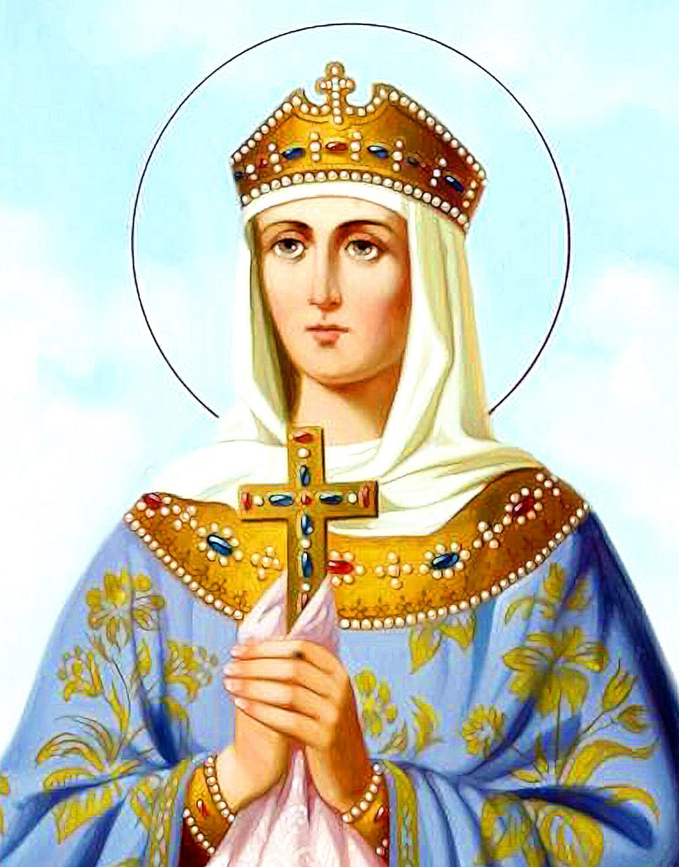
In 955, Olga arrived in Constantinople on a diplomatic mission. It was there that she converted to Christianity and was given the name Helena. The baptism was performed by the Patriarch of Constantinople, and the Byzantine Emperor Constantine Porphyrogenitus served as the princess’s godfather. Upon her return to Kyiv, Olga began actively spreading Christianity. She built churches, supported priests, destroyed pagan shrines, and tried to convince her son Sviatoslav to adopt the new faith.
However, Prince Sviatoslav remained a pagan until the end of his life. Saint Olga died on July 11, 969. She bequeathed that she be buried according to Christian rites. In 1547, the Orthodox Church canonized the princess as a saint equal to the apostles—those whose ministry is equated with that of the apostles in the spread of Christianity. In addition to Princess Olga, on this day the Church also honors the memory of the holy martyr Kindius and commemorates the miracle of the Great Martyr Euphemia the All-Praised.
Prayer to Saint Princess Olga
“O Holy Princess Olga, Equal to the Apostles, pray to God for us. Intercede for our people, that they may have peace, unity, wisdom, and a strong faith. Help us to live according to God’s commandments, strengthen us in good deeds, protect us from all evil, and teach us to be sincere in our love for God and our neighbors. Amen.”
Folk Traditions of This Day
In the folk calendar, the holiday was called “Olga the Harvester,” since the harvest and other fieldwork were in full swing during this period. It was believed that the day was especially favorable for working in the vegetable garden and orchard. People would transplant flowers, weed the garden beds, fertilize the soil, and tend to the plants. It was also customary on this day to pray for a bountiful harvest, the health of the family, and peace in the home.
Folk Signs for July 11
Our ancestors closely observed nature. Among the most well-known signs are:
- heavy morning dew — a poor harvest of cucumbers and tomatoes;
- thunder — fishing will be successful;
- a sunny and hot day — a good grain harvest is coming;
- plenty of mosquitoes and gnats — there will be plenty of mushrooms in the fall;
- restless bees — it will soon get even hotter;
- Leaves are starting to fall from the trees—autumn will come early.
What People Were Advised Not to Do on July 11
According to folk beliefs, people tried not to do laundry, sew, or do major cleaning on this day. It was also advised not to lend money, food, or any belongings, as it was believed that doing so could lead to losing one’s own prosperity. Another tradition was to avoid arguments, insults, and harsh words. Our ancestors believed that the day should be spent peacefully, with good thoughts and prayer.


