

Everyone is talking about the catastrophic state budget deficit today—from members of parliament to the president himself. This is a financial reality that is becoming increasingly evident with each passing day. The budget adopted for 2026 projected revenues of 2.9 trillion hryvnia and expenditures of 4.7 trillion. The deficit stands at approximately 2.4 trillion hryvnia, or 18.5% of GDP. At the same time, there are currently simply no sources to cover a significant portion of this deficit—some 800 billion hryvnia. And although there are still several months left until the end of the year, it is already clear: the money is not missing because (or not only because) it was embezzled, lost, or not collected in time. It is missing because there is simply nowhere to get it.
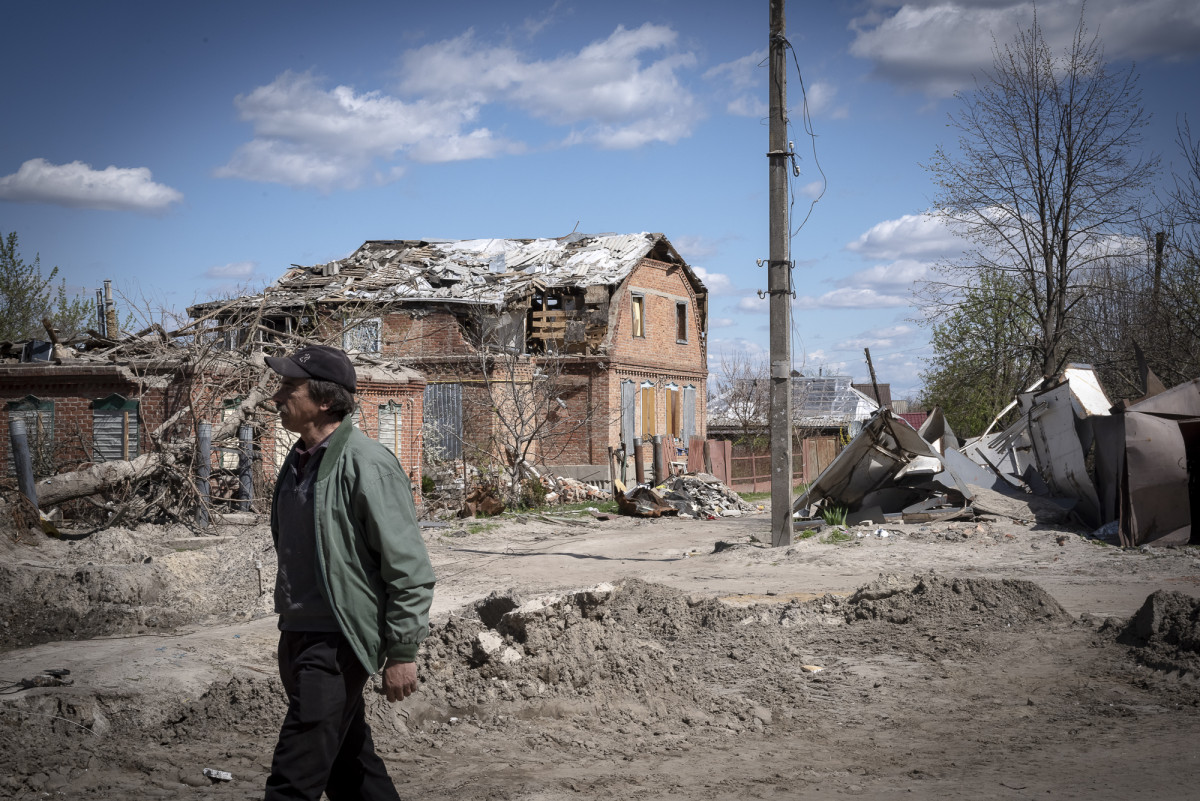
This is a fundamentally important shift in the very logic of how public finances operate. Previously, although the budget was heavily dependent on foreign aid, it still had a strong domestic foundation: industry, the agricultural sector, the service sector, transportation, energy, and so on. These sectors created jobs, filled local and national budgets, generated export revenue, and so on. Today, however, this foundation is being relentlessly eroded—not only due to negligence or corruption (though these certainly play a role), but because of the all-encompassing nature of the war.
How is the war physically destroying everything that used to fill Ukraine’s state budget? What sustained it in the first place? UA.News political analyst Mykyta Trachuk looked into the issue.
What Fueled the Budget and What Remains
Until recently, the Ukrainian budget relied on several key sources. Tax revenues traditionally formed the basis of income: in 2025, their share of total state budget revenue amounted to about 53% of total revenue. But behind these percentages lies a specific economy: steel mills, agricultural enterprises, cargo-handling ports, service sector companies, and so on.
The steel industry, in particular, was one of the pillars of the Ukrainian economy. Before the full-scale invasion, the mining and steel complex accounted for over 10% of the country’s GDP, but by the end of 2025, that figure had dropped to just 5.5%. This was an industry that did not merely produce and export goods but shaped entire industrial regions: Dnipro, Zaporizhzhia, Kryvyi Rih, Mariupol...
Today, however, the situation is radically different. Steel production in 2025 stood at 7.4 million metric tons. Only six metallurgical enterprises remain in territory controlled by Ukraine—down from nine before the full-scale invasion. A particularly severe blow was the halt in coking coal mining in Pokrovsk, which accounted for 66% of the Ukrainian coking coal market in 2024. As a result, Ukraine lost approximately 64% of its coke-chemical production capacity. Exports of mining and metallurgical products in 2025 totaled $6.2 billion—15.2% of Ukraine’s total exports.
For a long time, the agricultural sector was the second-largest source of foreign exchange earnings and tax revenues. It accounts for about 17% of GDP and generates nearly half of foreign exchange earnings. But today, a significant portion of agricultural land is mined, located in a combat zone, or under occupation. Where work can still be carried out somehow, another problem arises: how to transport the harvested crops? The Black Sea ports have been de facto blocked for several months now. In 2025–26, Ukraine exported over 41 million metric tons of grains and oilseeds—12% less than in the previous season. In 2025, Ukrzaliznytsia transported 25.4 million metric tons of grain for export—25% less than the previous year.
The service sector is another industry that, until recently, generated significant revenue for the budget through personal income tax, VAT, and local taxes. Today, however, it is literally suffocating. Constant air raid alerts are forcing businesses to halt operations; the rising tax burden is making many types of business unprofitable; mobilization is literally decimating the workforce; the “nightmare” of tax officials and security forces continues unabated; logistics costs are rising, and so on. Targeted raids on warehouses, sorting centers, and retail facilities are creating additional pressure. As a result, domestic demand is weakening, and with it, budget revenues are disappearing. Net revenues from domestic VAT in December 2025 amounted to 28.2 billion UAH—30.5% below the target.
The energy sector deserves special mention. Today, not a single intact power plant remains in Ukraine. This means not only power outages for the public but also direct losses for industry, which cannot operate steadily. Companies are forced to buy expensive generators, cut back on production, or shut down entirely. The logic is simple: less production means less tax revenue.

War as an Economic Catastrophe: Why the Tax Base Is Disappearing
When experts and politicians say there is no money in the budget, they usually cite two reasons: insufficient aid from partners and the “infamous” Ukrainian corruption. Both are indeed true. But there is a third reason that is often overlooked, even though it’s essentially the “elephant in the room”: in Ukraine, the very base from which taxes could be collected is physically disappearing. It’s not that people don’t want to pay; it’s that there’s simply no one left to pay, and nothing left to pay with.
The metallurgy sector has already been virtually destroyed as a system-forming industry. The remaining plants are operating at the break-even point due to high energy costs, raw material shortages, and export difficulties. Industry as a whole is shrinking. The remaining businesses are either moving into the shadow economy, losing profitability, or artificially lowering their tax base. But even systematic tax evasion by entrepreneurs does not explain the scale of the problem. The main issue is that the economy itself is contracting.
The agricultural sector, which has shown remarkable resilience all these years, is also losing momentum today. Fields mined or burned by the war represent more than just a lost harvest: they represent the loss of the very ability to grow anything at all in these areas for many years to come. Occupied territories mean lost businesses that no longer pay taxes to the Ukrainian budget. Hostilities mean destroyed infrastructure that must be endlessly rebuilt, rather than generating revenue.
Logistics is a major headache in its own right: even the grain that has been harvested cannot be transported in the volumes that were possible in the past. “Ukrzaliznytsia”—the key carrier—ended 2025 with losses exceeding 7.6 billion UAH. Ukrzaliznytsia’s liquidity shortfall in 2026 is estimated at 40–49 billion hryvnias, even though the railway is critically important for national defense and exports.
The same is happening in the service sector, the energy sector, and in every business—everywhere you look—except, perhaps, for defense enterprises and those businesses that produce everything necessary for war. However, it is important to understand that, from a market perspective, military production is money “buried in the ground”—in the literal sense of the word. Such products have very low liquidity: a tank costing millions of dollars can be destroyed in its very first battle; a bulletproof vest can be shot through and will have to be scrapped; tens of thousands of drones are “burned up” every day as soon as they roll off the assembly line, and so on. From the perspective of national defense, all of these products are critically necessary; however, from a market perspective, building an economy solely on military production is a dead end.
Partners as the Last Hope: Why Foreign Aid Doesn’t Solve the Problem
In 2025, Ukraine’s total budget expenditures reached a record $131.4 billion, with a deficit of $39.2 billion. The main driver of spending growth was defense and security needs, which accounted for 71% of all expenditures, or $93.3 billion. In other words, the lion’s share of budget resources goes toward the war rather than development, and this figure is growing almost exponentially every year. The problem is that these expenditures are nowhere near being covered by domestic revenues.
In this context, funding from international partners—in the form of loans and grants—is critically important. In the first half of 2026, funds from the EU and other partners covered more than one-fifth of budget revenues. After accounting for $13.1 billion in grants, the central budget deficit narrowed to $6.9 billion in the first half of this year—47% less than last year. But if donor funds are excluded, the actual deficit rose by nearly 10%—to $20 billion. In other words, without external aid, the budget shortfall would have been even larger.
At the same time, this aid is not unlimited. Some of the funds arrive late, and a significant portion comes in the form of loans that will eventually need to be repaid. In December 2025, the European Council approved a new support instrument for Ukraine: a €90 billion loan for 2026–2027, which will be repaid only after receiving reparations from Russia (a very optimistic expectation!). Of this amount, 30 billion will go toward general budget support, and another 60 billion toward military aid. The IMF and Ukraine have also reached an agreement on a new four-year program worth $8.1 billion. In total, Ukraine expects to receive $46.5 billion from foreign partners in 2026. But even these amounts are, first of all, insufficient, and second, not guaranteed.
The problem lies not only in the volume of aid but also in its structure. Grants cover current expenses but do not lay the groundwork for future growth. Loans will eventually need to be repaid, something no one is thinking about or talking about right now. Military aid, meanwhile, does not translate into tax revenue. This creates a vicious cycle: to revive the economy, investment is needed; to attract investment, security is needed; to ensure security, money is needed; and to secure money, a functioning economy is needed.
Corruption also remains a very serious problem, causing the budget to lose tens of billions. But even if it were possible to completely eliminate it, that would not solve the structural problem: Ukraine’s tax base is physically shrinking. Steel mills have been destroyed, agricultural land is mined or devastated, ports are blocked, the service sector is shrinking, the energy sector is under fire, the railways are operating at a loss, and so on. This is no longer even a question of management efficiency (though there are plenty of criticisms of inefficient management!)—it is a question of the economy’s physical capacity to generate revenue.

In
summary, the Ukrainian budget has found itself in a trap from which there is no easy way out. A deficit of 2.4 trillion UAH, or nearly 20% of GDP, is not just a number. Behind it lie ruined factories, mined fields, blocked ports, a loss-making railway, a deteriorating service sector, and an exhausted energy sector. Aid from partners is insufficient and cannot replace the country’s own economic base. Grants cover current expenses but do not create jobs. Loans help us survive today but create a debt burden that will last for decades to come.
The only realistic way out of this situation is to end the war. Peace—or at least a ceasefire—will allow for the reconstruction of what has been destroyed, the demining of land, the reopening of ports, and the restoration of the energy sector. Without this, any financial injections will be merely temporary support that will not change the fundamental dynamics: the tax base will continue to shrink, and the deficit will continue to grow. In all other scenarios—the continuation of the war, a protracted stalemate, or relying solely on partners—this is a one-way road with a predictable outcome. And the longer the war lasts, the less will remain of the economy.




