
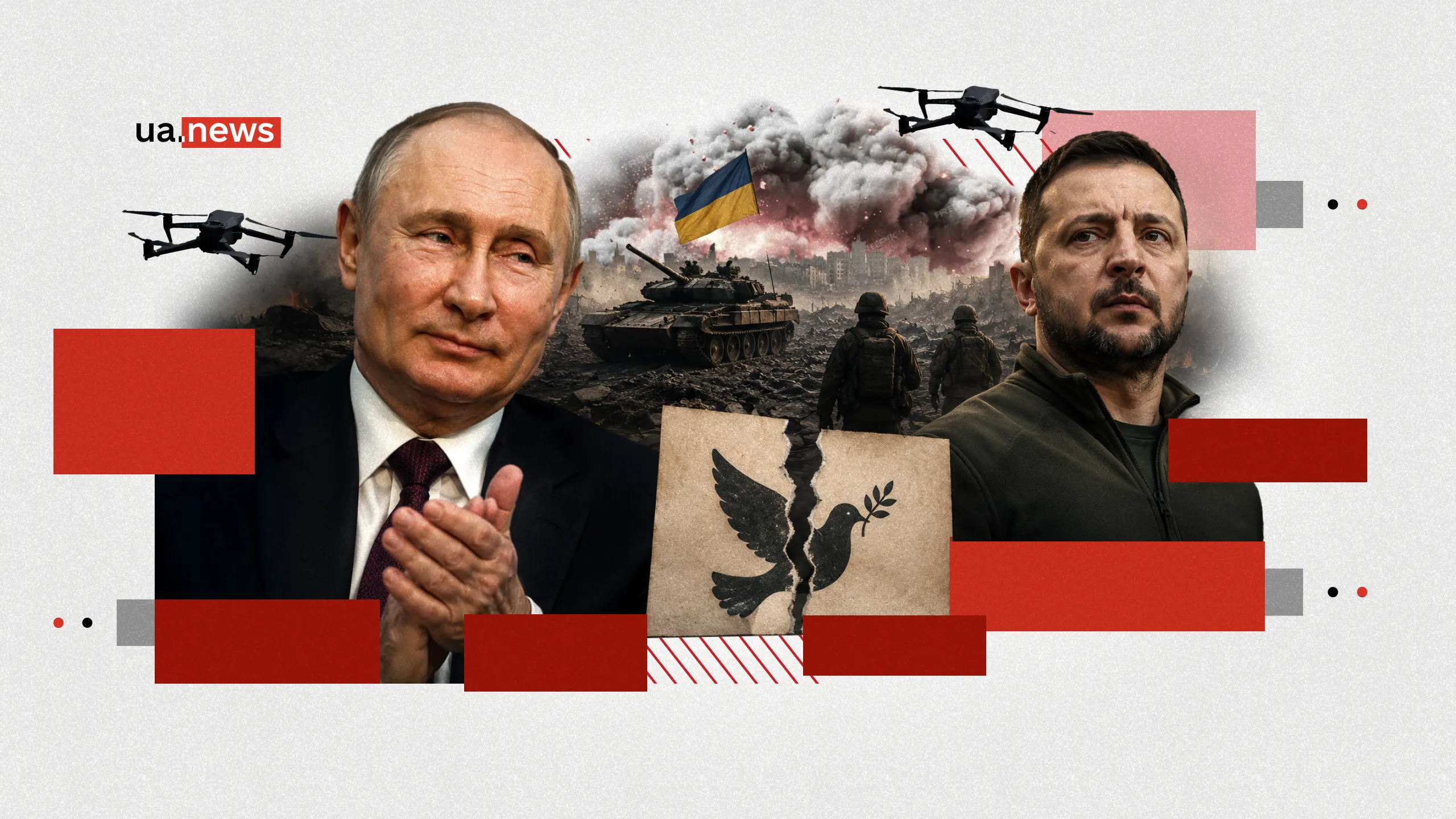
On Saturday, May 9, a Victory Day parade did take place in Moscow—albeit in a scaled-down version. Nothing particularly interesting happened: since a ceasefire was in effect during those days, there were no provocations, which the Kremlin had so feared. However, one of Putin’s statements still sparked a storm of reaction in the media: the Russian dictator declared that “the conflict with Ukraine is nearing its end.”
These statements stirred up the media and sparked a wave of cautious optimism. Bookmakers reacted instantly to the shift in rhetoric, and shares of Western defense companies plummeted. This was because, throughout the years of the war, the Russian leader had never before allowed himself to make such statements. For many, this created the mistaken impression—unfortunately—that the war is indeed coming to an end.
However, if we set emotions aside and look at the full picture of what is happening, it becomes clear: there are currently no real grounds for a sense of “de-escalation.” What we heard was not a diplomatic breakthrough, but rather an attempt at tactical maneuvering against the backdrop of growing internal tensions in Russia.
Why, in reality, has Putin never wanted—and still does not want—to make peace as soon as possible, and why is this merely a matter of manipulation and political rhetoric? UA.News political analyst Mykyta Trachuk, together with experts, examined the issue.
The Deceptive Context of the Three-Day “Ceasefire”
The general backdrop against which the Russian dictator’s words were spoken did indeed appear relatively non-aggressive, which played a key role in creating the illusion of a swift end to hostilities. For the first time in a long while, we saw not an escalation in rhetoric but a situational de-escalation of tensions. Throughout May 9, contrary to expectations of massive attacks or even strikes on Moscow, the parties more or less adhered to the ceasefire (at least, there were no long-range strikes). This three-day respite, which resulted from direct pressure from the U.S., was also seen by many as a harbinger of “major agreements.”
However, this truce was extremely fragile and limited in nature. It applied exclusively to long-range strikes but did not stop the war itself. Combat clashes on the front lines continued, as did strikes on frontline cities such as Kherson, Kharkiv, Kramatorsk, Sloviansk, and others.
The very mechanism by which the ceasefire was achieved is telling: direct intervention by Washington was required to force Kyiv and Moscow to agree to this step. This strengthens the U.S. president’s position ahead of his visit to China and demonstrates that Donald Trump’s influence over Zelenskyy and Putin remains intact, but at the same time shows just how difficult even purely declarative tactical concessions are for them. If such pressure was required for a brief pause, it is simply impossible today to imagine the level of coercion needed for the parties to make fundamental concessions.
This is precisely where the main trap lies. The societies of both countries, weary of war, cling to any signal or hint, to any statement, as proof that the end of this senseless, self-destructive bloodshed is near. But in reality, the situation is different.

Rhetoric without action: what Putin actually said
Putin’s statement that the war is “coming to an end” does indeed stand out sharply from his previous aggressive tone. During the May 9, 2026, ceremony, we saw a somewhat different Russian leader than we had seen all those years ago. Whereas his rhetoric used to be filled with the bombast of “inevitable victory,” it now carries undertones of fatigue and waning interest. However, it is always worth analyzing politicians’ statements not by their meaning and content, but by the actions that follow—or fail to follow—these statements.
Immediately after Putin’s high-profile remarks, his closest spokespeople—press secretary Dmitry Peskov and aide Yuri Ushakov—once again set the record straight, steering the discussion back into the harsh channel of ultimatums. For peace to come, Kyiv must make “one decision, well known to it,” they say in Moscow. This, of course, refers to the complete withdrawal of Ukrainian troops from Donbas.
And this is where a key logical contradiction arises, one that dashes any hopes for a quick peace. If Putin truly believes the war is ending—what led him to this conclusion? Is Ukraine planning to voluntarily withdraw its troops from Donbas? That seems unlikely. Or perhaps Russia will soon completely seize Donetsk Oblast by military force? That seems even less likely.
In other words, we have a situation where talk of “ending the conflict” is not backed by any realistic ceasefire scenario acceptable to both sides. No one wants to compromise; everyone is still holding firm to their maximalist positions. It is therefore completely unclear how the war could “move toward an end.”
For Kyiv to change its principled stance, unprecedented pressure—in terms of its severity—is needed from the United States and, optionally, Europe. So far, this does not seem realistic: Trump puts pressure on Ukraine from time to time, and even then mostly rhetorically, while the EU fully supports Kyiv in all its endeavors.
“Surrendering” Ukraine would mean acknowledging the global failure of Western policy, which would strike a far more painful blow to the U.S.’s standing in the world than the continuation of the war. Furthermore, Kyiv is currently, if not in a position of strength, then certainly not in a position of weakness—somewhere in between. The Russian advance has slowed, Ukrainian strikes on Russian rear areas are becoming increasingly painful, and socio-political tensions within Russia itself are rising—all of these are objective facts.
Similarly, for Russia to agree to a compromise, extreme pressure must be applied to it. However, the U.S. and, even more so, Europe simply do not have the necessary leverage. Theoretically, China could do this, but it also stands to gain from the confrontation between Moscow and the West. So we find ourselves in the same situation as a year, two years, and three years ago: for the parties to change their approaches and for the situation to break the deadlock, something absolutely extraordinary must happen—a “black swan” must arrive. And there is no sign of it on the horizon yet.

Putin’s Home Front
To understand the real reason behind the Kremlin’s shift in tone, it is worth looking at the socio-political dynamics within Russia itself, at Vladimir Putin’s “home front.” The euphoria of “rising from the ashes” from 2014 or even 2022 is long gone. The moral and psychological state of Russian society is gradually but steadily becoming deeply anxious. The war has dragged on, with no end in sight; frustration is growing due to constant bans, internet restrictions, and increased digital surveillance, and most importantly—the constant fear of a potential new wave of mobilization refuses to go away.
Added to this is the decline in Putin’s personal popularity and general trust in the government, a trend even noted by pro-government Russian sociologists. Russian society is tired of empty promises and wants to know when this “special military operation” nightmare will end. And looming on the horizon for the Kremlin are the State Duma elections in the fall of 2026, in which “United Russia”—whose ratings, even according to the most optimistic polls, do not exceed 30%—will have to secure a constitutional majority of 60–70%. In short, the situation is not yet catastrophic, but it is certainly not “stable and cloudless.”
This is precisely where this cautious rhetoric about “ending the conflict” comes in. It is an attempt to reassure a nervous and weary electorate, to give them hope without offering any concrete guarantees or promises. Putin explains to Russians that “the situation is serious, there are many dangers, and therefore we must prepare for a protracted struggle.” This is not the language of a peacemaker, but the language of an aging, long-serving autocratic leader who is preparing the people for yet another round of belt-tightening—“bear with it a little longer, and then someday, perhaps, there will be an end.” No more and no less.

Expert Opinions
Political scientist and director of the Ukrainian Institute of Politics Ruslan Bortnik notes: this is largely rhetoric intended to reassure Russians. One shouldn’t draw any sweeping conclusions from it.
“Sociological surveys show that over 70% of Russians want the war to end in one form or another. So this is rhetoric meant to reassure them, because it doesn’t seem like Russia is ready today to give up its key war objectives or to compromise with Ukraine. Moreover, this is even threatening rhetoric: as if to say, ‘We’re about to strike; we’ve gathered all our forces, and soon we’ll resolve all this by force.’ And this is rhetoric designed to attract attention in the West and demonstrate Moscow’s supposed readiness for negotiations. Because this statement was accompanied by clear hints about the need for negotiations between Russia and Europe.
This, however, is not a new argument; nor does it signify a change in Russia’s position or a renunciation of its goals by the Russian Federation. It is more of a strategic tool for managing domestic public opinion and negotiation processes, as well as for shaping its reputation. We have also often made such statements. Putin is now saying what people want to hear, although he means something completely different by these words than what is thought in the West and even within Russian society,” Ruslan Bortnik is convinced.
Political analyst and head of the Penta Center for Applied Political Studies, Volodymyr Fesenko, shares a similar view. The expert asserts: the reason here is definitely not the upcoming State Duma elections—they are not expected until the end of the year, and besides, they are not elections but a routine administrative procedure.
“In this case, we’re talking about a certain tactic in rhetoric. About small changes in it, but nothing more. On the one hand, this is aimed at Trump—that Moscow is ready to negotiate—and on the other hand, Putin needs to reassure his own society, where public sentiment is currently shifting. More and more Russians are dissatisfied with the war, its consequences, and the host of problems the war causes. Putin needs to send some reassuring messages, but he has no real willingness to end the war. What did Ushakov, who is the actual negotiator with the U.S., say afterward? That negotiations are on hold, and Russia’s position remains unchanged: it demands the withdrawal of Ukrainian forces from Donbas. But in exchange for this—not even an end to the war, but a “suspension” of hostilities. That is the key word—suspension. And next, in my opinion, there will be the same demands for the withdrawal of troops from Kherson and Zaporizhzhia… And regarding the meeting with Zelenskyy, no changes in Putin’s position have been noted. So, unfortunately, there are no fundamental changes in the Kremlin’s position,” noted Volodymyr Fesenko.
In summary, it appears that the media buzz surrounding the “end of the conflict” turned out to be a soap bubble that bursts at the first sign of analysis and when confronted with the facts. Yes, Putin has made openly new statements that were not there before, and yes, a very brief and very relative lull has set in during the war. But all of this is merely a form concealing an unchanging essence. The Kremlin’s true position, as articulated by Ushakov and Peskov, leaves no room for compromise, and the ultimatum regarding the withdrawal of the Ukrainian Armed Forces from Donbas remains a non-negotiable demand.
We also see no concrete actions that would indicate Moscow’s readiness for genuine peace. Moreover, an analysis of Putin’s behavior indicates that he continues to psychologically prepare society for a protracted war of attrition, hoping that Europe’s economic problems and internal tensions in Ukraine will play into his hands. The Kremlin’s goals regarding the “grinding down” of the Ukrainian state have clearly not changed either.
Therefore, believing that the Russian president has suddenly decided to end the war on terms acceptable to all amounts to wishing reality were different. Politicians should always be judged by their actions, not their declarations. And so far, we have not seen any peace-seeking actions on the part of the Russian Federation.


