
The mayor of Kharkiv reported widespread destruction of residential buildings in Ukraine
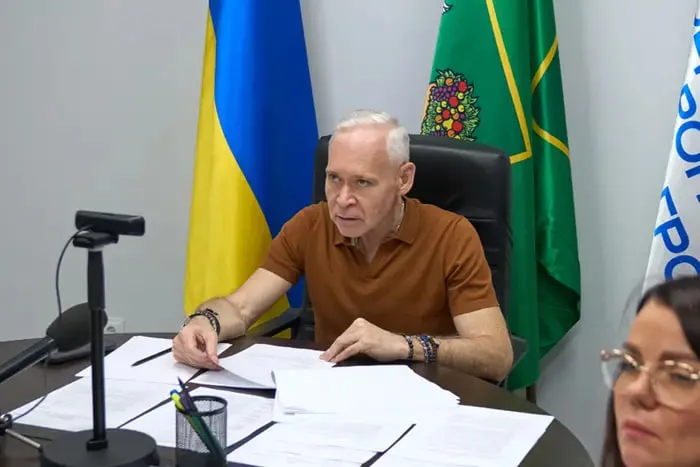
Kharkiv Mayor Ihor Terekhov stated that approximately 14% of Ukraine’s housing stock has been damaged or completely destroyed as a result of Russian aggression. According to him, official figures do not reflect the true scale of the losses.
As of the end of 2025, direct damage to the country’s housing stock is estimated at $61.1 billion, accounting for nearly one-third of Ukraine’s total losses. In the past year alone, this figure has increased by another $3.5 billion.
Today, about 14% of the country’s entire housing stock has been damaged or destroyed, and the consequences of the war have affected more than 3 million households. The Donetsk, Kharkiv, Luhansk, Dnipropetrovsk, Sumy, Mykolaiv, and Kherson regions account for approximately 73% of all direct damage to the housing stock.
At the same time, Terekhov emphasized that official statistics do not reflect the true scale of the problem: About one million Ukrainians are unable to use their own homes because their homes have been destroyed, are located in occupied territories or in combat zones, or have become uninhabitable.
“The government must count not only officially registered homeless people, but everyone who has lost the ability to live in their own homes due to the war. Otherwise, no government program will address the true scale of the problems,” emphasized Ihor Terekhov.
According to him, existing programs have already helped hundreds of thousands of families. In particular, under the “eRecovery” program, nearly 232,000 families have received compensation totaling over 119 billion hryvnias, and about 33,000 have already purchased new homes. At the same time, out of more than 161,000 applications regarding destroyed homes, only one-third have purchased new homes using the certificates.
The “eHome” program also remains problematic in frontline regions. Since the program’s launch, only 3,500 loans have been issued in the nine frontline regions—an average of about 11 per region per month. In the Mykolaiv region, this amounts to 2 loans per month; in the Zaporizhzhia region, 4; in the Sumy region, 6; and even in the Kharkiv region, only about 20.
The availability of housing for veterans is a particular cause for concern: in the first half of 2026, they received only 22 loans across all of Ukraine and just 3 in frontline regions.
“We’re talking about people who defend the country, return from service, and often have to start their lives practically from scratch, but the current housing system has yet to provide them with a solution commensurate with their needs,” Terekhov emphasized.
The Association’s chairman is convinced that Ukraine does not need yet another standalone program, but rather a comprehensive system of affordable housing that combines various tools: affordable mortgages, rent-to-own options, and municipal and social housing. People should be able to choose the mechanism that best suits their needs and financial capabilities.
The chairman of the Association of Frontline Cities and Communities identified the key task as creating a permanent source of funding for affordable housing through the capital market, as well as drawing on European experience, particularly that of Austrian low-income housing associations, which build and professionally manage affordable housing.
A separate focus should be the development of social rental housing for people who cannot qualify for a mortgage. Ihor Terekhov proposed that 10% of the proceeds from the sale of land plots at auctions be allocated to the purchase or construction of social housing for internally displaced persons.
According to him, the housing issue is directly linked not only to social policy but also to economic recovery and the return of people to Ukraine. This is particularly important for communities near the front lines, where businesses, hospitals, and schools lack specialists.
“For people, housing means a sense of security and confidence in the future; for the community, it is an opportunity to attract specialists and rebuild the economy; for the state, it is a prerequisite for the return of Ukrainians, the preservation of human capital, and long-term development; so we must not merely acknowledge the scale of the destruction; we must recognize that housing has become one of the state’s main challenges in the context of war,” he concluded.
Following the meeting, the members of the Association’s Board will continue to work together on developing proposals for a new national housing policy. The decisions reached are intended to serve as the foundation for a systematic approach to providing Ukrainians with affordable housing, rebuilding communities, and creating conditions for people to return.
“Housing policy must become an institution, not a temporary program,” concluded Ihor Terekhov.
This was stated by the chairman of the Association of Frontline Cities and Communities and Kharkiv Mayor Ihor Terekhov during a meeting of the Association’s Board dedicated to the topic “Formulating Ukraine’s New State Housing Policy.”
Four districts of Kharkiv came under a massive drone attack.
As a reminder, a gas station and a business were damaged as a result of a Russian attack on the Poltava region.
In Dnipro on Friday, August 7, a World Health Organization humanitarian warehouse was destroyed as a result of an attack. There were no people on the premises at the time of the strike, and no casualties were reported.
Over the past 24 hours, the occupiers lost 1,130 soldiers and more than 400 pieces of military equipment.
In the Kherson region, one person was killed and two were wounded as a result of Russian shelling.


