
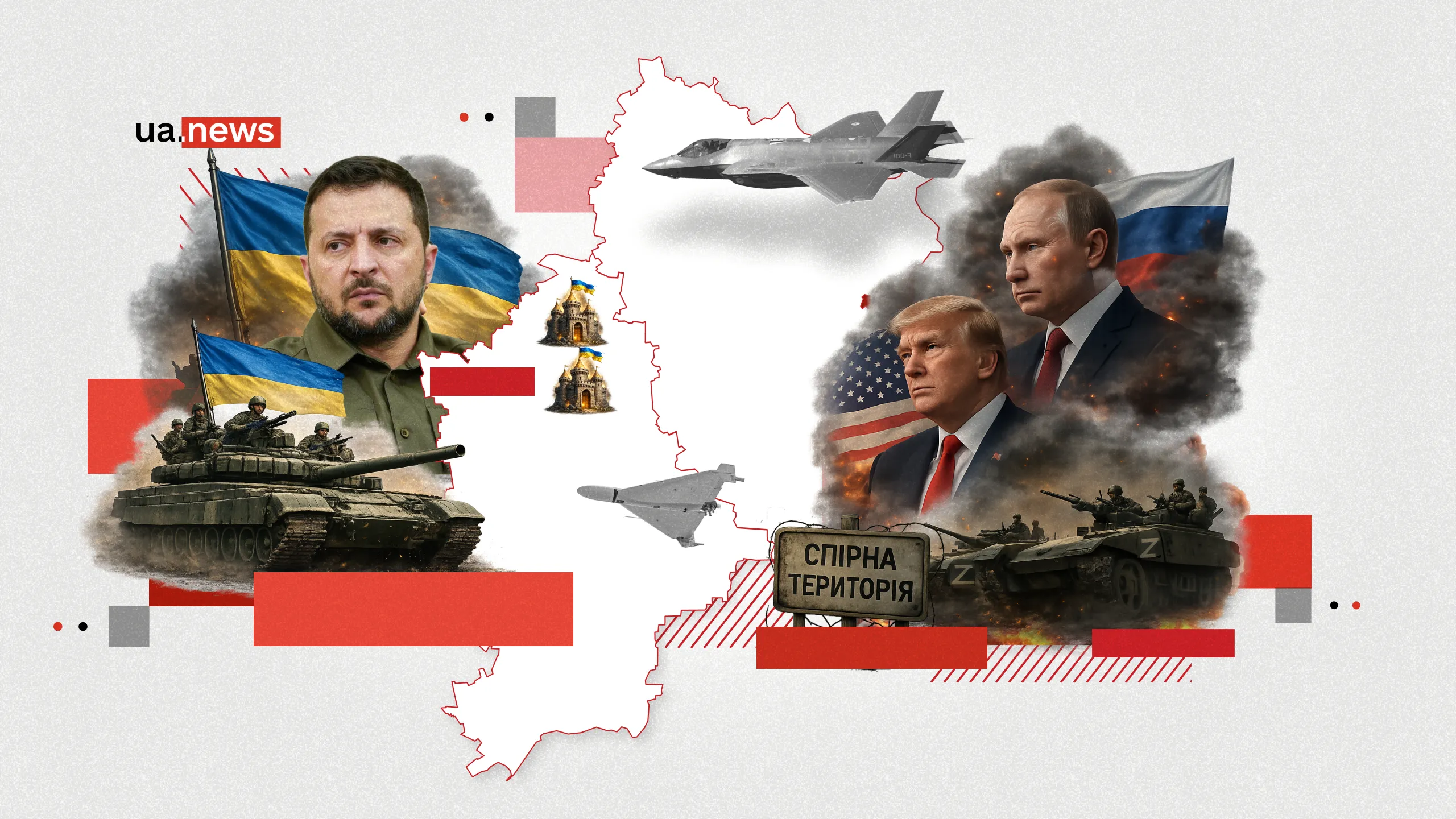
Today, once again, as countless times in recent years, public discourse is torn between two poles: “peace at any cost” and “war until the end” (not necessarily a victorious one). On the one hand, it may seem that both sides are already deeply exhausted, and resources are not unlimited. However, the reality is different: all key actors are now betting on escalation — or rather on a kind of “freezing” of hostilities, in the sense of preserving the current situation and agenda.
Peace today resembles a phantom. Ukraine is being offered to exchange the remaining territories of Donbas under its control for peace. These are parts of the Donetsk region that Ukraine still holds (approximately 20–25% of the region’s total area).
The formula “territories in exchange for a ceasefire” is the official position of the Kremlin and, with certain reservations, of Donald Trump’s administration. However, Kyiv and its European partners categorically reject such a scenario. The result is the current situation, in which peace negotiations have effectively ceased to exist, while the war continues to gain momentum.
Why is this happening, and is there any chance of breaking out of this deadlock? Political observer of UA.News, Mykyta Trachuk, examines the issue.
A plan: endless war
Recent statements and developments demonstrate that the sides are clearly preparing for a prolonged confrontation and are, de facto, publicly rejecting any compromises. Peace negotiations, which lasted for more than a year, have come full circle and returned to “square one.”
President of Ukraine Volodymyr Zelensky, in a number of recent interviews, has stated directly that he is being asked to make territorial concessions in exchange for peace or at least a ceasefire. The position of the head of state remains uncompromising: Ukraine is not ready to give up the remaining parts of Donbas, period.
The Kremlin holds an equally tough stance. According to the Financial Times, a closed meeting recently took place between Russian leader Vladimir Putin and representatives of major Russian businesses, during which the future of the war was discussed. Sources cited by the newspaper report that Putin was categorical: Russia will continue military operations until it captures the entire territory of Donbas — at a minimum. He justified this by saying that Ukraine refused to withdraw its troops from the Donetsk region during the latest rounds of U.S.-mediated negotiations, and therefore Russia will continue its offensive.
Interestingly, according to the same sources, Putin was ready to consider a U.S. proposal to create a demilitarized or special economic zone in Donbas if it were to come under Russian control. However, Kyiv called the transfer of the Donetsk region a “red line” it cannot cross. Having failed to achieve its goals diplomatically, the Russian leadership has once again returned to the idea of a purely military occupation, FT reports.
The European context also indicates readiness for a long war. Despite the rhetoric of certain actors such as Hungary or Slovakia, which advocate an immediate ceasefire, the European Union’s main line is continued support for Ukraine in the fighting. Ukrainian media recently reported, citing parliamentary sources, that the government is considering scenarios in which the war continues for at least three more years. Polish Foreign Minister Radosław Sikorski said as much in the autumn of 2025, noting that Ukraine is preparing for a prolonged conflict.
Thus, a bleak, seemingly inescapable yet painfully logical picture emerges. Moscow has declared its intention to occupy Donbas at any cost. Kyiv, in turn, rejects any territorial compromise. Europe supports Zelensky in this choice.
Under such conditions, peace appears unlikely, negotiations lose their meaning, and the war is set to continue for years. Hoping for a quick end in this context is simply unrealistic.
Security guarantees: a mirage that will not save
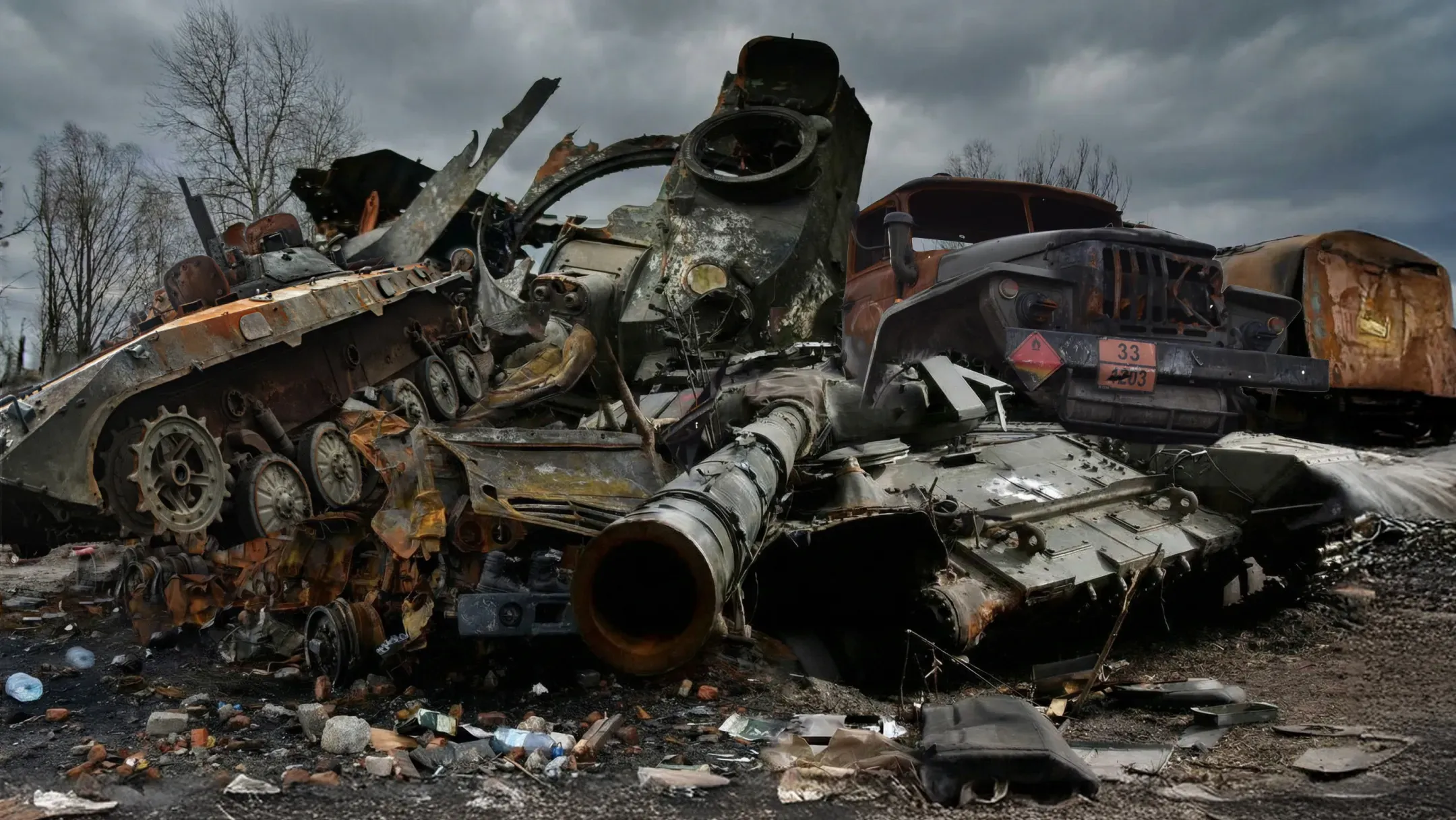
Why do the sides cling so stubbornly to their positions, rejecting even the hypothetical possibility of compromise? One of the key arguments coming from Washington is the promise of “security guarantees” for Ukraine in the event of concessions. The Trump administration suggests it could deter Russia if Kyiv agrees to a deal. However, it remains unclear what exactly these guarantees would entail.
Even if such guarantees were formalized legally, would they be sufficient in today’s world? Before 2022 — perhaps, though even that is debatable. As of 2026, however, it is increasingly clear that the deterrent power of the United States is no longer what it once was. Iran continues to attack U.S. interests and allies across the Middle East, while Washington, despite its military strength, has struggled to respond decisively. If guarantees fail there, why should they work in Ukraine?
The deeper issue is that, in today’s world, no security guarantees are absolute. Even NATO’s Article 5 is not automatic, but a political decision by member states — one that has never been tested in a full-scale war scenario. The strongest guarantee remains a capable national military, potentially backed by nuclear deterrence — yet even that is not foolproof. Believing that ironclad guarantees exist in 2026 is a dangerous illusion.
In Ukraine’s case, U.S. “guarantees” likely mean not a readiness to fight Russia, but temporary arrangements between Trump and Putin that would last only as long as Trump remains in power. What happens after a change in Washington remains uncertain.
Of course, even a temporary peace could provide valuable time for reconstruction and economic recovery. It is not inevitable that the war would resume afterward. However, expecting an external “security umbrella” to solve everything is unrealistic.
Any sustainable peace must be built not on promises, but on a political and diplomatic architecture that makes renewed aggression either impossible or prohibitively costly. Absolute guarantees do not exist.
A zugzwang situation
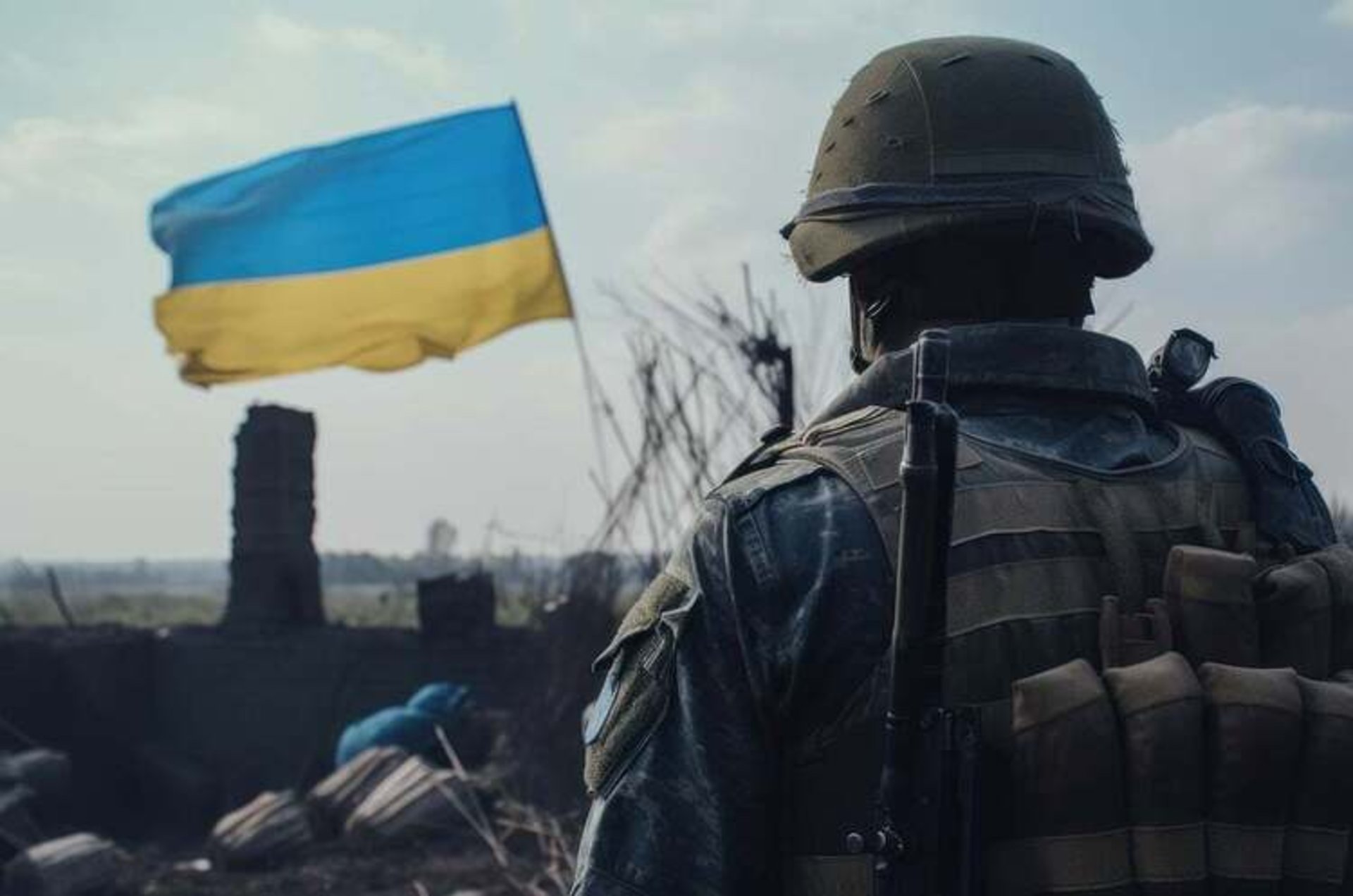
The very framing of “peace in exchange for Donbas” is, in many ways, a narrative imposed by the Kremlin. If Ukrainian forces withdraw, they would find themselves in exposed positions, facing significant risks of renewed attack with shorter logistical lines for the enemy. Such a move would also likely provoke backlash from parts of Ukrainian society, which would see it as a betrayal. Any decision of this magnitude would require a referendum — yet under martial law, broad democratic participation appears unrealistic.
At the same time, the strategy of maintaining the status quo raises equally serious concerns. At the current pace of Russian advances and the intensity of attacks, Ukraine risks losing not only control over Donbas, but the region itself in physical terms. This is not merely about temporary occupation, but about destruction so severe that reconstruction may be impossible — or meaningless.
Sloviansk and Kramatorsk could face the fate of cities like Bakhmut, Avdiivka, Maryinka, and Chasiv Yar — places effectively erased from the map by Russia’s method of warfare. What remains are ruins, minefields, and devastated land.
Hundreds of thousands of civilians could be displaced or killed. Tens of thousands of Ukrainian soldiers would be added to the already staggering toll.
Meanwhile, forced mobilization continues to fuel social tensions. Attacks on energy infrastructure persist — something Ukraine barely managed to endure last winter. The country risks becoming smaller, poorer, and more fragile, gradually losing not only people but also prospects for recovery.
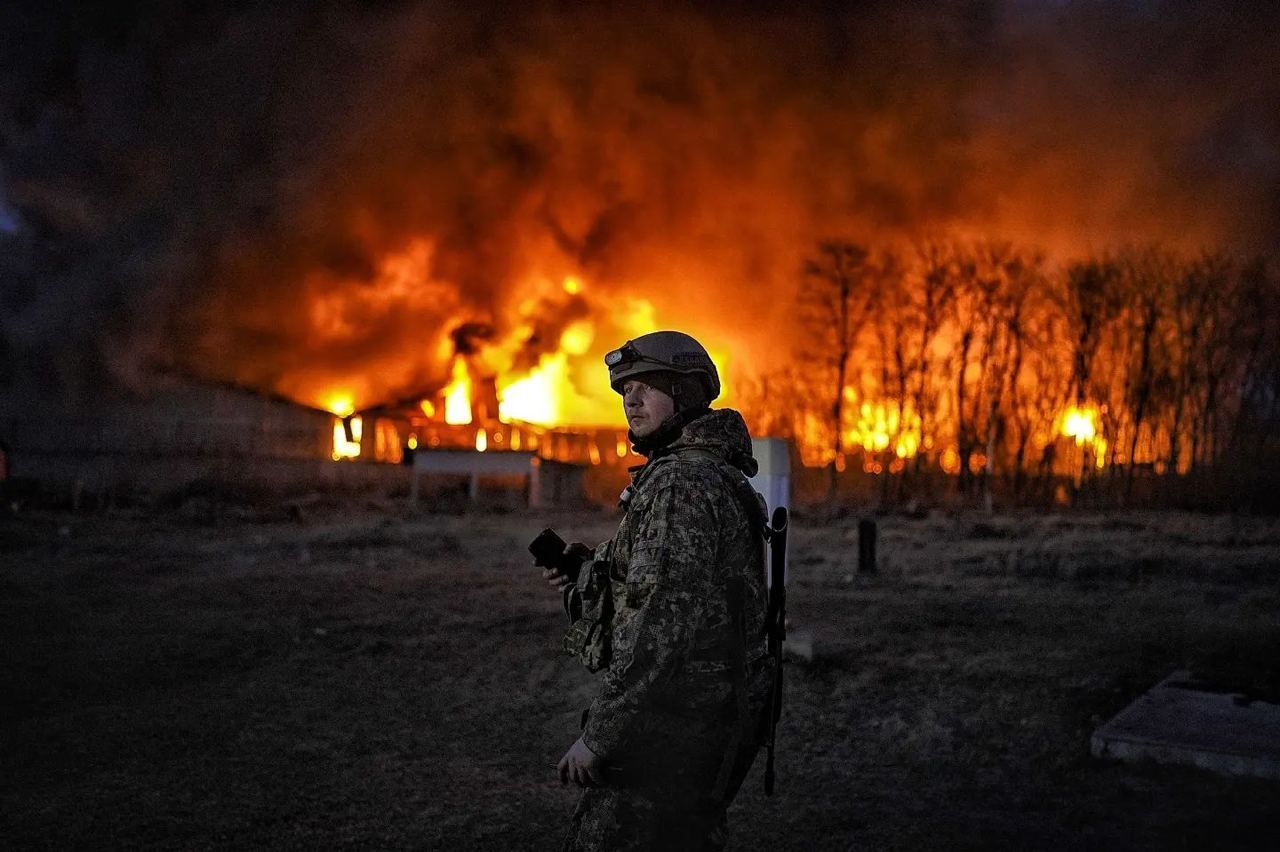
Ukraine is facing a classic zugzwang — a situation in which any move worsens the position, and there is no good option. There is no guarantee that giving up Donbas would bring peace. But continuing the current course also leads toward catastrophe.
There are no good solutions in this deadlock. That is the tragedy of the moment: any decision comes at a cost.
Today, no one — in Moscow, Kyiv, Washington, or Brussels — is able or willing to offer a solution that would satisfy all sides and ensure lasting security. There is even a sense that the key actors prefer inertia to responsibility, avoiding the difficult choices required to untie this “Gordian knot.” It is possible that, at the level at which the problem was created, no solution currently exists.
Thus, one is left to conclude: there is no realistic way out of this dichotomy today. Nor are there clear grounds to expect one in the near future. For now, the trajectory remains unchanged — and it leads further toward catastrophe.


