
The Ministry of Health does not maintain a registry of medications destroyed as a result of attacks
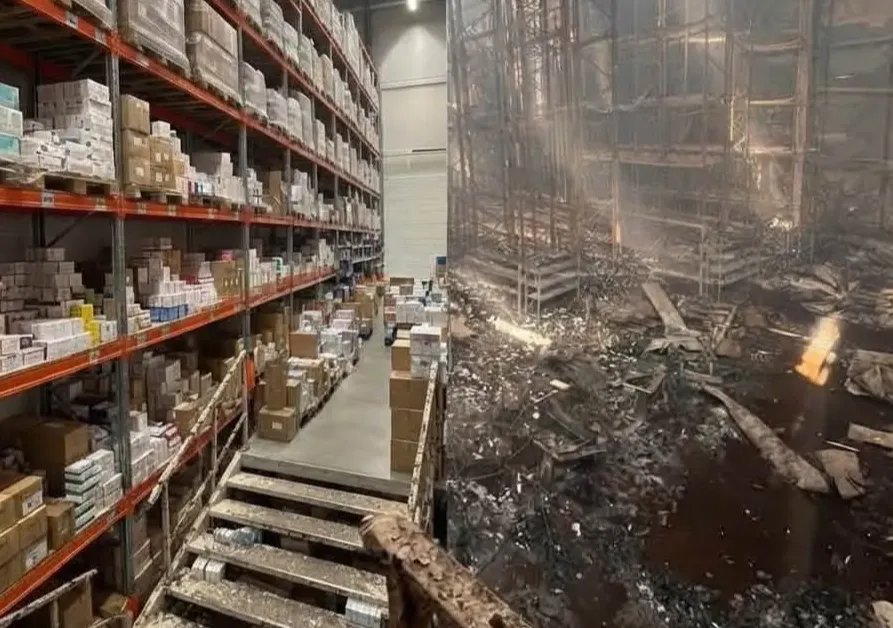
The Ministry of Health does not maintain a separate registry of medications that have been destroyed or lost as a result of Russian attacks. Health Minister Viktor Lyashko explained that companies do not disclose such data due to trade secrets, so the ministry assesses the risks of drug shortages on a case-by-case basis after each attack.
According to the minister, the government does not maintain a single registry of medicines destroyed during Russian attacks. The reason is that suppliers do not want to disclose information about their losses.
“As for a registry of lost medicines, we do not maintain such a registry. The issue is that businesses have trade secrets, and they do not disclose this information due to competition,” Lyashko said. In other words, the Ministry of Health does not have a complete picture of all the stockpiles that may have been destroyed as a result of the strikes. At the same time, the ministry is trying to monitor the situation in other ways.
After attacks, the Ministry of Health assesses the risk of shortages
Lyashko explained that after each attack, the Ministry of Health holds meetings with drug manufacturers, importers, and distributors. The purpose of these meetings is to determine which medications may have been affected, how much remains on the market, and whether lost supplies can be quickly replaced. “We hold meetings and consultations with manufacturers or importers—and separately with distributors—after every attack, and we assess all the risks,” the minister explained.
The Ministry of Health is also determining whether there are other companies in Ukraine that produce the same drug or have the necessary active ingredient. If there is a shortage of a particular drug, the ministry can work with other manufacturers and importers. This is an effort to prevent a situation where patients are suddenly left without the necessary medications.
A shortage had already occurred in early 2026
According to Lyashko, over the past four and a half years, a serious problem with medication availability has arisen only once—in early 2026. At that time, a plant that produced medications for treating epilepsy was affected. The company reported that it would be able to resume production in about four months. However, in practice, the recovery took six months. At the same time, according to the minister, the manufacturer did not notify the Ministry of Health in a timely manner that it would not meet the stated deadlines.
As a result, there was a problem with access to certain medications. The crisis lasted about three weeks. “The factory producing anti-epilepsy drugs that was affected promised to resume operations in four months, but did so in six months without warning us that it wouldn’t make the deadline, so there was a three-week crisis with access to medications,” Lyashko said.
The Ministry of Health asks businesses to report problems in advance
Following this incident, the ministry appealed to all participants in the pharmaceutical market, asking them not to withhold information about potential supply disruptions. It is important for the Ministry of Health to receive advance warning. This gives officials more time to find an alternative manufacturer or arrange for the import of the necessary medication. “We issued a request to all market participants asking them to notify us, as the regulator, in a timely manner so that we can work with companies that produce similar medications,” the minister noted.
According to him, in certain cases, it is also possible to arrange for the import of necessary medications into Ukraine. In other words, the main problem for the state is not just the loss of medications following an attack. It is important to know about it early enough to have time to find a replacement.
Hospitals have built up a four-month supply of medicines
To avoid a repeat of the situation during the first months of the full-scale war, designated medical facilities have built up a four-month stockpile of medications. This reserve should help the healthcare system continue to function even in the event of serious supply disruptions. “Designated medical facilities have built up a four-month stockpile of medicines so that, in the event of a crisis, we do not repeat the situation from early 2022 and have access to medications,” Lyashko said.
Such a stockpile is particularly important during wartime, when Russian attacks could damage manufacturing facilities, warehouses, or other logistical infrastructure. At the same time, a four-month supply does not mean that a shortage of any medication is impossible. It is an additional reserve that gives the system time to respond to a problem.
The situation depends on the war
Lyashko assured that the Ministry of Health is constantly monitoring the situation regarding the availability of medicines. According to him, the situation is currently predictable, but much depends on the course of the war and Russian attacks. “Our situation is predictable, but it depends on the military situation,” the minister emphasized.
Thus, the Ministry of Health does not have a single list of all the medicines that have been destroyed by Russian strikes. Instead, the ministry is trying to obtain information from manufacturers, importers, and distributors and assess in advance where problems might arise. So far, according to Lyashko, there has been no large-scale or prolonged crisis regarding access to medicines. At the same time, the experience from early 2026 showed that even a delay in resuming production at a single large facility can create problems for patients for several weeks. Lyashko spoke about this during a meeting of the parliamentary committee on national health, medical care, and health insurance.
Alona Shevtsova, CEO of Sends, will moderate a panel discussion at the executive level during the 17th Middle East Banking Innovation Summit (MEBIS 2026), which will take place on September 16–17 at the Jumeirah Emirates Towers in Dubai.


