
Mudra called the HR agency, and Gladyshenko made it onto Sens Bank's shortlist
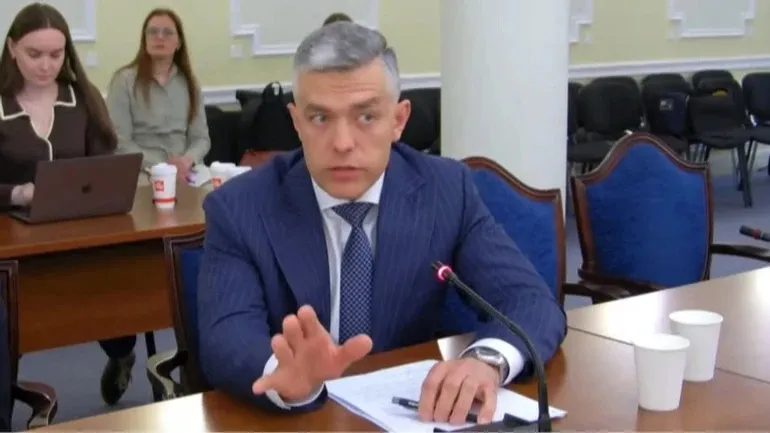
Mykola Hladyshenko was not initially included on the shortlist of candidates for the Sens Bank supervisory board because he scored fewer points than the other candidates. Afterward, Iryna Mudra, who was then the deputy head of the Office of the President and a member of the selection committee, called the HR agency and asked them to review the list. Following her call, Hladyshenko and several other candidates were added to the shortlist.
This information came to light during a meeting of the Verkhovna Rada’s Temporary Investigative Commission on Economic Security. This concerns the competition for positions on the supervisory board of “SENS Bank.” The company “Executives Search Ukraine” was engaged to select candidates; its task was to evaluate the applicants and compile a shortlist.
A total of 111 candidates submitted applications to participate in the competition. The HR agency evaluated the candidates according to specific criteria and compiled a list of those recommended for further selection. Mykola Hladyshenko did not make it onto the initial shortlist.
According to company representatives, the reason was that he scored lower than the other candidates during the evaluation. In other words, at this stage, the agency’s experts considered him less qualified for the position than the candidates who were included on the list. After the shortlist had already been submitted to the Selection Committee, the situation changed.
Iryna Mudra, then deputy head of the Office of the President and a member of the Selection Committee, called “Executives Search Ukraine.” During the conversation, she asked them to review the list of candidates that had been compiled. Among the people recommended for addition to the shortlist was Mykola Hladyshenko.
Thus, a candidate whom the HR agency had initially not recommended due to a lower evaluation score ultimately ended up among the contenders who were considered further. During the TSC meeting, company representatives were asked why the shortlist had been revised following Mudra’s request.
The company explained that it was not the organizer of the competition and did not make final decisions regarding the candidates. According to them, “Executive Search Ukraine” was carrying out the Competition Commission’s instructions, and its task was to evaluate the candidates and provide recommendations. Therefore, the company interpreted the request from a member of the Competition Commission to review the list as an instruction from the client.
Representatives of the HR agency stated that they were contractors, not the party that independently determines the composition of the final shortlist. In fact, the situation unfolded as follows: initially, the agency conducted its own evaluation of 111 candidates and did not recommend Hladyshenko. After Mudra’s appeal, the company reviewed the list and added him to the shortlist. It was precisely this circumstance that became one of the issues discussed during the TSK meeting.
At the same time, the mere fact that a candidate made it onto the shortlist following a recommendation by a member of the selection committee does not in itself mean that a violation occurred. To assess possible violations, it is necessary to determine whether such actions complied with the competition rules, what authority the Competition Commission had, and whether it could require the contracted company to review the evaluation results.
The Verkhovna Rada’s Temporary Investigation Commission is examining these circumstances as part of its work on economic security issues. The story also drew attention because Iryna Mudra was, at that time, both a high-ranking official in the Office of the President and a member of the Selection Committee. According to representatives of the HR firm, it was her intervention that led to the revision of the previously finalized shortlist.
As a result, Mykola Hladyshenko ended up among the candidates being considered for a position on the Supervisory Board of “Sens Bank,” even though the HR agency had initially excluded him from the list due to his lower evaluation score. Now, the Temporary Investigative Commission is looking into exactly how decisions were made during the competition and whether all established procedures were followed. This information came to light during a meeting of the Verkhovna Rada’s Temporary Investigative Commission on Economic Security.
The anti-corruption saga, which began with the public phase of Operation “Midas” in November 2025, has recently seen a new development. The National Anti-Corruption Bureau (NABU) and the Specialized Anti-Corruption Prosecutor’s Office (SAPO) announced the results of new investigations—“Forest Gump” and “Themis.”


