
A former landfill and dozens of hectares of ecosystems are on fire in the Lviv region
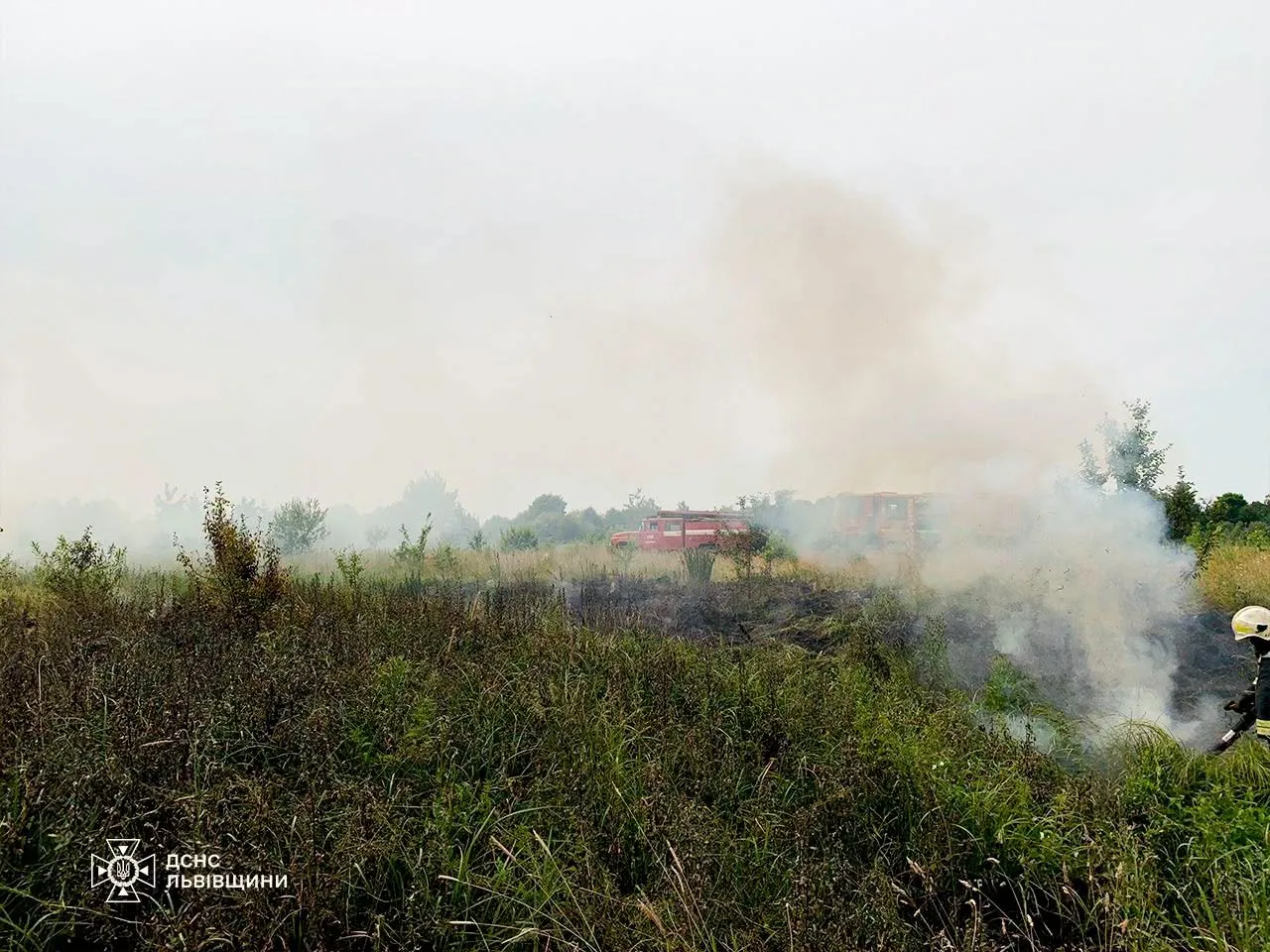
In the Lviv region, firefighters are battling a blaze at a former landfill in Pustomyty, where the fire has engulfed hundreds of square meters and is smoldering several meters underground. At the same time, seven more fires have been reported in the region’s ecosystems, which have already spread across more than 100,000 square meters of land.
A complex operation is underway in Lviv Oblast to extinguish a fire at a former landfill in Pustomyty, where the fire has engulfed approximately 750 square meters and continues to smolder deep within layers of waste, which significantly complicates the work of rescue workers. State Emergency Service specialists are forced not only to extinguish open flames but also to clear debris and douse deep layers of waste to prevent a rekindling of the fire, which could occur at any moment.

At the same time, the situation in the region remains tense, as seven more fires have been reported in ecosystems, affecting dry vegetation and peatlands in several districts of the region, including Lviv, Chervonohrad, and Yavoriv. The total area affected by these fires has already exceeded 113,000 square meters, which underscores the scale of the problem and the high level of fire danger in the region. More than 160 firefighters and 33 pieces of specialized equipment have been deployed to fight the fires; they are working around the clock to contain all the fire outbreaks.

Rescue workers also remind the public that burning dry vegetation is prohibited by law and carries fines: for citizens, from 3,060 to 6,120 hryvnias; for officials, up to 30,600 hryvnias; and within nature reserve areas, the fines may be even higher. The State Emergency Service urges the public to immediately call 101 if they spot smoke or a fire, as a swift response is often key to preventing large-scale consequences. This was reported by .

Passengers on “Ukrzaliznytsia” trains are complaining en masse about inhumane travel conditions due to non-functioning air conditioners and closed windows during heat waves exceeding +35°C, which is causing people and animals to feel unwell.




