
In the Carpathian region, the administrator of a Viber group was convicted for leaking the locations of TCCs
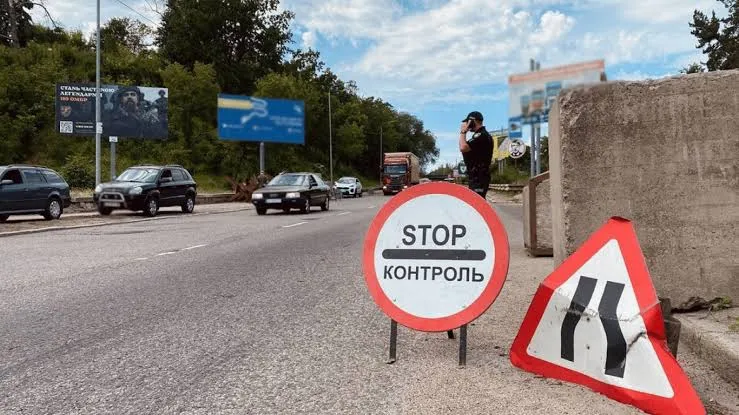
A resident of the Nadvirna District was found guilty of obstructing the lawful activities of the Armed Forces of Ukraine and other military formations. The woman created a private Viber group called “Police,” where users shared real-time locations of mobilization events.
According to the court ruling, the resident of the village of Volosiv decided to create a themed Viber group to collect, consolidate, and disseminate information about the locations and operating hours of military recruitment centers and joint recruitment offices. She became the group’s super-administrator herself and appointed several other users as regular administrators. She made the group private—access was restricted to members only. The court found that the woman ensured the group’s continuous operation, content updates, and the publication of information. The group’s settings allowed members to independently send text messages specifying the location, time, and address where mobilization activities were taking place.
In July–August 2024, 18 posts were recorded in the “Police” group that specified the exact locations where TCC and SP military personnel were operating. These included, in particular, checkpoints near Yaremche and in Uhryniv, the bypass road in Nadvirna, locations in the villages of Nazaviziv, Havrylivka, Parishche, and Torgovitsa, as well as locations in Ivano-Frankivsk—near the shopping mall, the central market, the children’s entertainment center, and at the intersection of Tselevycha and Halytska Streets. It should be noted that the posts were published not only by the superadministrator herself but also by other group members. However, the court noted that all of the group’s activities were carried out with intent: she created a mechanism whereby users systematically collected and disseminated information about the locations of mobilization events.
In fact, this was not about a single post or the accidental sharing of information with an acquaintance. A special closed community was created specifically for the continuous collection and dissemination of the locations of military recruitment centers and mobilization points. When one user spotted military personnel, they would notify the group, and others would then have the opportunity to change their route in advance and avoid an encounter. In its verdict, the court directly linked such activity to obstructing mobilization: disseminating current locations gives people seeking to avoid fulfilling their military duty the opportunity to evade military registration or avoid conscription. Ultimately, this creates additional obstacles to determining the state’s mobilization resources and staffing the Armed Forces of Ukraine.
And the consequences of such “warnings” do not end with someone simply bypassing a specific checkpoint. When this practice becomes systemic, the state falls short of the personnel needed to replenish its units, and the burden on those already fighting only increases. This is precisely the outcome Russia seeks in its war of attrition—to weaken Ukraine’s ability to replenish its defense forces and leave units without the necessary reinforcements. Therefore, regardless of how members of such groups explain their activities, the aggressor state ultimately benefits from the systematic disruption of mobilization efforts.
The case file specifically notes that no evidence of treason was found in the defendant’s actions. The woman fully and unconditionally admitted her guilt. She entered into a plea agreement with the prosecutor, expressed remorse, and ceased administering the “Police” Viber group. The court also took into account her active cooperation in solving the crime. The defendant provided detailed testimony regarding the operation and technical functioning of the Viber group, including information previously unknown to the investigation. Among the mitigating circumstances, the court also took into account that the woman had transferred 3,000 hryvnias in charitable donations to the Ukrainian Armed Forces’ account. The verdict also noted that her brother, a volunteer with the Ukrainian Armed Forces, was killed during combat operations in the Donetsk region.
The court considered the commission of the crime under martial law to be an aggravating circumstance. The woman was found guilty under Part 1 of Article 114-1 of the Criminal Code of Ukraine—obstructing the lawful activities of the Armed Forces of Ukraine and other military formations during a special period. Taking into account mitigating circumstances, the court imposed a lighter sentence than that provided for by the article and imposed a fine of 54,400 hryvnias. The court ruled that the iPhone 13 Pro, which served as material evidence in the case, should be returned to the convicted woman.
Source: Opendatabot
In Ternopil on the evening of August 25, while identifying individuals who might be evading military service, a group of people attacked employees of the Territorial Recruitment Center. As a result, three soldiers were injured.
In Lviv, a man stabbed a police officer with a knife during a police operation; the court sentenced him to four years’ probation.


