
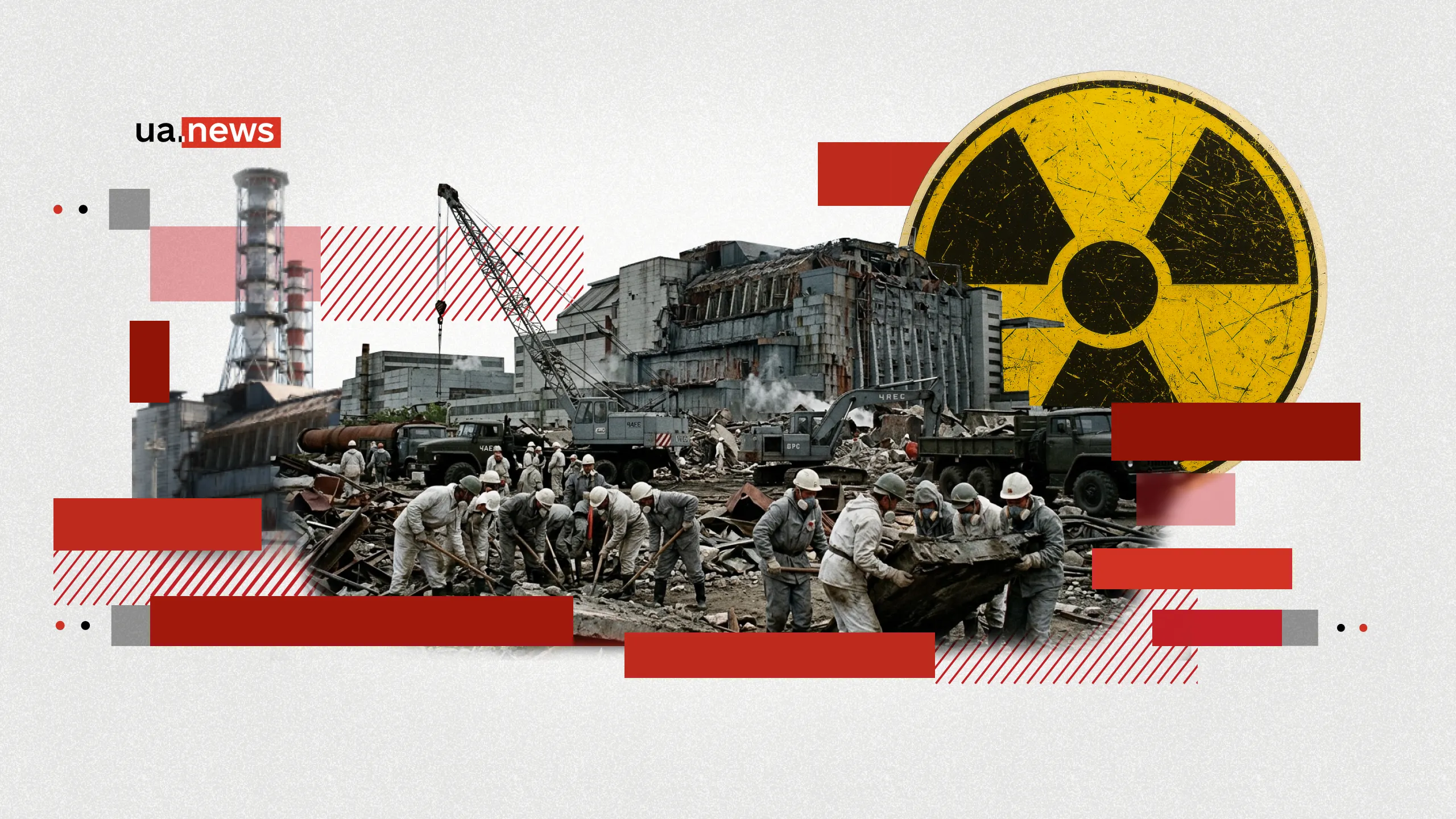
April 26, 2026, marks exactly 40 years since the day an explosion at the fourth reactor of the Chernobyl Nuclear Power Plant changed the world forever. This date is not merely a commemoration of a man-made disaster, but an occasion to remember those who were the first to rush into the fire, water, and radioactive hell to stop the catastrophe.
They are called liquidators. They were firefighters, engineers, military personnel, miners, medical workers, and others. Their feat is often compared to that of soldiers in war, but with one significant difference: they fought an utterly invisible enemy that continues to kill even decades later.
Today, the issue of social protection for Chernobyl liquidators is once again becoming particularly acute. Has the state fulfilled the promises it made to them back in 1986? How has the support system changed since independence? How do these people live now, how many of them remain, and can the care provided for them be considered sufficient? Political analyst Mykyta Trachuk spoke with the heroic liquidators and examined the issue. Read more in the UA.News article.
The Promises of 1986: Words That Dissolved in Radiation
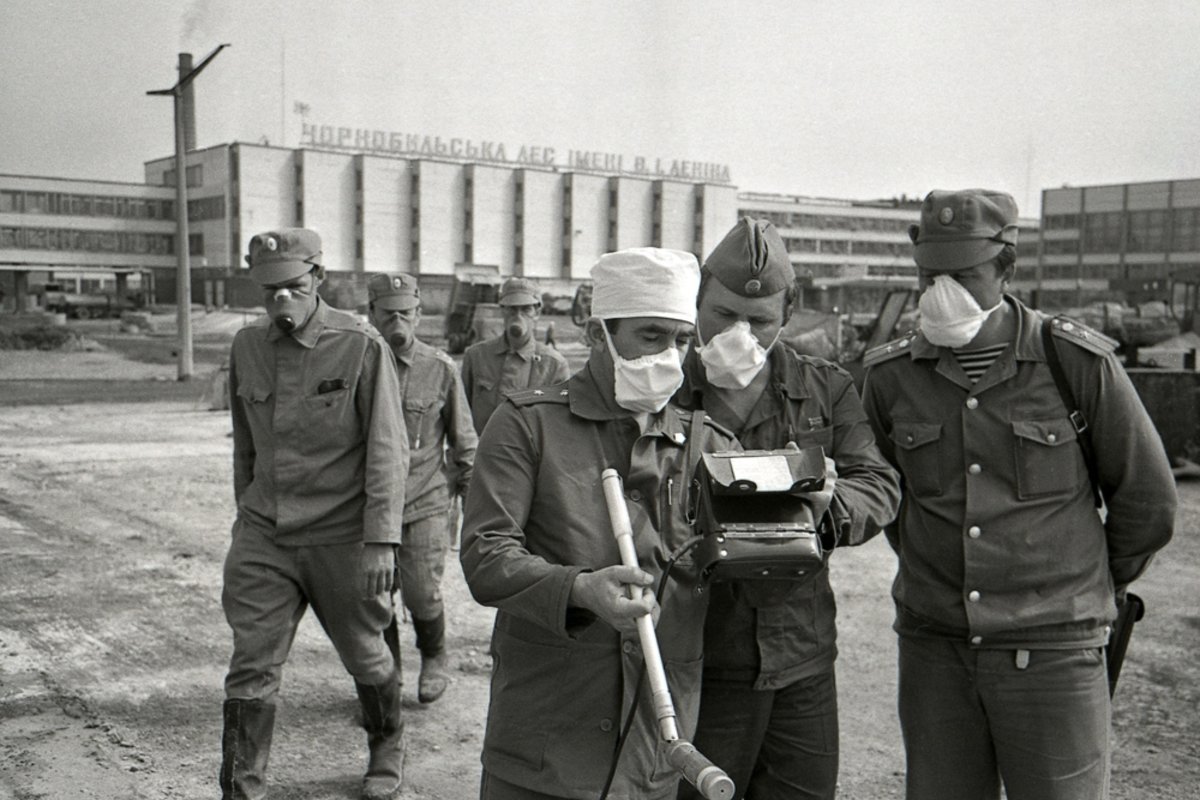
In the first days after the accident, the Soviet leadership—which had criminally concealed the scale of the tragedy until the very end—faced the necessity of deploying massive human resources to mitigate the consequences. Conscripts, factory workers, civilian specialists, and others began to be sent en masse to the Chernobyl Nuclear Power Plant. The total number of liquidators is approximately 600,000 people. At the time, they were promised “heroic” benefits: increased pensions, priority housing, free medical care, sanatorium treatment, monetary compensation for lost health... On paper, it looked like the state caring for its rescuers. However, the reality turned out to be somewhat different.
The testimonies of those who went through the hell of Chernobyl paint a grim picture: confusion with documents, lack of dosimetric monitoring, bureaucratic red tape in obtaining status, and so on. Many never even received the minimum benefits provided for by government resolutions. And with the collapse of the USSR, most of these promises simply vanished into thin air.
Chronicle of Changes: How Ukraine Tried (Not) to Fulfill Its Obligations
After gaining independence, Ukraine found itself in a difficult situation. On the one hand, the disaster occurred on its territory, and it was Ukraine that bore the brunt of the consequences. On the other hand, the crisis of the 1990s made it impossible to fully fund all social programs. In 1991, the foundational Law “On the Status and Social Protection of Citizens Affected by the Chernobyl Disaster” was adopted, intended to serve as the legal foundation for supporting the victims. It indeed provided for a wide range of benefits: from 50% compensation for utility costs to priority housing allocation. However, as is often the case, the gap between what was promised and reality turned out to be enormous.
During Leonid Kuchma’s presidency, funding for Chernobyl programs was constantly cut. In the 2000s, the situation improved somewhat, but the system remained extremely inefficient. The lion’s share of funds was “eaten up” by administrative costs, while the liquidators themselves received meager sums. The issue of pension provision was particularly acute. Although the law guaranteed a minimum pension for disabled liquidators at a level of 10 times the minimum old-age pension for Group I, 8 times for Group II, and 6 times for Group III, actual payments were significantly lower. The Pension Fund applied government resolutions that set payment amounts inconsistent with the law—but the courts, in most cases, sided with the liquidators.
In the 2010s, during Yanukovych’s presidency, social spending came under pressure again. Support programs for Chernobyl survivors were funded on a residual basis, and some benefits were canceled or suspended. After 2014, attempts were made to systematically review approaches to social protection. In 2021, amendments were made to the law intended to increase pension benefits by linking minimum payments to the country’s average wage. But Russia’s full-scale invasion in 2022 once again called all social programs into question.
The Lives of Chernobyl Survivors Today
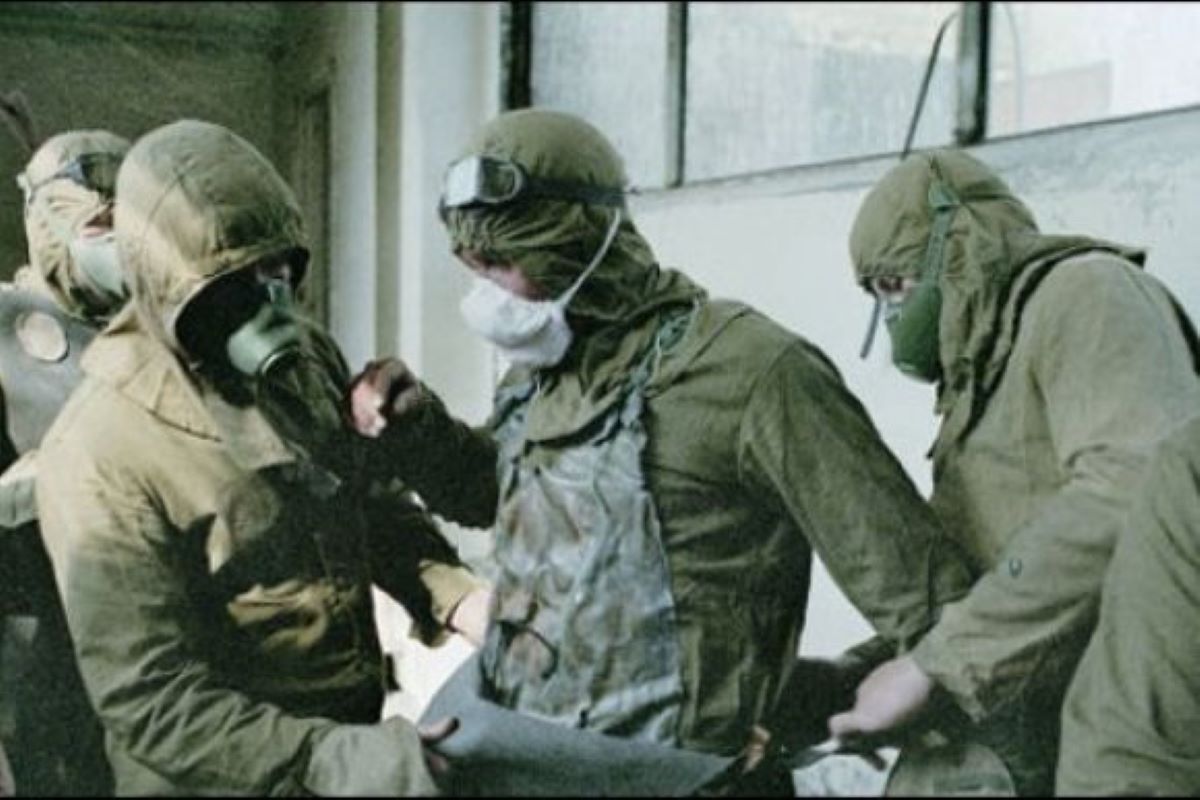
As of April 2026, there are over 1.25 million people registered in Ukraine who were affected by the Chernobyl disaster. But as for the liquidators themselves, the exact number of those who lived to see the 40th anniversary is unknown. According to various estimates, only one-third of the 600,000 liquidators are still alive. At the same time, for example, nearly 800 liquidators live in Khmelnytskyi alone, and in the Vinnytsia region, over 5,500 liquidators and victims are registered. This indicates that the issue has a significant regional dimension.
What support does the state provide to Chernobyl survivors in general and liquidators in particular today? The 2026 State Budget allocates 2.2 billion UAH for social assistance to those affected by the Chernobyl disaster and over 24 billion UAH for pensions. These are substantial amounts, but when divided among the number of affected individuals, the picture becomes less optimistic. For example, as of 2024, the pension for a liquidator without a disability was only about 6,700 UAH.
As of March 1, 2026, the minimum pensions for individuals whose disability is related to the Chernobyl disaster were indexed. After the increase, they amount to: for Group I — 11,048.25 UAH, for Group II — 8,838.60 UAH, for Group III and children with disabilities — 6,813.09 UAH. At the same time, for liquidators who have the status of war veterans and receive a pension under “military” law, minimum payments may be significantly higher, however, the vast majority of civilian liquidators receive exactly the amounts established by the relevant “Chernobyl” legislation—that is, at best, slightly more than 11,000 hryvnias for the most severe disability group. This is an example of the very legislative conflict that has forced liquidators to litigate against the state for years.
Also, starting January 1, 2026, the supplement for non-working pensioners living in the radiation-contaminated zone has been increased to 2,595 hryvnias. Nearly 45,000 residents of Rivne Oblast alone receive this assistance. In addition to pensions, liquidators are entitled to a range of benefits. However, in practice, access to these benefits is often hindered by bureaucratic obstacles, and actual funding is completely insufficient.

“We want respect, gratitude, and a decent life”: stories from liquidators
UA.News spoke directly with the heroic liquidators, asking about their lives, needs, and challenges in 2026. We are publishing their direct quotes so that everyone can assess for themselves the extent to which the state is helping these people.
Serhiy Akulin, a former Chernobyl plant employee, says:
“I’ve worked at the plant since 1977. When the accident happened, it was our shift. We were on duty and saw it unfold. We participated in operations related to the evacuation of personnel, determining what had happened to the equipment, and so on. Everyone who worked at the Chernobyl Nuclear Power Plant for a long time has significant pensionable service. I have been retired for 24 years now. Our maximum possible pension is 25,950 UAH. For Ukraine, that’s a high pension. When the plant resumed operations, the staff were settled in Slavutych—the youngest city in Ukraine. They tried to create all the necessary conditions for us there: modern housing, infrastructure, shops, and a health resort. But lately, especially during the war, everything related to the liquidators has been delayed… The accident happened 40 years ago. When it happened, I was 32 years old. In recent years, everything related to medical care has been one of the biggest problems. There aren’t enough doctors. As for care for accident liquidators—just last year in Kyiv, the Chernobyl hospital was taken over, and now it’s a general-purpose facility. And you have to go through the whole procedure: get a referral, and so on.
As for sanatorium-resort treatment—it was canceled a long time ago. Only people with a Category I disability can go there. Then they can go there once every year or two. For categories I and II, travel is covered once. It’s a bit easier for liquidators who still work at the nuclear power plant—the trade union committees handle this. But overall, the situation with healthcare isn’t very good. Today, liquidators are in particularly urgent need of treatment, rehabilitation, and health improvement. Regarding pensions: those with disability groups I–III receive certain supplements, but only if the pension is small. At the same time, nearly 600,000 people participated in the cleanup in one way or another, and pensions there are, of course, very low.
In 2025, there were still benefits for utility services—now they no longer exist. There are also no longer any discounts on utility bills. If you don’t have a disability, you won’t get a health resort voucher either. Previously, you could apply for housing expansion—now everyone has long forgotten about that. In Slavutych, where I live, there is a very high percentage of accident cleanup participants because many people worked at the Chernobyl Nuclear Power Plant. We used to get to work very quickly, since there’s still work at the plant. Now, because of the war, with bridges destroyed and everything else, people work on a rotating shift basis, and the road is 360 km long. That’s an expense too.
Not long ago, the Verkhovna Rada was still discussing the need to expand benefits for liquidators. There’s a huge difference between how things were before and how they are now. The benefits for liquidators are severely lacking, and life has become much more stressful. We need health care, medical services, rehabilitation, and so on. When you were young, you were still healthy, but you worked in extreme conditions. The consequences of all this are very serious now.”
Ihor Kichko, head of the “Union of Chernobyl” disability organization in the Kholodnohirskyi district of Kharkiv, says:
“Before the war, we worked extensively with the Verkhovna Rada and the Cabinet of Ministers to ensure our pensions were calculated according to the law. Eventually, they were raised, but not to the level required by law. But life has improved slightly: payments to liquidators and their widows have been raised. Yet there is very little positive news. There are far more problems.
The first thing that concerns us is food compensation. For many years now, 400–500 UAH has been allocated for this. You understand what kind of money that is. According to experts’ calculations, 5,000 UAH is needed. Second—last year, utility subsidies were taken away, and for all categories. They’re only provided if income is less than 4,200 UAH per person. This is very troubling. Third—pensions. There are cuts, and supplements are being reduced. Fourth—almost no one here receives a full pension as required by law. People have to go to court. But the state’s debt still stands at around 70 billion UAH, and that’s just for those who’ve gone to court. Fifth—health care. There haven’t been any health resort vouchers for a long time; we already know that. But for health care—they give out 120 UAH a year! Well, that speaks for itself. By law, we are supposed to have specialized clinics for treatment. But for many years there has been a “blurring” of roles: everyone is admitted to these hospitals, and it happens that a liquidator comes to be treated, only to be told—no, you have to wait 1–2 months; there are no beds, not enough specialists. Food expenses at these clinics are also disproportionately low. And there’s another very painful issue: when a Chernobyl liquidator dies, especially a disabled one, his widow is entitled to half of his pension. But the law requires a certificate stating that the cause of death is directly linked to his time in Chernobyl. And if they write that he died of something else, the widow will be left without these funds.
The problem is that we all worked together on the cleanup, despite the danger. But then some were hospitalized many times and received disability status—this is Category I. But many, even though they were sick, were afraid of losing their jobs, and now they have no disability status—these are Category II liquidators. This is very sad and tragic; their pension is now 4–5 thousand! That is, several times lower than that of Category I. We constantly ask the Verkhovna Rada, the Cabinet of Ministers, and the Pension Fund of Ukraine to set a fair pension amount. But the extra payment to them is mere pennies. What matters most to us is respect, gratitude, and a dignified life, which the state must guarantee. These are our demands and problems.”
Another liquidator asked not to disclose his name due to his reluctance to be in the public eye during these difficult times. However, he briefly told our publication the following:
“There is virtually no medical care. Benefits are being canceled, and pensions are calculated not according to the law on the status of liquidators, but according to a resolution of the Cabinet of Ministers, resulting in an underpayment of about 25%. I last received money for health rehabilitation, as well as the mandatory 13th salary, in 1994, and an annual health resort voucher in 1992. By the way, equating liquidators with accident victims is an insult in itself, because we were fulfilling our military duty.”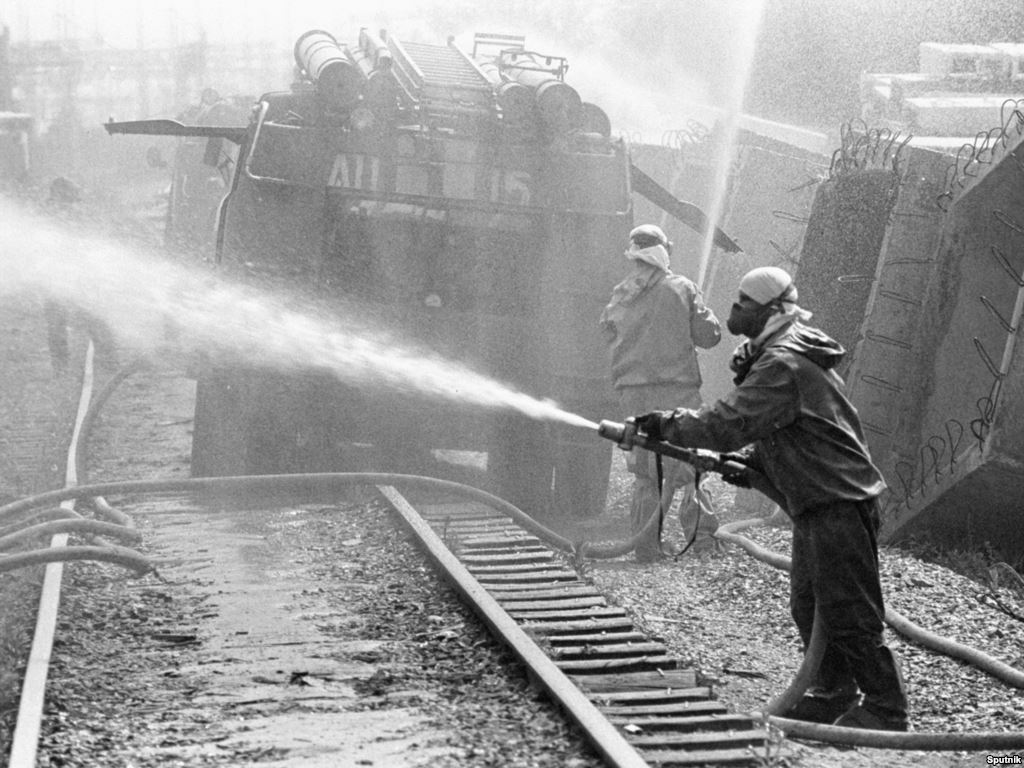
In summary, 40 years later, state support for Chernobyl liquidators in Ukraine is a complex mosaic of declarative guarantees, lawsuits, periodic indexations, and chronic underfunding. It certainly cannot be said that the Chernobyl heroes have been completely abandoned: they regularly receive pensions, some additional payments, and benefits enshrined in law, among other things. However, the level of this support, unfortunately, remains largely formal and does not correspond to either the scale of their feat or their real needs.
The state has still failed to create a unified, transparent, and fair mechanism to support the liquidators. Legislative contradictions force elderly people, often already in very poor health, to spend their last strength and money on legal battles. The promises made to them back in 1986 have largely remained on paper.
On the eve of the 40th anniversary of the Chernobyl tragedy, it is worth remembering: true gratitude is measured not only by the grandstanding posts of officials on social media once a year, but also by meaningful actions. And time for such actions is running out, along with the lives of those who saved the world from a nuclear threat 40 years ago.




