
The NBU has eased regulations for businesses in response to attacks by the Russian Federation
The National Bank has allowed banks, in certain cases, not to declare a company in default if its financial problems arose as a result of the war and Russia’s attacks. This refers to short-term debt restructuring, which is intended to help companies weather temporary difficulties without damaging their credit standing. The NBU has also introduced certain concessions for the agricultural sector, which is facing challenges with product exports.
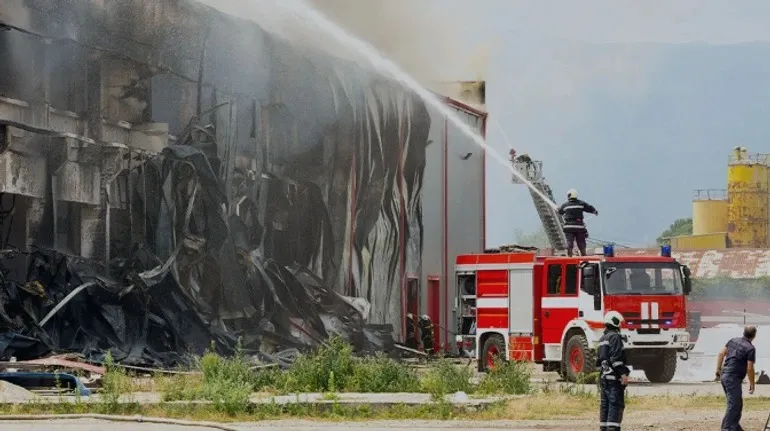
The National Bank of Ukraine has allowed banks to apply new rules when working with companies that are temporarily unable to service their loans normally due to the war. This specifically applies to situations where a company’s financial difficulties are linked to Russian aggression. For example, a company might have lost part of its production due to shelling, been left without electricity, or faced problems due to damage to critical infrastructure.
In such cases, the bank will be able to carry out a short-term debt restructuring and not classify the borrower as having defaulted. However, this does not mean that all companies will automatically qualify for such relief. The bank must assess the situation and ensure that the company’s financial difficulties are temporary. It is also important that the borrower have a realistic chance of resuming normal debt service once the difficult period has ended.
The new rules apply to restructurings carried out from July 1, 2026, through September 1, 2027. The NBU explained that the decision is linked to the deteriorating security situation and regular Russian attacks on Ukrainian infrastructure. “These measures were developed to appropriately respond to the deterioration of the security situation resulting from military operations and Russia’s systematic attacks on critical infrastructure,” the National Bank stated.
Why This Is Important for Businesses
Due to Russian attacks, Ukrainian companies may find themselves in a situation where they have debts but are temporarily unable to pay them as usual. A company may lose part of its revenue due to damage to production facilities. Another company may face disruptions in electricity supply, logistics, or the supply of raw materials. For businesses, this means less cash in the short term, even if the company itself remains viable.
Under normal circumstances, problems with loan repayments can lead to a downgrade of the borrower’s credit rating and a declaration of default. For a company, this can make it more difficult to secure financing in the future.
Banks now have greater flexibility to take wartime circumstances into account. If a company’s financial situation can recover, the bank may grant it time to weather the difficult period and resume normal debt repayment. However, the final decision rests with the bank. The mere fact that a company has been affected by the war does not automatically mean that its debt will be written off or that it will be exempt from payments.
Special Rules for the Agricultural Sector
Another part of the NBU’s decision concerns agricultural enterprises. For them, the war has created additional challenges, particularly due to disruptions in exports and difficulties with delivering the harvest. Therefore, the National Bank has amended the rules for valuing agricultural products that enterprises pledge to the bank as collateral. Until September 1, 2027, the liquidity ratio for such products has been increased from 0.4 to 0.75. Simply put, banks will be able to factor in a larger portion of the value of the pledged agricultural products when assessing credit risk.
This is important for farmers and agricultural companies that have a harvest but, due to export problems, cannot quickly convert it into cash. For example, a company may have large stocks of grain or other products but at the same time need funds to continue operations. If the products can be used as collateral, this opens up an additional opportunity for the company to obtain a loan.
The NBU has also allowed banks to determine the value of such collateral based on the actual product balances at the time of credit risk assessment. In other words, the value can be assessed based on how much product the company actually has on hand at a given moment.
Loans secured by agricultural products can now be taken out for longer terms
Loan terms have also changed. Previously, the maximum term of a loan agreement secured by agricultural products was 12 months. It has now been extended to 18 months. This may be important for the agricultural sector due to the seasonal nature of the work. Producers cannot always sell their harvest quickly after it is gathered, especially when export routes are disrupted or product prices fluctuate.
The additional six months can give businesses more time to sell their harvest and repay the loan. At the same time, companies will not have to rush to sell their products at a loss just to pay off the debt more quickly. The National Bank expects that the new rules will help farmers attract additional financing. The funds can be used to replenish working capital, store the harvest, and find alternative routes for its delivery.
What This Means for Businesses
The NBU’s decision effectively gives banks more leeway to work with businesses that have found themselves in a difficult situation due to the war. For companies, this may mean the opportunity to negotiate with the bank to change the loan repayment terms instead of immediately being classified as a distressed borrower.
At the same time, the new rules do not mean that banks will stop demanding loan repayment. The company must still fulfill its obligations, and the bank will assess its financial condition and prospects for recovery. The main idea behind the changes is to distinguish between temporary problems caused by the war and situations where a business is truly no longer able to meet its loan obligations.
For farmers, certain concessions should help them secure loans using their already harvested crops as collateral. This is particularly important given that, due to Russian attacks and logistical challenges, businesses are having to store their harvests for longer periods and seek new export routes.
In this way, the NBU is attempting to give Ukrainian businesses more time to recover and maintain their access to credit even amid ongoing Russian attacks. This was reported by the NBU’s press service.
The National Bank of Ukraine forecasts that due to the suspension of maritime exports in the second half of 2026, the country will lose more than $2 billion in export revenue.


