
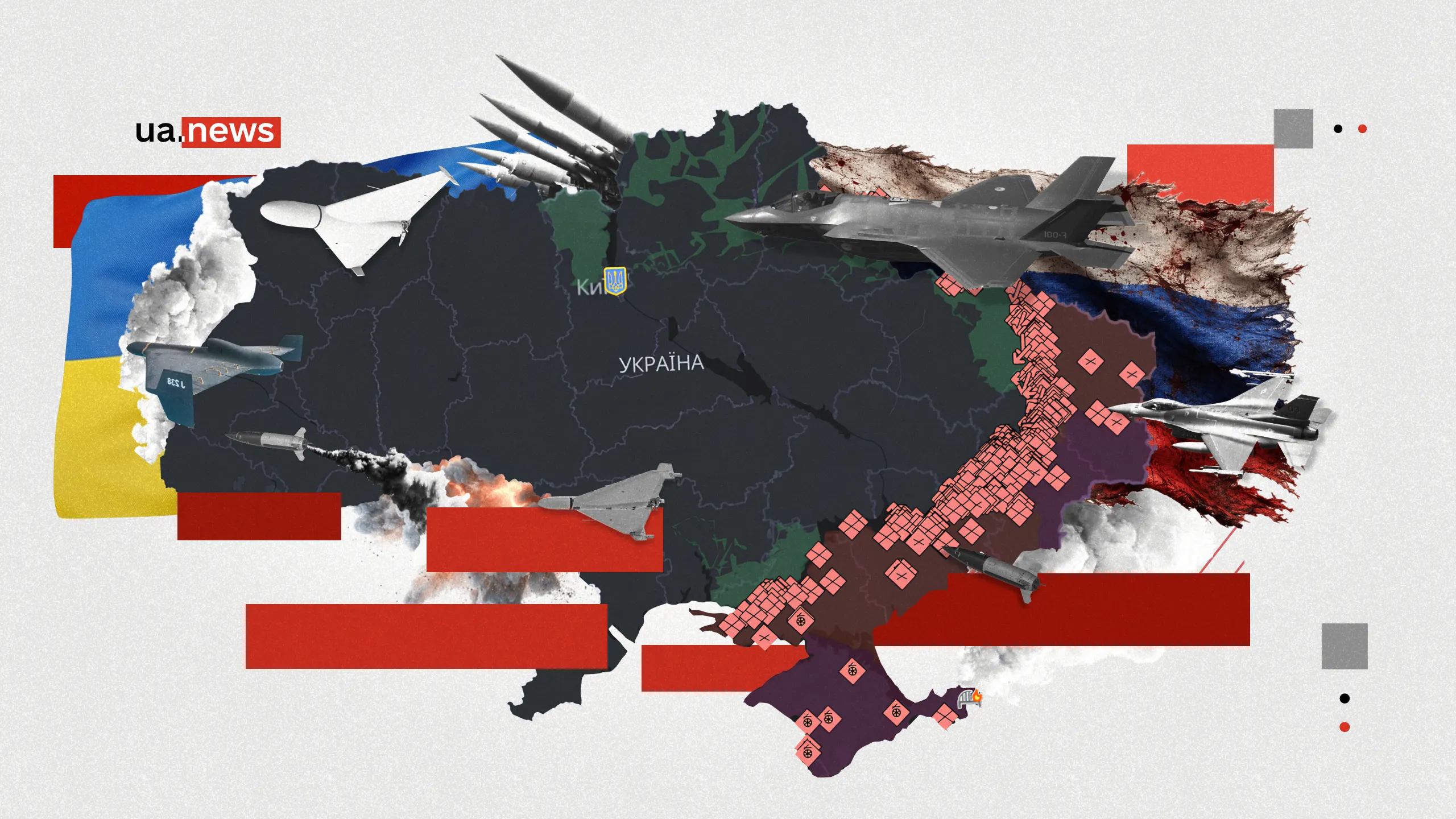
In May 2026, fortunately for Ukraine, the Russian army recorded its slowest expansion of occupied territory since October 2023. According to the analytical portal DeepState, the enemy managed to capture only 14 km² over the course of the month, and the actual increase in occupied territory turned negative for the first time since the 2023 counteroffensive. To put this into perspective: 14 km² is an area roughly half the size of Bucha or a quarter of the area of Bakhmut, which was destroyed by the Russians. And this is despite the fact that the number of assaults increased by 37.5% and exceeded 7,000 in a month—an all-time record.
Indeed, in 2024 and 2025, Russia captured an average of 400–500 km² of Ukrainian territory each month. This year, over the same period, the figure stands at just 137 km². And the 14 km² in May isn’t even stagnation—it’s practically a standstill.
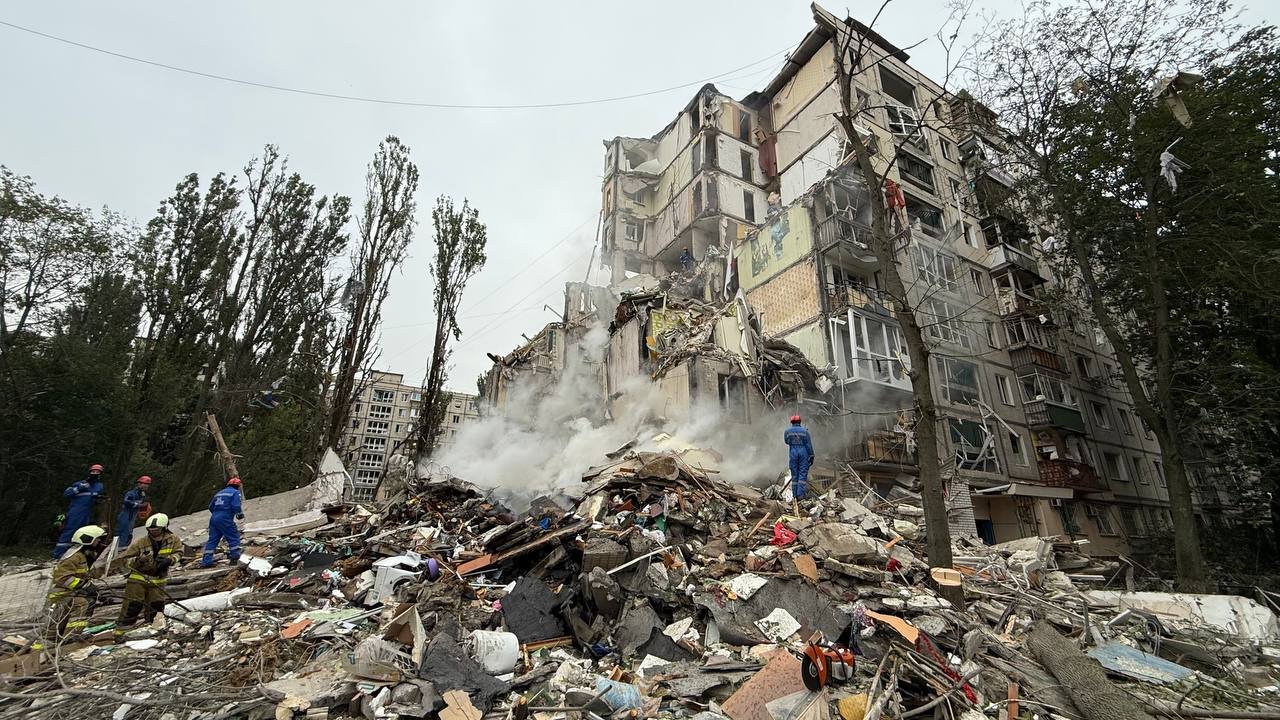
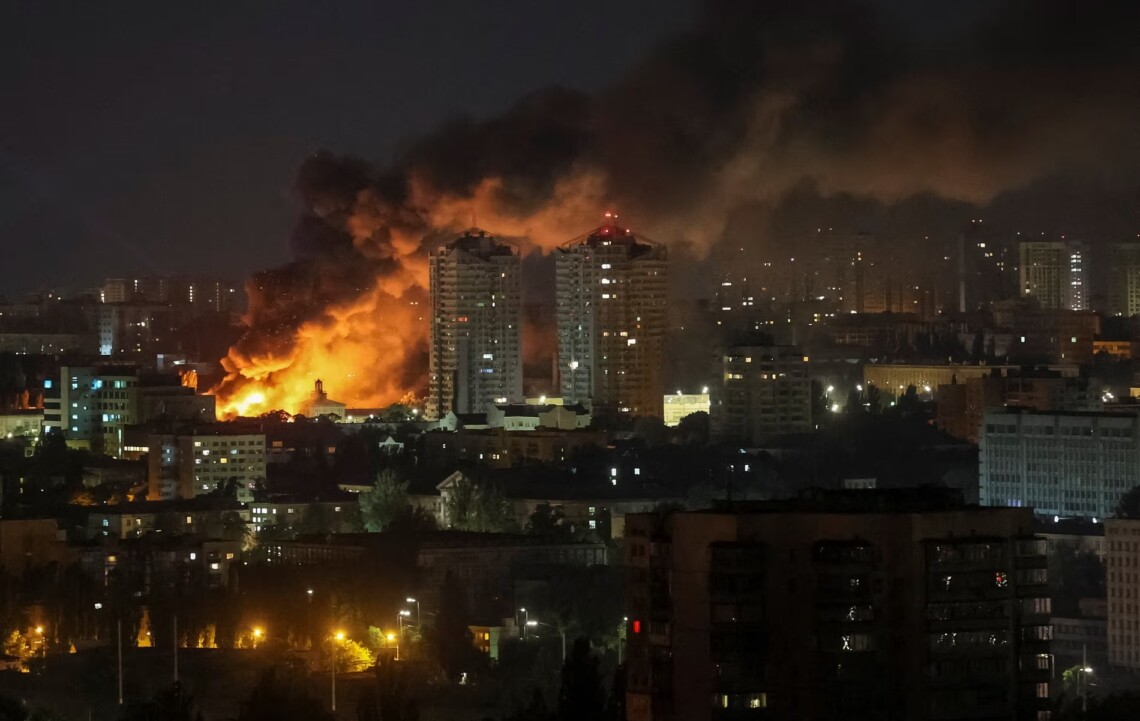
At the same time, however, we are witnessing an unrelenting escalation of aerial terror. On the night of June 2, Russia once again launched a massive attack on Ukraine. Kyiv bore the brunt of the assault: as of this evening, there are reports of 6 dead and nearly 80 wounded, and these figures, unfortunately, are likely to rise. In Dnipro, there are 15 dead, dozens wounded, and the search for the missing continues. Kharkiv, Zaporizhzhia, and other cities have also been attacked, with casualties reported there as well.
Such shelling occurs almost every week, and its deadly toll is horrifying. One need only recall the strike on Kyiv on May 14, when 24 people were killed after a rocket struck a residential building directly. In total, in the capital alone, more than 400 civilians have been killed and several thousand wounded since the start of the full-scale war. In Kharkiv, nearly 1,000 (!) deaths and over 6,700 injuries have been recorded. In Dnipro and the surrounding region, as of 2025, at least 515 civilian deaths and, again, thousands of injuries are known. These horrific statistics could be compiled for nearly every major Ukrainian city.
Against this backdrop, Putin’s statements about some “retaliation for Starobelsk” seem particularly cynical. But they are merely a smokescreen for what has become two parallel realities of war, barely touching one another. More details in the UA.News article.
The Stalemate on the Front vs. Senseless Aerial Terror
The figures released by DeepState are so telling that they require little additional commentary. 14 km² in a month is nothing in terms of the scale of the war. In fact, it is equivalent to standing still on the moon. The record-breaking more than 7,000 assaults carried out by the enemy army in May resulted in zero operational gains and even negative dynamics, as the net gain turned negative. In other words, despite significant pressure, the enemy not only failed to advance but in some places even lost previously held ground.
Talk of Russian advances in 2026 does not stand up to any scrutiny when compared to previous years. The front line has effectively stalled when viewed from a broader perspective. According to official sources, Ukraine is making progress, launching counterattacks, and actively strengthening its forces; however, there has been no large-scale breakthrough or recapture of territory, as was the case in 2022.
In fact, both massive armies are facing off against each other, conducting endless assaults, suffering massive casualties in the drone “kill zone”—and that is all. The war on the front has entered an extremely grueling stalemate phase, where neither side is capable of gaining an advantage with the military resources at their disposal.
While the line of contact has frozen, the enemy’s strike potential is increasingly directed against rear cities. The night of June 2 provided yet another confirmation of this: Kyiv, Dnipro, Kharkiv, Zaporizhzhia, and others—rockets and drones are flying into residential neighborhoods, IT sectors, hospitals, garage cooperatives, etc. Once again, dozens of people were killed overnight, and over 100 were wounded—and these figures, unfortunately, are not final.
Such shelling occurs with such striking regularity that there is no doubt: this is a deliberate strategy of terror. It is becoming increasingly chaotic, completely devoid of even a hint of military purpose.
And most importantly: this tactic has no confirmed impact on the front lines. This has been proven by years of terror. The destruction of residential buildings in Kyiv or Kharkiv does not clear the way for Russian columns somewhere near Kupiansk, Sloviansk, Orikhiv, or the infamous Mala Tokmachka. And why the Russians need Mala Tokmachka at all is a rhetorical question that has been asked for five years now. The air war exists in a different dimension—it is a war purely against the civilian population, a war against the people, devoid even of the illusory logic attributed to strikes on military targets in those rare instances when they actually occur.
Incidentally, in response, Ukraine is also expanding the geography of its strikes on Russian territory. Oil depots, refineries, and oil terminals; warehouses and military bases; the entire border region; attempts to strike Moscow and other major Russian cities—all of this is aimed at psychologically pressuring the enemy and reducing its resource potential. But it must be acknowledged: despite their justification in terms of reducing the enemy’s capabilities, these actions have not yet led—and most likely will not lead—to a fundamental turning point on the front lines. This works both ways: just as missiles targeting Kyiv do not affect the front lines, neither will drones launched at Moscow.
Two realities that do not touch each other
So, as of now, it seems an unprecedented state of war has emerged: it exists in two realities that have almost nothing in common. On one hand—a de facto frozen front where neither side is achieving its goals, and advances are measured in meager square kilometers, paid for with immense bloodshed. On the other—a total air war that is striking the rear and civilians with increasing intensity, yet has literally no impact on the line of combat.
This is a paradoxical situation that completely contradicts the classical understanding of war as the continuation of politics by other means (according to Clausewitz). The political objectives are utterly vague, and the war itself is not bringing either side any closer to achieving them—quite the opposite.
As of now, Russia is physically incapable of occupying all of Ukraine or even reaching the administrative borders of the Donetsk region. Similarly, the Russian Federation is unable to completely wipe Kyiv off the face of the earth: this could be done either with nuclear weapons (a scenario of total catastrophe that one does not even want to think about), or by spending decades of aerial terror—in the literal sense—on this utterly abstract and unnecessary goal—and still achieve nothing on a global scale.
Ukraine, despite its heroic resistance, the expansion of the geography of its strikes, and significant tactical successes, also currently lacks the resources to reclaim all its territories or to bring about the internal collapse of the Russian regime. Both armies are bogged down in an exhausting stalemate that has long since turned into a dead end and a road to nowhere.
Time for diplomacy: not to capitulate, but to seek a way out
We are witnessing a situation that can quite rightly be called madness: the repeated performance of the same action over and over again, one that clearly yields no results—for example, the years-long terrorization of Ukrainian cities. In reality, such a war should have ended long ago simply because it leads nowhere. Its goals are currently unattainable for both sides, and first and foremost for the aggressor. Yet it continues, destroying lives, peaceful cities, and the future day by day. This is a war as a permanent state of destruction of everything around it, which could last for decades if not stopped by conscious political decisions.
So now is the time to more actively pursue and revive the half-dead diplomatic track. This does not mean “giving up” or “surrendering.” It means trying (or at least trying again) to end the active phase of the war on terms that are more or less acceptable to all.
The very first and most realistic step today is a ceasefire along the front line. Specifically along the front line, since it is effectively not moving anyway. The positions of the parties are more or less fixed, and the fighting does not change the overall strategic picture, only increasing the losses.
At the same time, barbaric strikes on cities continue—strikes that serve no military purpose and could go on for decades. Kyiv and Moscow could be bombarded with drones and missiles for literally decades—this will lead neither to victory nor to peace. It is significant that recently President Zelenskyy has again spoken of a chance to end the war by fall or winter, and the head of the Presidential Office, Budanov, has also made statements about the possibility of ending the active phase.
It is essential that these words of hope be turned into action. The diplomatic process should be intensified as much as possible, not only through official negotiations but also by involving mediators who can guarantee a ceasefire—such as the United States, which has not officially renounced its peacemaking role, although it has noticeably cooled toward the process due to its own war with Iran and the complete lack of progress on the Ukrainian front.
In any case, the war in its current form is a dead end. Former Chief of Staff Zaluzhny, by the way, said exactly these same words back in 2023 (!)—and the cart, as they say, is still stuck there. In our case, the war is not a continuation of politics, because it does nothing to bring us closer to a political outcome. It has become a routine of destruction, and this routine must finally be broken.

To sum up, the key paradox as of June 2026 is that the front line has frozen globally, while cities in the rear continue to burn with increasing intensity. Russia is demonstrating an inability to make any serious headway: 14 km² in May and less than 600 km² since the start of the year—this is not about an offensive, but about senseless destruction of people. And while no one feels sorry for the Russians in this context, we certainly do feel sorry for the Ukrainian fighters holding back this onslaught and the hundreds of civilians killed in Ukrainian cities. Worst of all, even this wave of utterly pointless, barbaric violence has exactly zero impact on the situation at the front.
The war has split into two parallel realities, and neither of them brings the sides any closer to their goals. This does not mean we should lay down our arms, raise a white flag, and surrender. On the contrary, it means that the time has come to take a realistic look at the situation and at least try again to find a political solution. After all, with very few exceptions, wars always end with negotiations somewhere “in the middle,” not with an assault on the enemy’s capital or something of that sort.




