
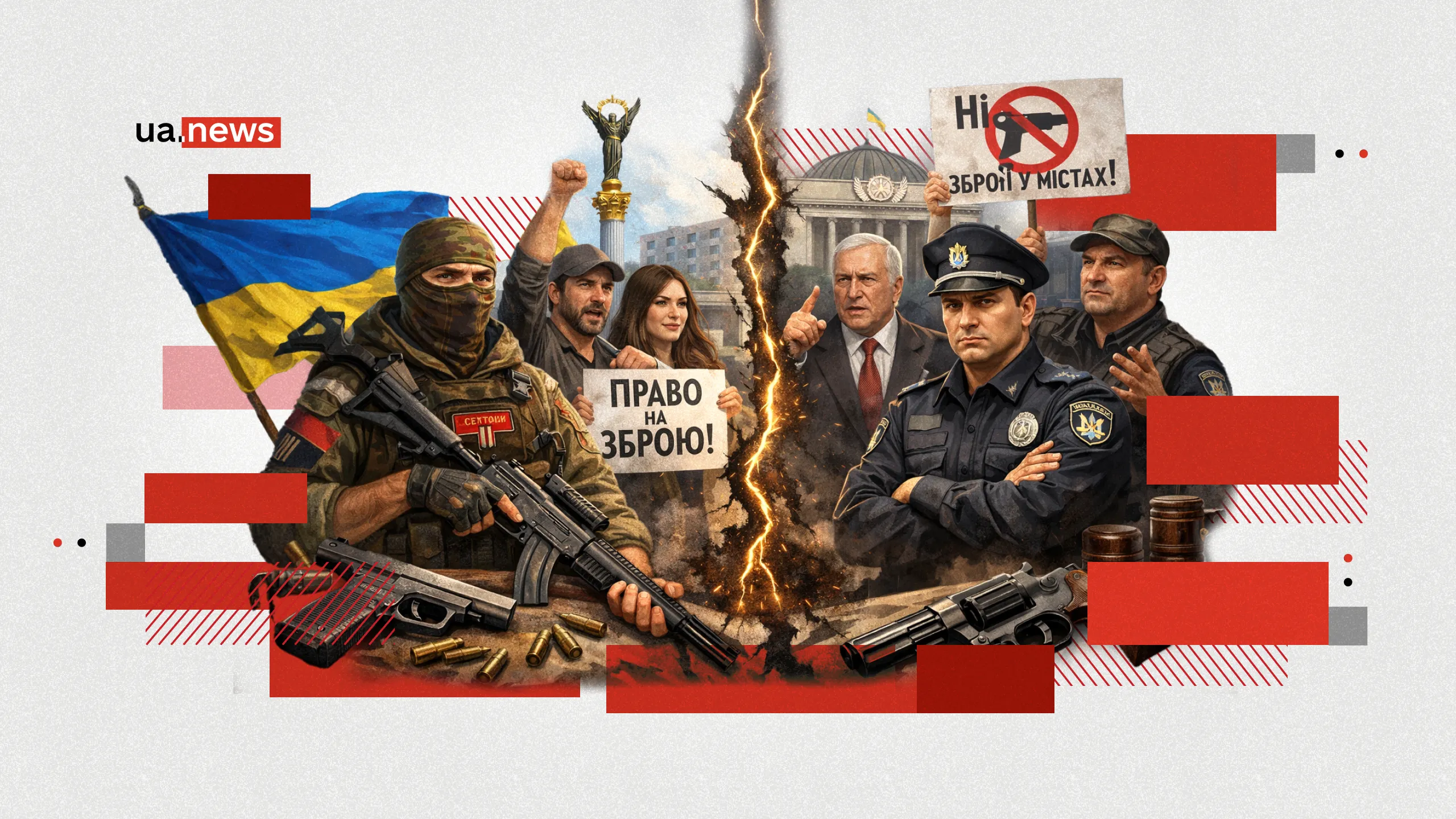
The tragic events of Saturday, April 18, in Kyiv—when an armed man showing clear signs of mental illness took hostages at a supermarket and killed seven people—shook society and forced the authorities to revisit a debate that has actually been ongoing in Ukraine for decades — the legalization of firearms for civilians. The attack, which lasted several hours and ended with the attacker’s elimination after all attempts at negotiation failed, became a trigger for new high-profile statements. Interior Minister Ihor Klymenko stated that “people should have the right to armed self-defense,” while some members of parliament and public figures began demanding the urgent adoption of a law on civilian firearms.
At the same time, this tragedy—the attacker used an officially registered hunting carbine!—gives pause for thought: is expanding citizens’ access to firearms really a panacea? Or might this be a path toward even greater escalation of violence in a society that has been living under conditions of full-scale war for five years? That is precisely why the issue of legalizing firearms for civilians—particularly short-barreled weapons such as pistols and revolvers for self-defense—requires not emotional slogans in the wake of a tragedy, but a very careful analysis that takes into account Ukrainian realities and international experience. UA.News, together with experts, has examined the issue in detail.
The Legal “Maze” of Firearms in Ukraine
Before discussing “legalization” as such, it is essential to clearly understand what is currently permitted and what is prohibited. Ukraine still lacks a single comprehensive law that would comprehensively regulate the circulation of civilian firearms. Instead, the current system is based on subordinate regulations, the main one being Ministry of Internal Affairs Order No. 622 of 1998—a document that is nearly 30 years old and completely fails to meet modern standards and security challenges.
However, citizens who are at least 21 years old, have undergone a medical examination—including drug and psychiatric evaluations—have no criminal record, and have obtained the appropriate permit from the National Police may purchase hunting shotguns and rifles, as well as “non-lethal” firearms—pistols and revolvers. Strict storage requirements are in place: the presence of a metal safe, which is regularly inspected by the local police officer.
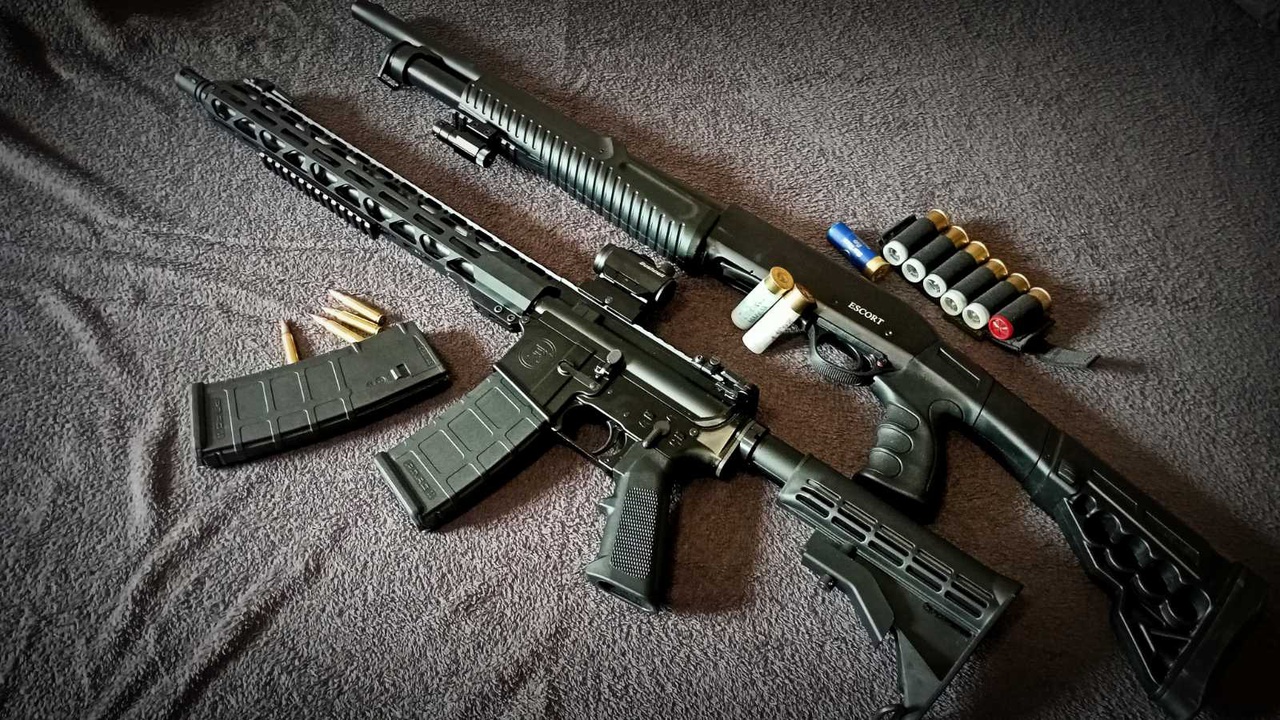
At the same time, there is a clear ban on a number of categories of weapons that an ordinary citizen cannot legally purchase under any circumstances. These are primarily short-barreled rifled firearms—that is, classic combat pistols and revolvers. These are the main subject of the debate on legalization. Also prohibited are any automatic weapons, weapons with silencers, devices for silent firing, and ammunition with high-penetration bullets, etc.
A separate and extremely important aspect is the issue of self-defense in Ukrainian legislation and judicial practice. Article 36 of the Criminal Code recognizes the right to necessary defense, but there is a key phrase here that has ruined the lives of thousands of people: “exceeding the limits of necessary defense.” In practice, it often happens that a person who defended their own life or the lives of their loved ones ends up in the dock themselves. Therefore, any liberalization of gun laws must be accompanied by a parallel revision of the rules on necessary defense to expand citizens’ rights to self-defense.
Free gun ownership for Ukrainians: arguments “for” and “against”
The legalization of short-barreled firearms for civilians has both ardent supporters and staunch opponents. The key issue is that there is no single “correct” opinion here, nor can there be, as the situation is too complex and socially significant. Let’s start with the arguments in favor of legalization.
The first and most obvious is the fundamental human right to self-defense. Article 27 of the Constitution of Ukraine guarantees everyone the inalienable right to life and the right to protect their life and health from unlawful encroachments. Relying solely on the police is very naive: citizens must be able to defend themselves until law enforcement arrives.
The second argument appeals to the very concept of freedom in a democratic society. The right to bear arms can be viewed as one of the fundamental rights of a free person, a safeguard against state arbitrariness, and a guarantee of a citizen’s ability to withstand threats. Indeed, Ukrainian Armed Forces General Oleksiy Pavliuk, commenting on the Kyiv terrorist attack, noted that “if any of the passersby had had a gun, there would have been far fewer victims.”
The third argument relates to the massive black market for weapons in Ukraine. According to various estimates, millions (!) of illegal firearms are in the hands of the population. The exact figure is unknown, but it would be surprising to expect anything else, given that the war in the country has been going on for 12 years. A criminal or terrorist will have a weapon in any case, while an ordinary citizen remains defenseless. Legalization could bring part of this “arsenal” into the legal sphere, reduce demand on the black market, and ensure control over owners.
The fourth argument is generally successful international experience. Proponents of legalization often cite examples from the U.S., the Czech Republic, Switzerland, or the Baltic states. In the Czech Republic, citizens have the right to purchase handguns for self-defense provided they pass strict background checks. At the same time, the rate of gun-related crime is among the lowest in Europe. In Lithuania, the situation is similar following the legalization of handguns. In contrast, the example of the United States, where the right to bear arms is enshrined in the Constitution, is a mixed case that demonstrates both the positive and negative consequences of widespread civilian gun ownership. On the one hand, it serves as an effective deterrent against crime; on the other, mass shootings occur regularly in America.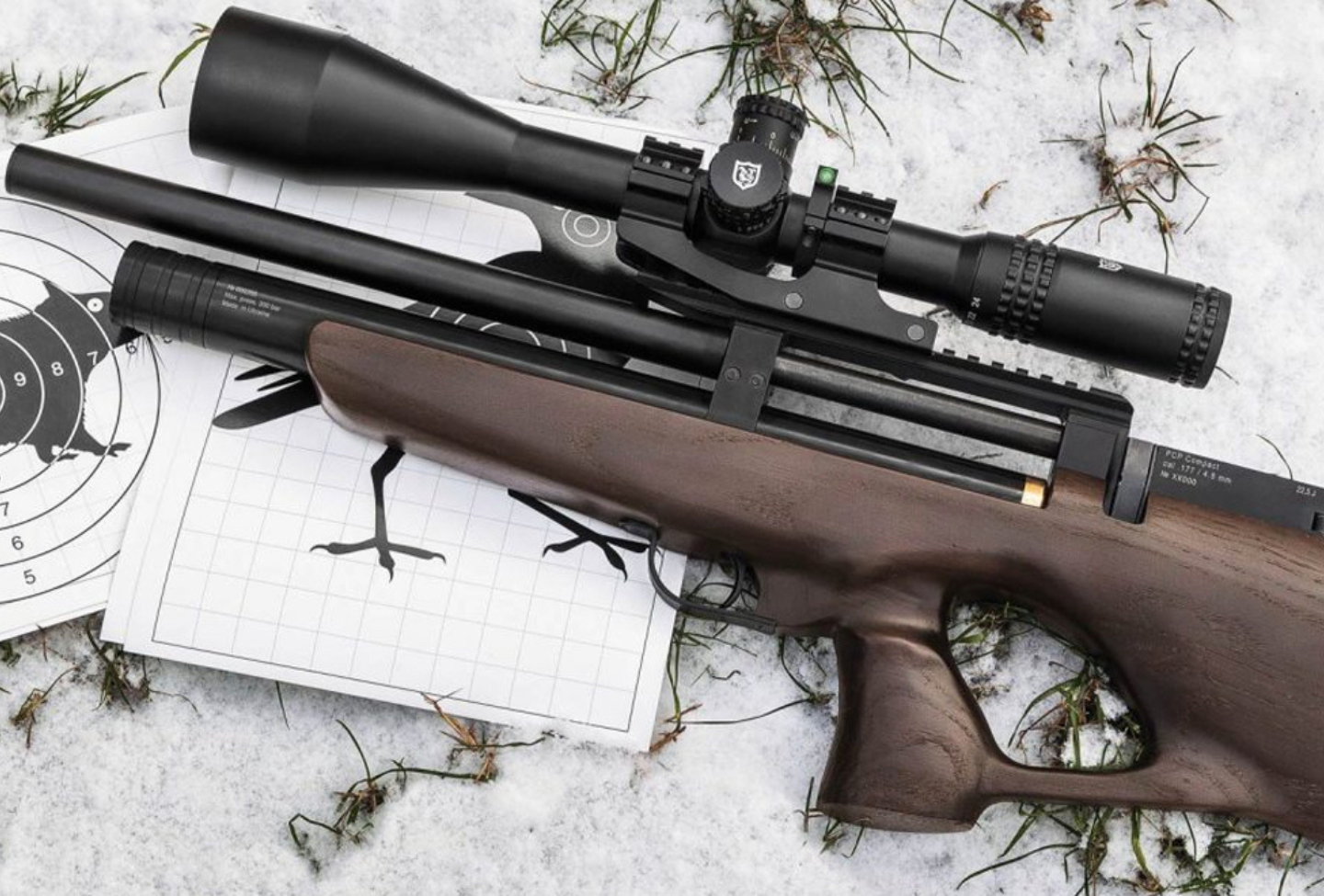
Now let’s consider the arguments against legalization. The main counterargument stems from the psychological state of Ukrainian society in the fifth year of a full-scale war. According to WHO estimates, up to 10 million (!) Ukrainians suffer from PTSD, and these figures are only as of the end of 2022! Nearly half of the population has some form of mental health issues caused by constant stress, loss, shelling, and the generally unhealthy atmosphere in the country. In such a society, the widespread distribution of firearms could lead to catastrophic consequences: a surge in domestic conflicts with fatal outcomes, an increase in suicides, and so on.
The second argument concerns corruption risks and the ineffectiveness of state oversight. Ukraine’s licensing system is already grappling with widespread forgery of medical certificates, corruption in the issuance of permits, and inadequate vetting of applicants for gun ownership. The recent terrorist attack proved this perfectly: the Kyiv attacker had an official gun permit despite his completely obvious mental instability. Are we ready to scale this flawed system to hundreds of thousands of new handgun owners? Won’t legalization turn into yet another source of corruption? These are rhetorical questions.
The third argument is the risk of further escalation of violence. The presence of firearms among civilians does not always guarantee safety, but it can provoke a criminal into more aggressive actions, knowing that the victim is potentially armed. After all, not everyone, even if they carry a pistol, is psychologically capable of shooting an attacker, let alone killing them. Whereas a potential terrorist is certainly ready to do just that. And a gun kept at home can be stolen by a burglar, become the subject of family conflicts, or be used by children due to adult negligence.
International Experience and Ukrainian Realities
International experience shows that there is no one-size-fits-all solution: each country chooses its own model for regulating the circulation of firearms, one that aligns with its traditions, cultural characteristics, and the psychological state of society. Three main models can be identified here.
The first is the American liberal model, where the right to bear arms is constitutional, and the purchasing procedure is very simplified, though it varies from state to state. At the same time, this model is accompanied by regular incidents of mass shootings in schools, shopping malls, and other public places, sparking heated debates about the appropriateness of such a liberal approach.
The second is the European regulated model, which combines recognition of the right to bear arms with strict requirements for owners and tight state control. Overall, this is the most optimal scenario for Ukraine: not a total ban, as is currently the case, but also not a “buy whatever you want, whoever you want” approach, as in the United States.
The third is a strictly restrictive model, characteristic of, for example, the United Kingdom or Japan, where civilian gun ownership is significantly restricted, and handguns are strictly prohibited. This, however, does not completely eliminate the problem of gun violence, as criminal elements or terrorists can still easily find ways to obtain weapons illegally.
Bill No. 5708, which has been under consideration in the Verkhovna Rada since 2021 and to which hundreds of amendments have been submitted, proposes creating a comprehensive system for regulating the circulation of civilian firearms, including a Unified Firearms Registry, standardized rules for storage, carrying, and use, as well as a clear categorization of firearm types. As of now, this bill has not yet been adopted, although the process may accelerate following the terrorist attack on April 18. However, even the most perfect law will not work without genuine reform of the licensing system, expanding the right to self-defense, combating corruption, and creating an effective mechanism to identify individuals who cannot be trusted with weapons under any circumstances.

Expert Opinions
Political scientist and director of the Third Sector Center, Andriy Zolotaryov, is certain: the issue of legalizing civilian firearms is not a case where simple solutions exist for complex problems. It should be kept in mind that there are many countries where citizens have the right to own handguns (such as the U.S.), but this does not preclude mass shootings like the recent one in Louisiana, where eight children were killed.
“We must not forget that society today is overflowing with malice and aggression, and sooner or later, people with PTSD will return from the front lines. This is a situation where psychiatric care must be available. Unfortunately, Suprun’s reforms have effectively destroyed this sector of healthcare. So there will be a great many people with mental health issues on our streets. But people can be killed not only with firearms, but also with bladed weapons or any other means. So those involved in political tactics and information operations—swinging the pendulum from betrayal to victory and constantly searching for enemies—need to think about this first and foremost. We must bear in mind that sooner or later this hatred of the enemy will spill over into society.
It should also be noted that the police system in Ukraine, unfortunately, does not work. The two PR-savvy “reformers” from Georgia who sold us a knockoff version of the American police have long since left, but the “circus” remains. And, unfortunately, we’ve seen that our police officers are like little fox terriers: frantic, but utterly useless. In situations where their help was needed, they simply took to their heels. So we need to change the police system itself so that the main center of public order enforcement is localized. We need, as in many countries, a local police force funded by citizens’ taxes, who can hold police officials accountable for the state of public order. And there must, of course, be a central unit of a special task force that specializes in particularly complex cases, such as “Kord,” notes Zolotaryov.
The expert also points out that the citizen who carried out the terrorist attack in Kyiv used a legally obtained weapon. That is precisely why the question must be framed so that the procedure for obtaining a gun license is not merely a formality—where a permit is bought with money—but rather so that people are genuinely vetted: their criminal records are checked, their backgrounds are examined, and any criminal offenses are investigated—all of this must be done before granting the right to possess a weapon.
“I believe that citizens have the right to armed self-defense, so this issue must be resolved. But it is not a panacea in this situation. Well, would you walk around a supermarket with a Glock pistol that weighs almost a kilogram? And this weapon must also be unloaded. And to draw a weapon, load it, and aim it at an opponent in such an extreme situation—that requires many hours of training, which most citizens are unlikely to undergo. That is precisely why citizens must first and foremost not only be taught the rules of handling weapons, but they must also have skills in tactical medicine and in responding to extreme situations, so as not to become sitting ducks, as happened on Demiivska Street in Kyiv. We need to change the system. Because this system, which we inherited from the reforms of Mr. Avakov and all the others—it does not stand up to any criticism,” concluded Andriy Zolotaryov.
Political analyst and director of the Ukrainian Institute of Politics Ruslan Bortnik believes that the issue of legalizing weapons for civilian self-defense is extremely complex. It divides our society. But we must understand that, as of now, firearms are already legal in Ukraine. And, unfortunately, the shooting in Kyiv on Saturday was carried out using a legal firearm that the Ministry of Internal Affairs had failed to properly regulate, the expert notes. “Legal firearms
are already permitted in Ukraine today: rifled, smoothbore, and hunting firearms. That is, shotguns and converted automatic weapons are permitted, but legal handguns and pistols are not. What does this mean? In practice, any person who is of legal age, legally competent, and not a convicted criminal can today go to a completely legal store in Ukraine and buy, for example, a Kalashnikov assault rifle, which will be called something slightly different and will not fire in bursts. They can also buy Italian Benelli rifles, a Turkish pump-action shotgun, or this American shotgun that a criminal used to kill people in Kyiv. In other words, a person obtains a permit from law enforcement, then buys a weapon, then registers that weapon, and under certain conditions—such as having a safe and regular inspections by a local police officer—that person can use the weapon—supposedly for hunting.
What are the police and the Minister of Internal Affairs talking about now? About allowing people to buy pistols. Why pistols? Because pistols are easier to carry. When you carry a rifle, it’s immediately obvious; it’s hard to carry it with you every day. Pistols can be carried all the time; they’re cheaper. And most importantly: pistols can be carried concealed. “I am categorically opposed to this. Weapons should be carried openly, in a holster, so that everyone can see that this person is armed,” says Ruslan Bortnik.
The political analyst also believes that Ukraine needs to strengthen the system of control over the purchase of weapons, the issuance of medical certificates, and the storage and maintenance of these weapons—ensuring there are appropriate safes inaccessible to other people or children—and only then should the issue of full legalization, including that of pistols
, be addressed.At the same time, we must understand that today there are millions of illegal weapons in Ukraine, sold very cheaply on the black market. And today, not only criminals but also ordinary people returning from war, the volunteer movement, and their associates—all these people are often armed with illegal weapons. Only law-abiding citizens do not possess weapons. Therefore, legalization is necessary, but first and foremost through strict control. Because in the case of this terrorist we are discussing, he should not have been allowed to purchase a weapon at all. People who have committed crimes in the past should not have the right to possess weapons. And in his case, after those altercations in the supermarket, his weapon should have been confiscated; an investigation should have been conducted; a local police officer should have visited him to check the condition of the weapon, and so on. And that weapon should have been confiscated. But right now, this system isn’t working. There are absolutely no checks. And, consequently, people with criminal tendencies or those who are mentally unstable often have access to weapons. And this must be addressed,” says the expert.
In the future, according to Bortnik, only two scenarios are possible. Either a situation where no one has weapons—but that’s impossible. Or a balance where anyone can have a weapon, but the state must strictly control how they’re used, how they’re stored, proper training for these people, and their legal
and mental status. “And then we’ll have more law and order on the streets. Yes, of course, any legalization of weapons may initially lead to a higher number of cases where they are used. But over time, as global practice shows, the use of weapons will decrease,” Ruslan Bortnik concluded.
In summary, the tragedy of April 18 served as yet another painful reminder that the issue of public safety cannot be delayed. But the response to this challenge must not be an impulsive or emotional reaction, but a measured decision that takes into account both the lessons of international experience and the unique characteristics of the Ukrainian situation. There is no perfect solution here, but there is certainly a responsible approach: one that prioritizes not an abstract “right to bear arms,” but the real right of every Ukrainian to life and safety.


