
Temperatures nearing 40 degrees broke records in Ukraine

In Ukraine, a severe heat wave from August 3 to 5 set more than 20 new temperature records. In various regional capitals, daytime temperatures exceeded previous historical highs for these dates by 0.1–5.6 degrees, and it was hottest in the west of the country—where temperatures in some places reached nearly +40 °C.
The beginning of August in Ukraine turned out to be exceptionally hot. For three consecutive days—from August 3 to 5—temperatures in many cities rose to levels never before recorded for these dates. According to the Ukrainian Hydrometeorological Center, daytime highs in a number of regional centers once again exceeded previous historical records. The difference from previous records ranged from 0.1 to 5.6 °C.
The highest readings over these three days were recorded in Lutsk, Rivne, and Uzhhorod. Overall, record-breaking temperatures were recorded in several cities across western and central Ukraine. Meteorologists emphasize that these are specifically temperature records for specific dates. In other words, the temperature in a city on August 5 may be a record for August 5, even if the air in that same city warmed up even more on another day.
Where temperatures broke records on August 3
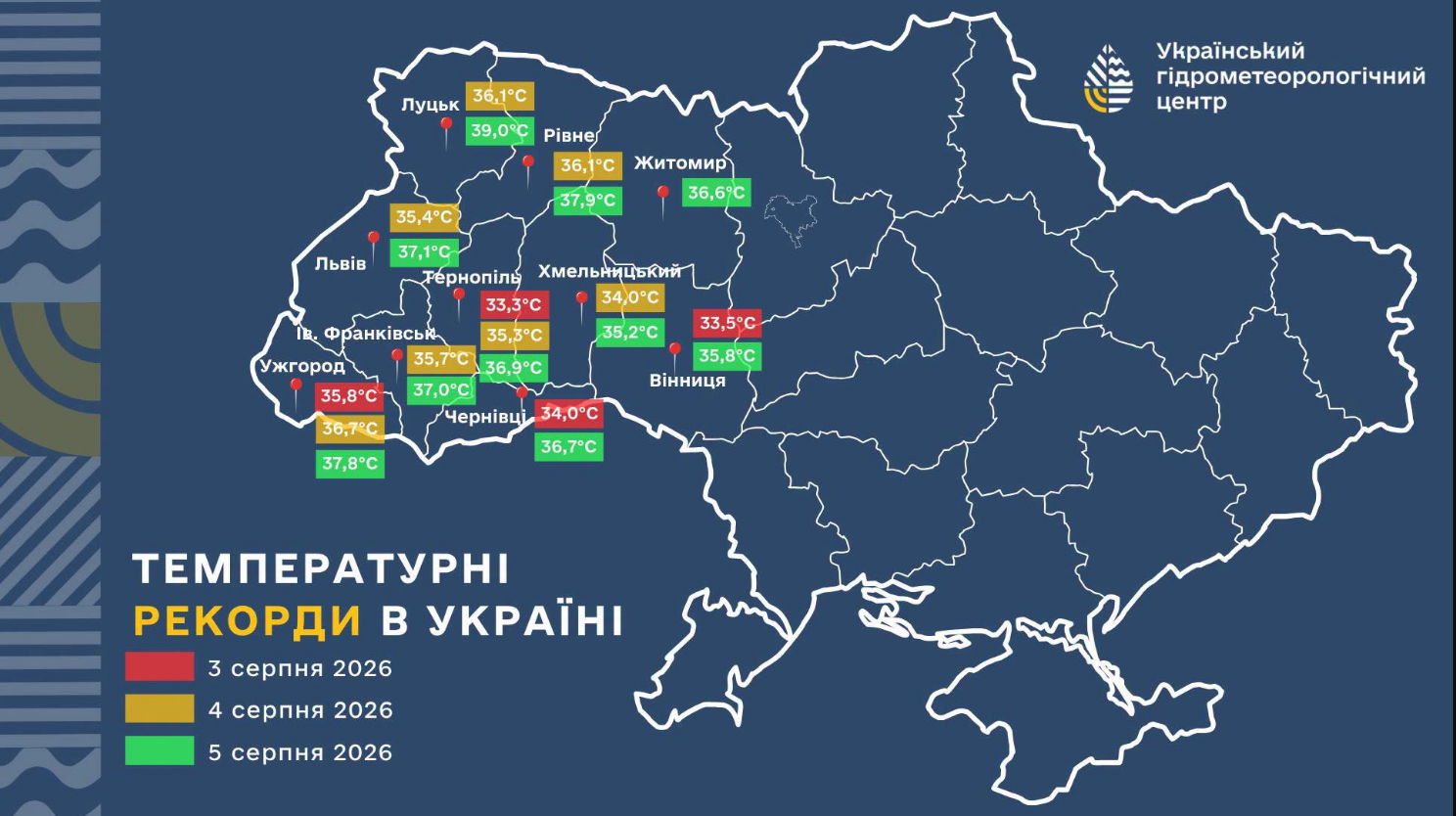
The first new highs began to be recorded on Monday, August 3. On that day, record-breaking heat was observed in four regional capitals at once. In Uzhhorod, the temperature rose to +35.8 °C. In Chernivtsi, the air warmed up to +34.0 °C; in Vinnytsia, to +33.5 °C; and in Ternopil, to +33.3 °C.
For these cities, these readings set new all-time highs specifically for August 3. The very next day, the heat wave intensified, and the number of record-breaking temperatures increased significantly.
August 4: The Heat Intensified
On Tuesday, August 4, temperature records were broken in seven regional capitals at once. The highest temperature was recorded in Uzhhorod—+36.7 °C. In Lutsk and Rivne, temperatures rose to +36.1 °C. In Ivano-Frankivsk, the temperature reached +35.7 °C; in Lviv, +35.4 °C; and in Ternopil, +35.3 °C.
Another record was set in Khmelnytskyi, where the air warmed up to +34.0 °C. Thus, new record highs were set in several cities across western Ukraine in a single day. But the next day turned out to be the hottest. On August 5, temperatures in some cities approached 40 degrees.
Lutsk reached +39 °C
On Wednesday, August 5, the heat reached its peak. The highest temperature among regional capitals was recorded in Lutsk—+39.0 °C. In Rivne, the air warmed up to +37.9 °C, and in Uzhhorod—to +37.8 °C. In Lviv, the temperature reached +37.1 °C; in Ivano-Frankivsk, +37.0 °C; and in Ternopil, +36.9 °C.
Chernivtsi was not far behind, with temperatures rising to +36.7 °C. Zhytomyr recorded +36.6 °C, Vinnytsia — +35.8 °C, and Khmelnytskyi — +35.2 °C. In other words, on August 5 alone, new temperature records were set in ten regional capitals at once. The heat hit the western regions the hardest, where temperatures exceeded +37 °C in some places.
Records were set for three days in a row
If we look at the data for the entire period from August 3 to 5, the scale of the heatwave becomes even more apparent. Over the course of three days, record-breaking temperatures were recorded in more than 20 regional capitals across Ukraine. Moreover, temperatures did not simply remain high—in many cities, they exceeded previous highs that had been considered record-breaking for those dates. The largest deviation was 5.6 °C.
The contrast between the readings on different days was particularly striking. While the record in Ternopil on August 3 was +33.3 °C, by August 5, the temperature there had reached +36.9 °C. In Uzhhorod, the temperature rose from a record +35.8 °C to +37.8 °C over those three days. In Lutsk, the situation was even more striking. On August 4, the temperature there reached +36.1 °C, and the next day it rose to +39.0 °C. Lutsk was the hottest of all regional capitals during this period.
Complete list of records
August 3:
- Uzhhorod — +35.8 °C;
- Chernivtsi — +34.0 °C;
- Vinnytsia — +33.5 °C;
- Ternopil — +33.3 °C.
August 4:
- Uzhhorod — +36.7 °C;
- Lutsk — +36.1 °C;
- Rivne — +36.1 °C;
- Ivano-Frankivsk — +35.7 °C;
- Lviv — +35.4 °C;
- Ternopil — +35.3 °C;
- Khmelnytskyi — +34.0 °C.
August 5:
- Lutsk — +39.0 °C;
- Rivne — +37.9 °C;
- Uzhhorod — +37.8 °C;
- Lviv — +37.1 °C;
- Ivano-Frankivsk — +37.0 °C;
- Ternopil — +36.9 °C;
- Chernivtsi — +36.7 °C;
- Zhytomyr — +36.6 °C;
- Vinnytsia — +35.8 °C;
- Khmelnytskyi — +35.2 °C.
Why Records May Vary Across Different Cities
Temperatures in Ukraine depend on many factors. They are influenced by a city’s location, elevation above sea level, the nature of air masses, cloud cover, wind, and other weather conditions. Therefore, even neighboring regions can have different temperatures at the same time. In one city, the air can warm up to +39 °C, while just a few dozen kilometers away, the temperature will be several degrees lower.
It is also important to note that in this case, the Ukrainian Hydrometeorological Center provides data specifically for regional centers. Local temperature records may also have been set in other settlements. The Ukrainian Hydrometeorological Center advises people to follow updates from regional and local hydrometeorological centers. That is where you can find data on records in specific cities and towns.
The heat wave set more than 20 records
Thus, August 3–5, 2026, marked a period of unusually high temperatures for Ukraine. During this time, daytime highs in many regional centers exceeded previous historical records for those dates. The most striking reading was +39 °C in Lutsk. At the same time, several cities experienced temperatures above +37 °C.
The weather during those days demonstrated just how much temperatures can vary even within a single country. While in some regions the heat was only approaching record levels, in western Ukraine thermometers had already nearly reached the +40 °C mark. The Ukrainian Hydrometeorological Center continues to monitor temperature readings. Certain regions may report new local records if the heat persists.
For meteorologists, such data is important not just as interesting statistics. Temperature records help track changes in weather conditions and compare the current situation with long-term observations. This was reported by the Ukrainian Hydrometeorological Center on Facebook.


