
September 25, 2026 — Memorial Day for Paphnutius of Egypt: The Story of the Saint and the 546 Martyrs
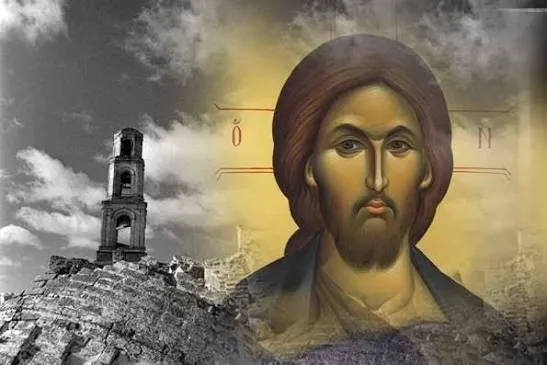
On September 25, 2026, Orthodox Christians commemorate the Venerable Martyr Paphnutius the Egyptian and 546 martyrs who, according to church tradition, were killed during the persecutions of Christians in the 3rd and 4th centuries. According to the Old Style calendar, this date falls on October 8. The saint’s story is connected with Egypt, the persecutions during the reign of Emperor Diocletian, and the people who, according to tradition, converted to Christianity after his courageous witness.
The commemoration of the holy martyr Paphnutius of Egypt and 546 martyrs falls on September 25 according to the New Style calendar. According to the Julian calendar—known as the Old Style—this date corresponds to October 8. This is why the same commemorative date can be found in different church calendars, but with a 13-day difference. In 2026, September 25 falls on a Friday. On this day, the Orthodox calendar commemorates Paphnutius the Egyptian along with 546 martyrs. His commemoration is also associated with other calendar dates, notably April 19, which is observed in some church traditions.
This is not a public holiday nor an additional day off. It is specifically a church day of remembrance dedicated to the saint and to those who, according to Christian tradition, died alongside him or following his sermon. For believers, this date is first and foremost a day of prayer and remembrance of the martyrs. In churches on this day, prayers may be offered to Saint Paphnutius and his companions during the divine service.
Who Was Paphnutius the Egyptian?
Paphnutius lived in Egypt during the early Christian era. According to church tradition, he left his ordinary life behind and settled in the desert, where he devoted himself to prayer and spiritual asceticism. That is why, in church tradition, he is referred to not simply as a martyr, but as a holy martyr. Paphnutius lived at a time when Christians in the Roman Empire faced persecution for their faith. His life is associated with the reign of Emperor Diocletian, who ruled from 284 to 305. This period in the history of Christianity is known as one of the most severe periods of persecution.

According to tradition, Paphnutius lived in the desert near the Egyptian city of Tentira. He did not hide his faith and, according to his hagiography, helped other Christians remain faithful to their beliefs. When the local governor ordered a search for Paphnutius, the saint did not go into hiding. On the contrary, according to tradition, he went to the governor himself and openly declared his faith in Christ. After that, he was arrested and tortured. It was this very moment that marked the beginning of a story that would later link Paphnutius not only to his own martyrdom but also to that of hundreds of others.
How Paphnutius Endured Torture
The saint’s life describes several attempts to kill Paphnutius. According to church tradition, he was tortured, but he refused to renounce his faith. During the torture, two soldiers who were tormenting Paphnutius witnessed his steadfastness and, according to tradition, came to believe in Christ themselves. They are known as Dionysius and Callimachus. Afterward, they were also executed. After his torture, Paphnutius was thrown into prison. There, according to his hagiography, he continued to speak with other prisoners about the Christian faith.
According to tradition, Paphnutius converted 40 prisoners to Christianity while in prison. They were later executed as well. In church tradition, this story has become an example of how even imprisonment did not prevent the saint from continuing to preach. Afterward, Paphnutius was released for a time. He was taken in by a Christian named Nestorius. According to his hagiography, after spending time with Paphnutius, Nestorius and his family were further strengthened in their faith and eventually also suffered a martyr’s death.
The Story of the 546 Martyrs
The most well-known part of Paphnutius’s story is connected specifically with the number 546 martyrs. According to church tradition, the saint’s example inspired many other Christians to openly profess their faith. Among them were people who were already aware of the persecution and understood the consequences of openly professing Christianity. Despite this, according to tradition, they did not renounce their faith. Sources indicate that a total of 546 men suffered a martyr’s death. Some were beheaded with swords; others were burned at the stake. This number has become an integral part of the Church’s commemorative title for the saint—“Paphnutius the Egyptian and with him 546 martyrs.”

Thus, this day is dedicated not only to one saint. The Church simultaneously commemorates a large group of people who, according to tradition, died because they refused to renounce the Christian faith. The story of the 546 martyrs also explains why, in the church calendar, Paphnutius’s name is almost always mentioned alongside this number. It has become part of the commemoration of his martyrdom.
What Happened to Paphnutius Himself
According to his hagiography, his persecutors tried to kill Paphnutius in various ways. One of the most unusual episodes is the story involving a stone. A stone was tied around the saint’s neck, and he was thrown into the river. According to church tradition, Paphnutius did not die and managed to reach the shore along with the stone. This episode in his hagiography is described as a miraculous rescue. After that, his persecutors continued their attempts to execute him. Eventually, according to tradition, Paphnutius’s case was referred to Emperor Diocletian himself.

The emperor ordered the saint to be executed. According to his hagiography, Paphnutius was crucified on a date palm. This is how, according to church tradition, his earthly life came to an end. The story of Pafnutius’s martyrdom became the basis for his veneration in the Orthodox tradition. He was included in the calendar as an example of a person who, according to church tradition, did not renounce his beliefs even under threat of death.
Why Pafnutius Is Called a “Venerable Martyr”
The title “Venerable Martyr” combines two concepts. “Venerable” refers to a person who has dedicated his life to spiritual and monastic devotion. A “martyr” is one who died for the faith. According to his hagiography, Paphnutius initially lived as a hermit and devoted himself to prayer. It is this part of his life that explains the term “venerable.”

But his story did not end with a peaceful monastic life. He was captured during the persecution of Christians, tortured, and ultimately executed. Therefore, in the church calendar, he is specifically referred to as the Venerable Martyr Paphnutius the Egyptian. This distinguishes him from other Saints Paphnutius, who also appear in the church calendars.
What Was the Period of Persecution of Christians Like?
Paphnutius lived at a time when Christianity was not yet the state religion of the Roman Empire. Christians were subject to persecution at various times, although the intensity and scale of such persecution varied depending on the ruler and the region. The persecutions during the reign of Diocletian became particularly notorious. It is these persecutions that church tradition associates with Paphnutius. During this period, Christians could be forced to renounce their faith and offer sacrifices to the Roman gods. Refusal could have serious consequences. People were imprisoned, tortured, or executed. It is against this backdrop that church sources describe the story of Paphnutius and his companions.
For early Christians, the memory of the martyrs held special significance. They were regarded as examples of people who did not renounce their faith even under extremely difficult circumstances. That is why the stories of such saints were preserved in the church tradition and eventually found their way into the calendars. The commemoration of these saints became an integral part of the liturgical life of Christian communities.
What People Do on September 25
The commemoration of Paphnutius does not have any specific mandatory customs, such as those associated with folk holidays that feature particular dishes or rituals. The main focus of this day is religious. Believers can visit a church and participate in the service. On this day, one can also pray for oneself, family, and loved ones, give thanks for life, and ask for strength in difficult situations. Pafnutius himself and the 546 martyrs are commemorated separately. Their story serves as a reminder of faith, fortitude, and the willingness to remain true to one’s convictions.
For someone who does not follow church traditions, this day can simply be an opportunity to learn more about the early history of Christianity. The story of Paphnutius illustrates just how challenging the period of the formation of Christian communities in the Roman Empire was. It’s also a good day to do a good deed. Helping a loved one, supporting someone going through a difficult time, or contributing to charity—such acts align with the Christian understanding of mercy.
Are There Any Folk Superstitions or Taboos?
Over time, folk omens and everyday superstitions have developed around many church holidays. However, it is important to distinguish between church tradition and later folk beliefs. There is no universally recognized set of mandatory folk rituals for the feast day of Paphnutius. The focus remains on commemorating the saint and the martyrs, as well as on worship. Therefore, claims that on this day one must not perform certain household chores, go anywhere, or use certain items should not be presented as church rules without verification.

In the Christian tradition, prayer, participation in worship, acts of mercy, and concern for others are far more important. The saint’s memorial day should not be reduced to merely a list of prohibitions. If a person observes fasts or other church rules, these should be determined according to the calendar of their church community. In particular, in one Orthodox calendar, September 25 is marked as a non-fasting day, while Old Style calendars may have different markings for this date.
Interesting Facts About Paphnutius the Egyptian
One of the most interesting details of his life story is that, according to tradition, Paphnutius went to the ruler of his own accord, even though soldiers had already been sent after him. He did not wait for them to find him but openly declared his faith.
Another unusual episode is the story of the stone tied around his neck. According to church tradition, the saint was thrown into a river, but he survived and made it to shore. This episode is one of the most famous parts of his hagiography.
According to tradition, Paphnutius converted 40 prisoners to Christianity. Their subsequent execution is also mentioned in his hagiography.
Another detail is the story of the soldiers Dionysius and Callimachus. According to tradition, they initially participated in the torture of Paphnutius, but after witnessing what happened, they themselves became Christians and suffered a martyr’s death.
And, of course, the most notable figure in this story remains the 546 martyrs. That is precisely why their commemoration was included in the church calendar alongside Paphnutius, rather than separately from him.
What Does the Name Paphnutius Mean?
The name Paphnutius has ancient Egyptian origins. It is associated with the Coptic name Papnuti, which is interpreted to mean something like “man of God” or “one who belongs to God.” Today, the name Paphnutius is quite rare. It belongs to the category of ancient names that have been preserved primarily in ecclesiastical and historical traditions.
At the same time, there are several saints with this name in the Orthodox calendar. Therefore, when referring specifically to September 25, it is important to clarify that this refers to Paphnutius the Egyptian and the 546 martyrs. It should also not be confused with Paphnutius of Alexandria, who lived in a different era and has a different history. Church reference books list the various saints with this name separately.
What Is Commemorated on This Day
September 25 on the church calendar is not simply a day of remembrance for one man. Along with Paphnutius, 546 martyrs are commemorated who, according to church tradition, died for their faith. Their story dates back to the early Christian period and is linked to Egypt and the persecutions during the reign of Diocletian. That is why this day holds special significance for those interested in the history of the early Church.

For believers, it is an opportunity to remember people whom church tradition considers examples of steadfastness. For the history of Christianity, it is yet another testament to how important the stories of the martyrs were in shaping religious memory. In 2026, according to the New Style calendar, this day falls on September 25, and according to the Old Style calendar, on October 8. The main idea behind the day is not a grand celebration, but remembrance. The Church commemorates Paphnutius and his companions as people who, according to tradition, remained faithful to their faith even in the face of death.




