
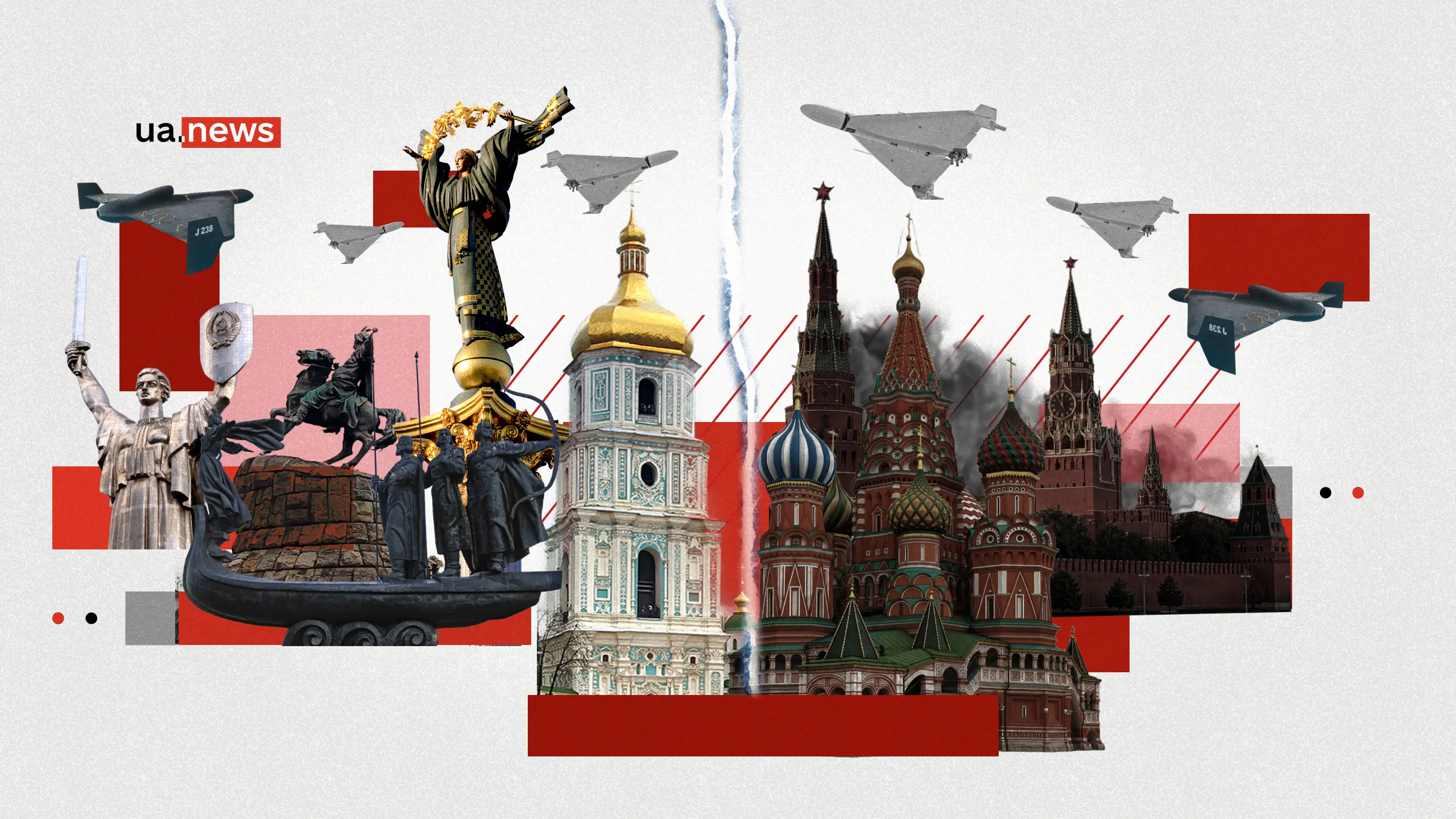
May 2026 will undoubtedly go down in the history of the war, though not as a month of decisive battles on the front lines or a month when the sides finally moved closer to peace—unfortunately. Rather, it will be remembered as a period of unprecedented aerial terror directed specifically against the capitals of the warring nations.
What is happening now goes beyond the usual logic of war. It is not even formally a “strike against military targets only,” as Russian propaganda likes to repeat. It is a deliberate bet on terrorizing metropolitan areas as a tool of political pressure.
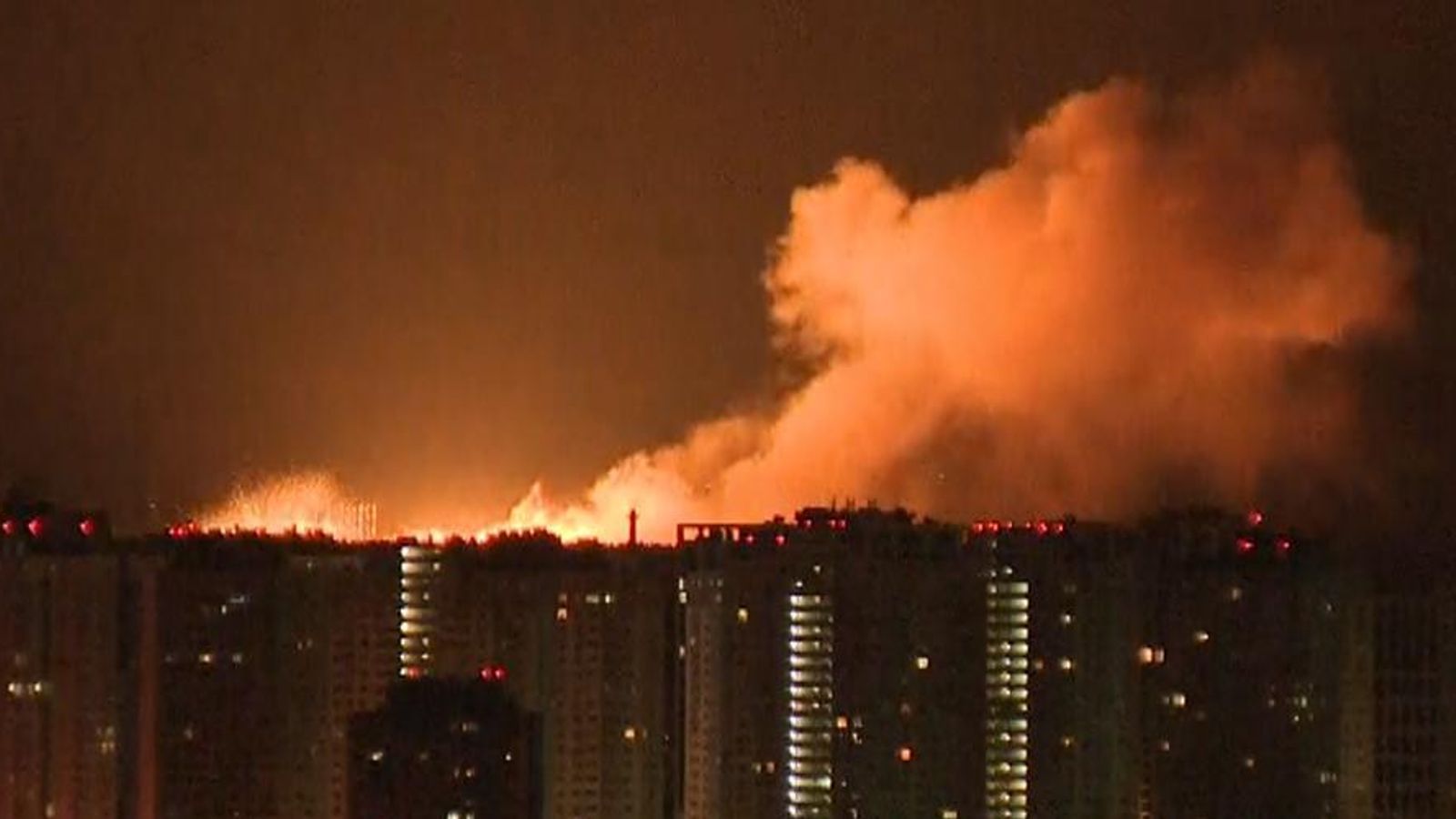
On May 15, Kyiv endured an attack that was immediately dubbed the largest since the full-scale invasion began. For nearly a full day (!), the city shook from explosions. At the same time, a Russian missile struck a residential building in Darnytsia—24 civilians were killed. The city had barely recovered when, just two days later, on May 17, a mirror image of that horror (albeit on a smaller scale) struck Moscow and the Moscow region. Muscovites faced a record number of drones, resulting in dozens of injuries, three deaths, and hours of nighttime panic.
And then came the night of May 24, which surpassed all previous scales. Everything imaginable in the Russian arsenal was raining down on Kyiv and the region: fifty missiles of various types, hundreds of “Shaheds,” and even the infamous “Oreshnik” (without a warhead). They struck absolutely every district of the capital; markets, shopping centers, historic buildings, and, of course, residential buildings were ablaze. The air defense system, as even Ukrainian monitoring sources acknowledged, could not cope with such an overwhelming barrage. It was a night of pure, unadulterated terror.
These events marked a new threshold of escalation. The parties make no secret of the fact that attacks on capitals are their priority. But why do they specifically target capitals for such attacks? Is there any military logic to this? And why is this a strategy that leads nowhere? UA.News political analyst Mykyta Trachuk, together with experts, examined the issue.
In Search of the “Center of Power”: The Role of Capitals in the Lives of Ukraine and Russia
To understand the nature of this mutual terrorization—which, incidentally, would not exist without the ongoing Russian aggression—we need to dig a little deeper and understand the very role of capitals in the lives of our nations. Historically, both Ukraine and, especially, Russia have been catastrophically “capital-centric” countries. This is not just a political science term, but an entire cultural code: for many years, all the political, economic, social, and cultural capital of these nations has converged on a single point on the map.
In Ukraine, this happened, first, due to the direct legacy of the USSR with its rigid vertical power structure (although Kyiv only gained capital status in 1934; prior to that, Kharkiv was the main city of the Ukrainian SSR), and second, because Ukraine is a unitary state—as they say, with all the ensuing consequences. The war has only intensified and expanded this centralization of power. It is in Kyiv that all key decisions are made; it is here that all financial flows converge (international aid, humanitarian missions); it is here that the logistics and planning centers are located; and it is here that people from the regions still come in search of a better life, and so on.
Kyiv is not just a city, but the nerve center of the entire system. It may be painful and difficult, but one can still imagine Ukraine without certain temporarily occupied territories (Crimea, Donetsk, and Luhansk, etc.). But most likely, no one is capable of imagining Ukraine without Kyiv. This is precisely where the “capital-centricity” of the Ukrainian state manifests itself.
The situation in Russia is even more paradoxical. Formally, it is, in fact, a federation where powers should be distributed among the regions. But in practice, Russia is a highly centralized state with a single decision-making center. The famous line from the cult film “Brother”—“You have to go to Moscow; all the power is in Moscow!”—has become not just a fitting movie quote, but a true political diagnosis. All the power really is in Moscow: that’s where the money is, that’s where the power is, that’s where key financial transactions take place, etc.
For comparison and context: in the United States, no one goes to Washington in search of a better life—they go to New York, Los Angeles, San Francisco, Miami, Chicago, and so on. In Germany, the financial world revolves around Frankfurt and Hamburg, fashion in Munich, industry in Stuttgart, and politics in Berlin, which is modest compared to the others. In Belgium, far from everyone chooses the bustling, sprawling Brussels for their life and career: there is Antwerp, there is Bruges, and so on. In Switzerland, there is no official capital at all, and the country has several centers: Geneva, Zurich, Basel…
One could cite similar examples for a very long time. Their key point is this: there is no such overwhelming pull of everyone and everything toward the administrative capital. We, on the other hand, have all of that. And it is precisely this “capital-centricity” that has made Kyiv and Moscow the most “tempting” targets in a war of attrition. They are the hearts of the states, and these hearts, of course, the enemies are trying to stop.

“Mirror War”: Who Will Shoot Whom
And it is precisely because of all of the above that Russia is so relentlessly terrorizing Kyiv. The calculation is very simple: destroy the “heart” of Ukrainian resistance, sow panic in the country’s most populous city (even during the war, that’s about 3.5 million people), force ordinary citizens to tremble with fear in their homes and shelters, and the authorities—in their own offices or bunkers. The Kremlin’s logic is presumably as follows: if Kyiv residents witness the complete helplessness of the air defense and the horror of the destruction, sooner or later they will take to the Maidan demanding an end to the war on any terms. And even if not—well, then they will at least suffer greatly. Not to mention that during air raid alerts, half the capital is simply “paralyzed”: from the metro on the left bank to shopping malls and popular restaurants.
Ukraine is trying to mirror this. The phrase “Moscow is not Russia” was not coined by Ukrainians. It is a very old, deeply rooted perception of Muscovites who live much better than the rest of their country, in their own fenced-off world, where even war exists mainly only on television screens. This sense of injustice, common to many Russians, is compounded by a rich historical experience in which the “center” has prospered at the expense of the “periphery.”
Ukrainian strikes on Moscow and the surrounding region are an attempt to shatter this “bubble” of security. It is an attempt to bring the war to a place where, for a long time, it was merely an abstract propaganda image. The goal of these strikes on both sides is not military at all: it is political and psychological. Destroying a certain number of warehouses or headquarters on the outskirts of Moscow or Kyiv (if they even exist there) is a secondary task. The main thing for Ukraine is to force the Russian political class and the residents of the “golden towers” to physically experience what Ukrainians have been feeling for years. For the Russians, the main goal is simply to terrorize Kyiv so that there is no question of any normal life here.
And all of this will only intensify. Escalation here is not merely likely, but guaranteed. Yet in this game without rules, which we are witnessing in May 2026, there is one fatal miscalculation that leads it down a dead-end path.
A Road to Nowhere: The Size of the Metropolis and the Law of Large Numbers
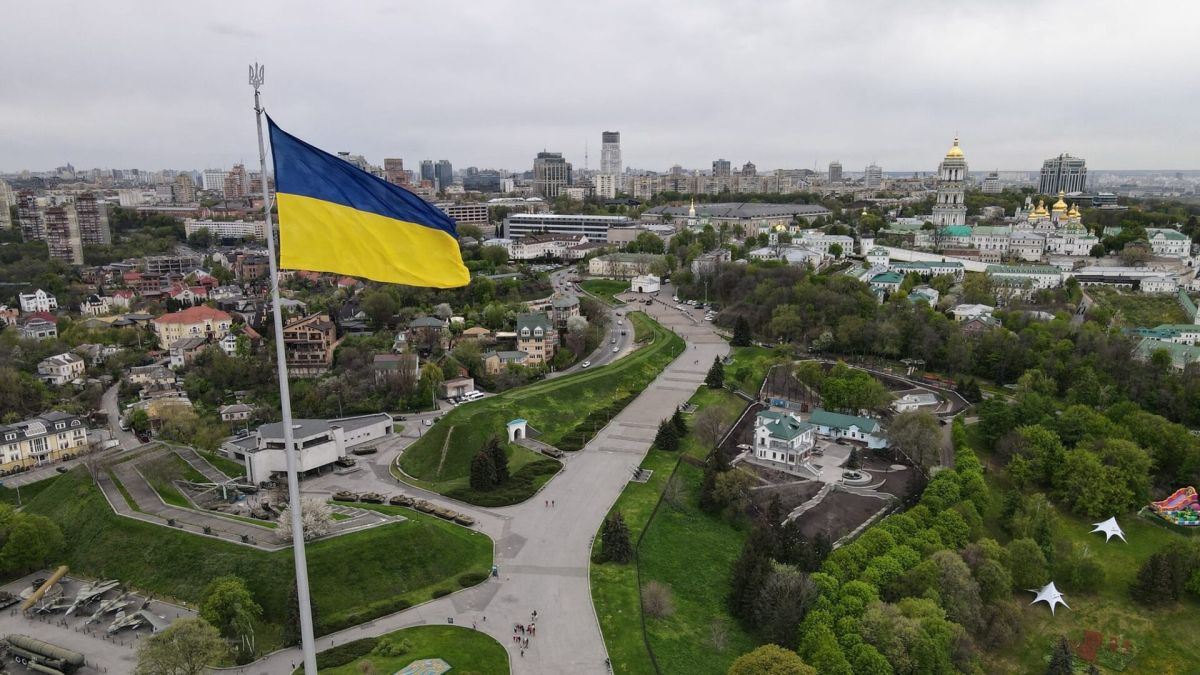
The problem with the “capital terror” strategy lies in basic mathematics and geography. Kyiv is a massive metropolis. Its area is over 840 square kilometers. To put it in perspective: that’s like eight Parises, 25 (!) Brussels, nine and a half Zurichs, almost three Bratislavas, two Viennas, one and a half Warsaws and Budapest, etc.
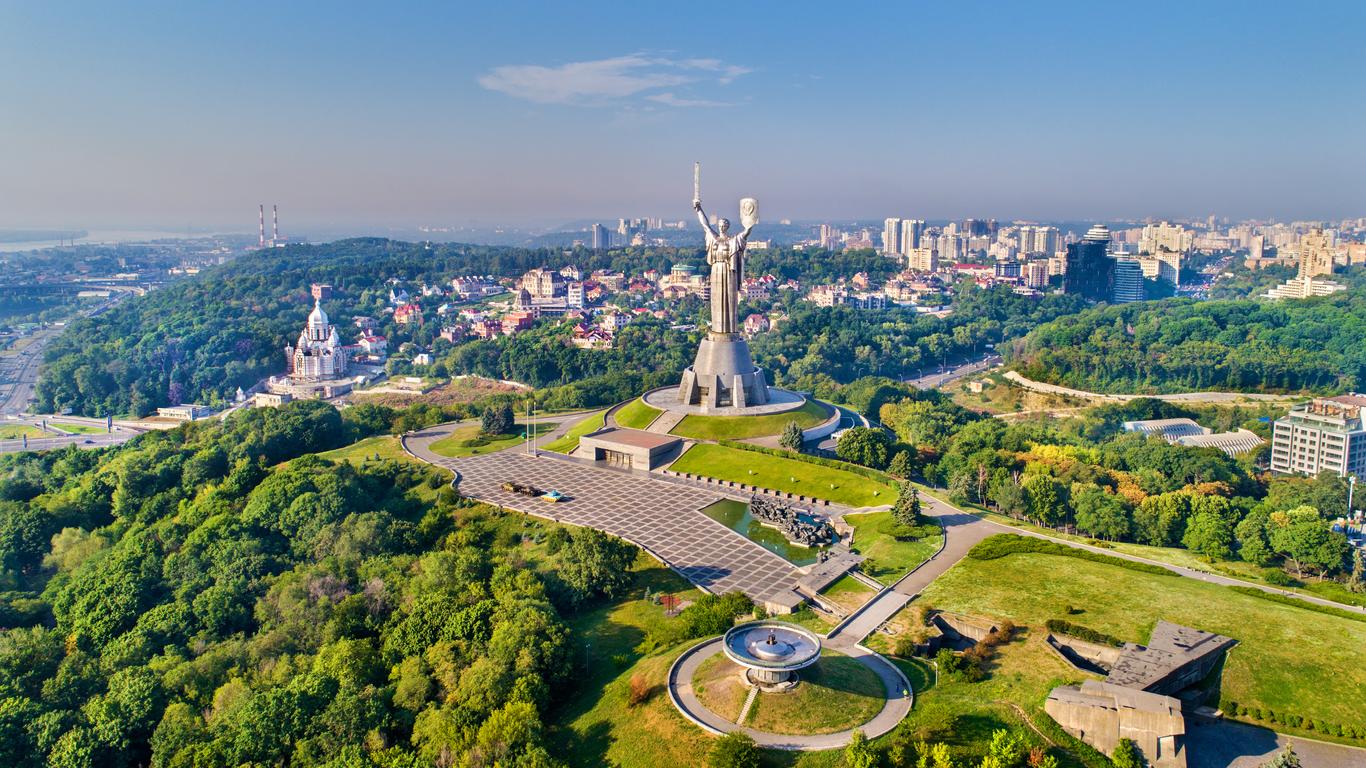
For five years now, this massive city has been bombed by missiles and drones. And what do we see? Are Kyiv residents running in panic through the streets? Are they demanding immediate surrender? Are they waiting for Putin’s “liberation”? Apparently not. On the contrary, society is uniting in its hatred of the aggressor and adapting even to the simulacrum of life we have now. The psychological breakdown the Kremlin was counting on is not happening.
Now let’s imagine Moscow. It is a monster of a city, three times larger than Kyiv in area and four times larger in population. An attempt to inflict on Moscow the same level of terror that Kyiv experienced on May 24 requires resources that simply do not exist in the Ukrainian arsenal. One could even send a thousand drones to strike a series of targets in the Moscow region, sow chaos at airports, reach Moscow itself, and even hit some oil depots or residential neighborhoods. This would instill fear, this would provoke anger, but it would not paralyze life in a 20-million-strong metropolitan area. The sheer scale of capital cities makes them nearly invulnerable to the tactics of total destruction that Russia employs in the Donbas.

That is precisely why all of this is a road to nowhere. Bombing Kyiv with the intensity seen on May 24 could continue for decades—and the result would remain the same: destruction, casualties, but not the collapse of statehood. As for Moscow, with its sheer scale, it could be terrorized for a hundred years, but the “strength” inherent in the city’s size and resources will not disappear.
This is not 1618, nor even 1812. There is neither Konashevich-Sagaidachny nor Napoleon. And burning Moscow, as in the past, unfortunately, will no longer be possible. The same applies, fortunately, to Kyiv.

Expert Opinions
Military expert and retired SBU Colonel Oleg Starikov believes that in this context, it makes no sense to resort to the tactics—or even the military strategy—of the recent strikes on Kyiv itself. Here, we need to consider a broader political strategy.
“We are approaching the point where conventional warfare is turning into ‘urban warfare.’ This is the most dangerous and terrifying scenario. The recent strikes are ‘urban warfare.’ This means that the adversaries will launch strikes in accordance with doctrines aimed at destroying not only the military-industrial complex but also as part of psychological pressure on the rear. Here is the key point about these strikes… The outcome of World War II showed that the classic bombing of Germany, for example, did not lead to anything significant on a global scale. Take the bombing of Dresden, for instance. Why was Dresden, a cultural center of Europe, destroyed? No one can say. But the city was wiped off the face of the earth. Before the nuclear strikes on Hiroshima and Nagasaki, the Americans carried out massive bombing raids on Tokyo. They killed 100,000 Japanese, and a million lost their homes, but Japan did not end the war; it had no impact on the battlefield. In other words, massive shelling of cities does not lead to a change in the situation on the front lines. Neither the enemy’s operations against us nor our special air operations against the enemy have any impact on the front at all.
The “war of cities” will lead to further escalation. As a result, if the “eye for an eye” principle continues to prevail, there will be no winners at all. More and more civilians will die, but there will still be no changes on the front lines. Senior military leaders—both ours and the enemy’s—must cool down, take a breath, and define the boundaries beyond which strikes are strictly prohibited. But the war party in the Kremlin has won; that much is clear. I fear that at this rate, we’ll soon see carpet bombing. When even cities in the rear are simply reduced to rubble. If we adhere to the principle of “an eye for an eye, a tooth for a tooth,” it will be simply impossible to stop,” Oleg Starikov is convinced.
Retired U.S. Navy Captain Harry Tabach, a military expert, agrees with this assessment.
“There’s hardly any military logic to any of this. It’s more a matter of politics and psychology. As we can see, such strikes don’t change anything on the front lines. Even the harsh winter that froze the entire country didn’t change anything on the front lines. Why, then, continue all this? Clearly, it’s terror for terror’s sake. They (the Russians—ed.) need to keep the war going, stir up the people, and rally them around a ‘victory’ over all these so-called ‘fascist murderers,’ Harry Tabach noted.
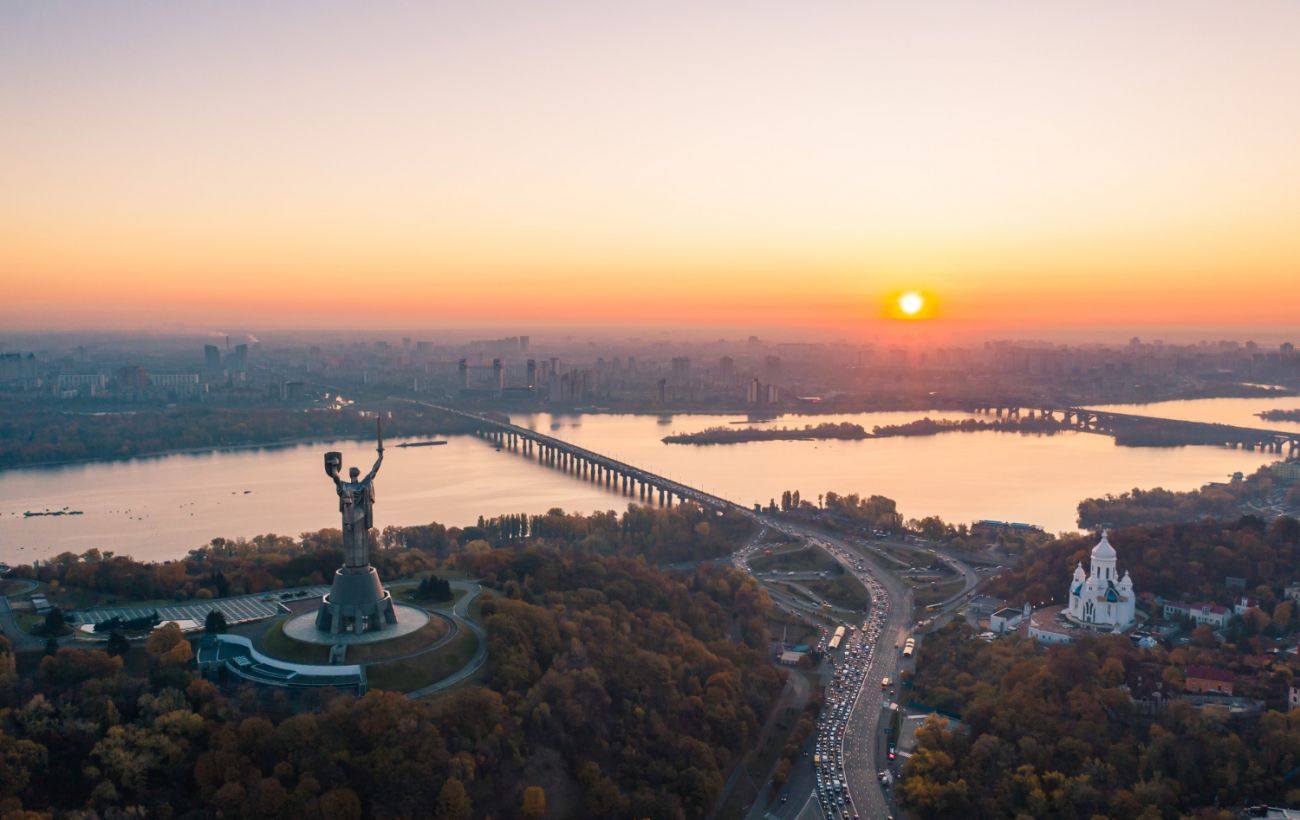
In summary, the May attacks became yet another symbol of escalation, but they have finally broken away from any military expediency. This is a pure psychopolitical game and, in fact, an absolute dead end. Mutually striking at the “hearts” of nations is not the path to victory, but the road to collective suicide amid the ruins of residential buildings, markets, and shopping centers.
Kyiv and Moscow are too large to be “brought to their knees” from the air with the available forces and resources. No stockpile of missiles or drones would be enough for this (at least for now). The only thing guaranteed to grow along this path is the number of casualties and the intensity of mutual hatred. This is a zero-sum game, where instead of zero, there is an infinite minus. And if we have already seen the launch of the “Oreshnik” without a warhead, then the next step on this ladder of escalation will sooner or later be something that is too terrifying to even think about aloud.


