
The Ministry of Culture has revealed details about Russia's investments in propaganda through content
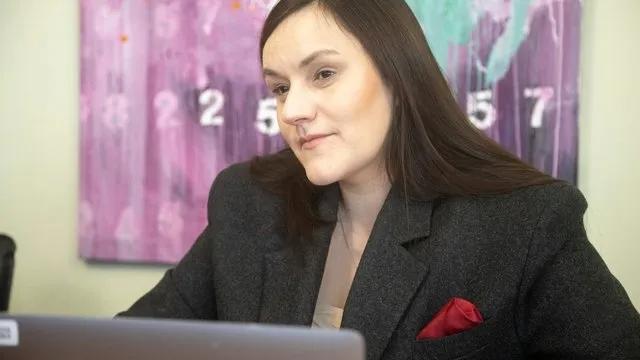
Ukrainian authorities claim that Russia spends billions of dollars annually on cultural and children’s propaganda. A significant portion of these funds goes toward media content and exerting influence through cartoons and digital platforms, Berezhna emphasized in Kyiv on Tuesday during the presentation of the results of a study on Ukrainians’ content consumption, conducted by Gradus on behalf of the Ministry of Culture of Ukraine, with support from the MHP-Hromadi Charitable Foundation. Officials in Kyiv stress that the response must be the development of Ukrainian cultural products.
Russia continues to actively use cultural and media content as a tool of influence, spending enormous sums on it, and this involves not only information policy but also shaping children’s worldviews through entertainment products that are widely distributed online. According to Tetiana Berezhna, last year alone Russia allocated approximately $1.4 billion to content-based propaganda and another roughly $700 million to the ideological education of children. She emphasized that cultural products have become part of a systematic strategy of influence that operates unnoticed by the consumer.
Berezhna pointed out that Russian cartoons and TV series remain extremely popular among children. In particular, she noted: “As the mother of a three-month-old child, it saddens me deeply to realize that the Russian animated series ‘Masha and the Bear’ garnered 800 million views in 2025. In this way, Russian culture is subtly, very gently, penetrating the minds of our children.”
She also emphasized that the algorithms of streaming and social media platforms often amplify Russian content because it is already highly popular among users. According to the minister, Ukrainians continue to encounter Russian artists on music services such as Apple Music, as well as in recommendations on TikTok, YouTube, and Instagram.
“This wave can no longer be stopped. Therefore, we must create all the conditions necessary to develop a high-quality Ukrainian alternative. So that there is an abundance of Ukrainian content and cultural products across various fields. So that it helps Ukrainians who consume it to counter information threats. This is a huge guarantee of victory in our full-scale war,” Berezhna stated.
The Ministry of Culture also noted that a new program to support content creation has been launched in Ukraine, aimed at stimulating the development of national cultural products. UAH 4 billion has been allocated for its implementation in the 2026 budget, and most of these funds are expected to be utilized by the end of the year.
The ministry emphasizes that expanding the Ukrainian media space is viewed as one of the key tools for countering external information influence and ensuring long-term cultural security.
The head of the Investigative Committee of the Russian Federation, Alexander Bastrykin, has ordered an investigation into the works of children’s author Grigory Oster due to “attitudes that are questionable from a pedagogical standpoint.” The investigation concerns such well-known books as “Harmful Advice,” “38 Parrots,” and “A Kitten Named Gav.”
The Security Service of Ukraine has notified Alexander Bastrykin, head of the Russian Investigative Committee, of the charges against him. The criminal is facilitating mass repression in the temporarily occupied territories of our country.
The Moscow City Court has ruled that Mikhail Khodorkovsky’s book “How to Kill a Dragon: A Guide for Beginner Revolutionaries” constitutes extremist material.
The Tagansky District Court of Moscow issued a new ruling regarding the sentence of Boris Akunin (real name—Grigory Chkhartishvili). Instead of a general-regime penal colony for part of the term, a strict-regime penal colony has now been assigned—this applies to the additional year in the case regarding the “foreign agent” charge.


