
The Special Anti-Corruption Prosecutor's Office (SAP) has identified the key condition for combating corruption in the defense sector
The National Anti-Corruption Bureau (NABU) and the Specialized Anti-Corruption Prosecutor’s Office (SAPO) are unable to eradicate corruption in the defense sector on their own, the head of the Specialized Anti-Corruption Prosecutor’s Office stated on August 10. According to him, a systematic solution to the problem requires changes that go beyond the scope of the anti-corruption agencies’ work.
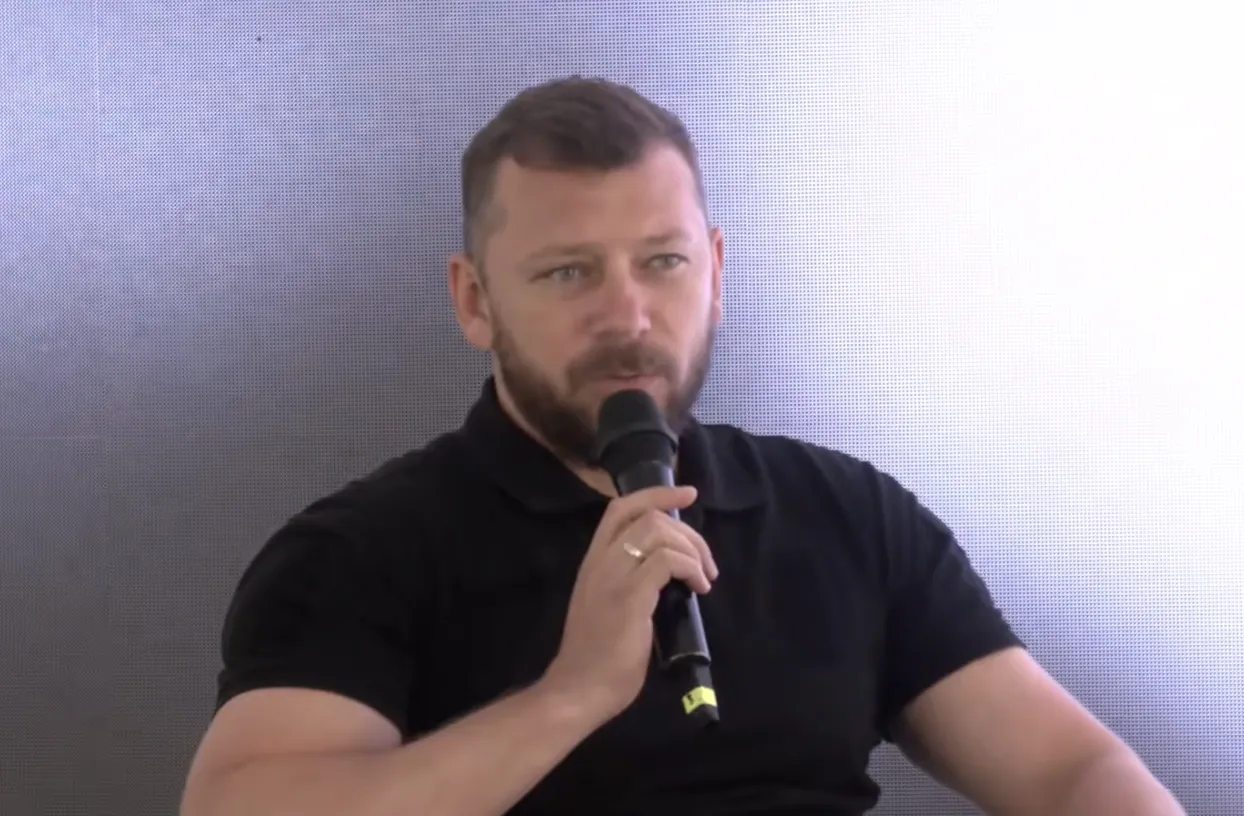
SAPO Head Oleksandr Klymenko issued this warning during a briefing.
“Can we combat corruption in the defense sector with just NABU and the SAPO? No, we cannot. Because the budget is enormous, the number of procurements is enormous, and each one may carry a certain risk of corruption,” Klymenko emphasized.
He also explained that this must be a joint effort involving both anti-corruption agencies and the Ukrainian Ministry of Defense itself.
The head of the SAP confirmed that the Ministry of Defense recently approached NABU for the first time to obtain a risk analysis identifying potential corruption in the defense sector.
“They provided such an analysis, and this can only happen in a symbiotic relationship where the Ministry of Defense is also taking steps to reduce this corruption,” Klymenko explained.
Against this backdrop, he noted that NABU and the SAP can only investigate specific cases and shed light on how corruption operates.
However, only the Ministry of Defense has the authority to make administrative decisions to prevent corruption from spreading further.
As for the anti-corruption agencies, they currently lack the necessary number of investigators and prosecutors to handle such a large volume of cases.
“So this can only be a symbiotic relationship. Is there corruption there? Yes, there is. How can it be overcome? It takes a series of steps. That is, if we see kickbacks in procurement—a million dollars went toward the purchase of drones. These are basic things: a company simply cannot win a contract without a kickback. What should be done about this? To address this, we need to utilize administrative resources,” Klymenko explained.
According to him, this involves transparent tenders and procurement processes so that companies offering high-quality and lower-cost goods win the contracts.
Source: NABU
As a reminder, NABU is investigating officials who are hidden owners of defense companies.
In the first half of the year, as of August 10, courts handed down 55 guilty verdicts in cases investigated by NABU and the Specialized Anti-Corruption Prosecutor’s Office (SAPO). Among those convicted are four high-ranking government officials, 11 heads of state-owned enterprises, as well as judges and prosecutors.
The state-owned enterprise “NAEK Energoatom” does not have the status of an aggrieved party in the “Midas” criminal case. At the same time, according to Kryvonos, as of August 10, the investigation had established that more than $100 million had been transferred through a so-called “laundromat”—a back-office operation for money laundering.
The level of corruption in Ukraine is not decreasing, and corruption among top officials, according to SAPO Head Oleksandr Klymenko, is even on the rise. He stated that the fight against bribery is hampered, in particular, by a lack of political will and a number of problems in the functioning of the anti-corruption system.
The Appeals Chamber of the High Anti-Corruption Court has remanded one of the suspects in the “Midas” case, Ihor Myronyuk, into custody. Bail in the amount of 85 million hryvnias was set as an alternative to pretrial detention, but it has not yet been posted.
As a reminder, NABU and the Specialized Anti-Corruption Prosecutor’s Office (SAPO) announced new charges against a former Energoatom official in connection with the “Midas” case. According to “Suspilne,” citing case materials, the suspect is Dmytro Basov, the company’s former executive director for physical protection and security.


