
Today, Ukraine commemorates the victims of the Crimean Tatar genocide
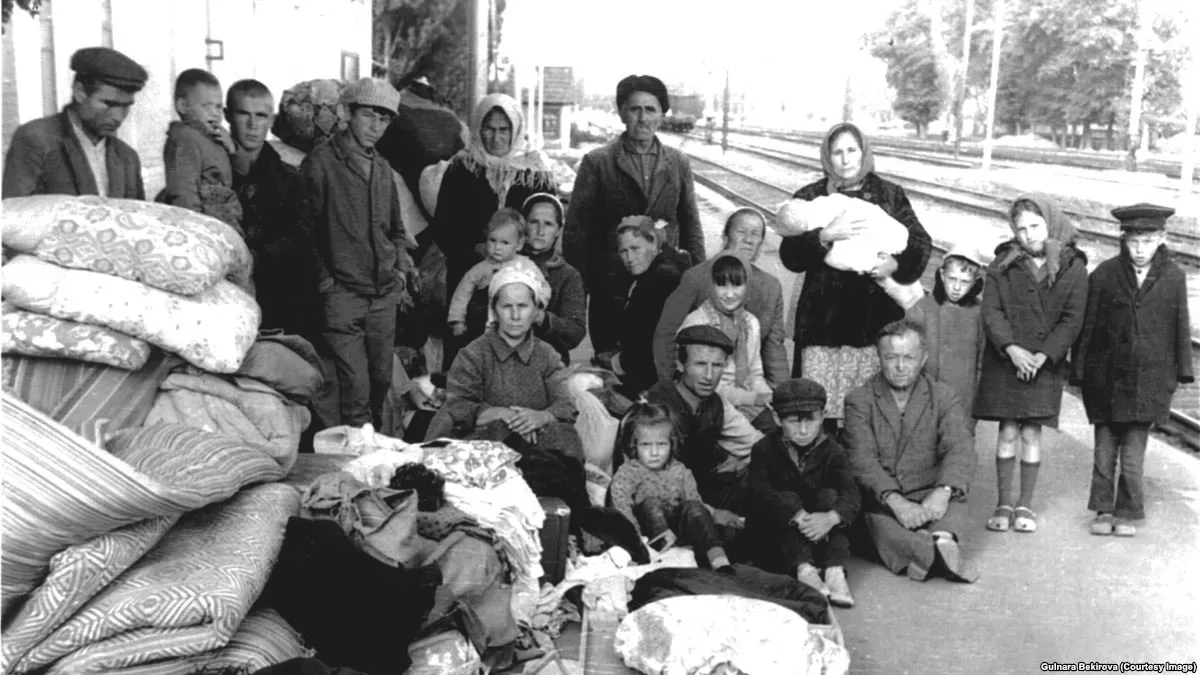
Today, May 18, Ukraine commemorates the victims of the genocide of the Crimean Tatar people, remembering the events of 82 years ago, when the Soviet authorities deported the indigenous population from the Crimean Peninsula.
This day is officially designated as the Day of the Struggle for the Rights of the Crimean Tatars.
The mass forced deportation, which began in May 1944, became one of the largest and most horrific crimes of the Soviet totalitarian regime.
At dawn on May 18, 1944, the deportation of the Crimean Tatar people from Crimea began. The Soviet authorities accused the entire people of treason and collaboration with the Nazis and ordered their expulsion from the Crimean Peninsula.
The brutal punitive operation was carried out by NKVD forces at an extremely rapid pace.
In just under three days, approximately 200,000 people were deported from Crimea; in Ukraine and some other countries, these actions by the Soviet regime are recognized as genocide against the Crimean Tatar people.
The expulsion of German troops served as the catalyst for this large-scale ethnic cleansing. On May 13, 1944, the Nazi German army retreated from Crimea, and the peninsula came under Soviet control.
On orders from Moscow, NKVD troops herded nearly the entire Crimean Tatar population remaining on the Crimean Peninsula into railway cars and sent them toward the republics of Central Asia.
The Soviet leadership applied the principle of collective responsibility, completely ignoring the military merits of many members of the nation.
According to the Ukrainian Institute of National Remembrance, although approximately 15% of Crimean Tatar men fought on the side of the Red Army, the Soviet regime still accused the people of treason.
Most of those deported ended up in Uzbekistan and neighboring regions of Kazakhstan and Tajikistan. They found themselves in so-called special settlements with a strict curfew regime, which more closely resembled labor camps.
The Soviet command-and-control system also began a systematic destruction of the cultural identity of the deported ethnic group.
The children of the deportees could receive an education in Russian or Uzbek, but not in Crimean Tatar.
Repressive measures and discrimination on ethnic grounds continued for many decades. Until 1957, any publications in this language were banned, and the article on the Crimean Tatars was removed from the Great Soviet Encyclopedia.
It was also forbidden to list this ethnicity on passports. The ban on Crimean Tatars returning to Crimea remained in effect until 1989.
It was not until 1989 that the Supreme Soviet of the Soviet Union condemned the deportation and recognized it as illegal and criminal.
At that time, Crimean Tatars began returning to their homeland. The Soviet authorities did not assist them or compensate them for the land they had lost.
Seventy years later, the crimes were repeated. The descendants of Soviet NKVD officers, having occupied Crimea in 2014, resumed brutal oppression, repression, and abductions, persecuting people based on their ethnicity or religious affiliation.
The Russian Federation has completely copied Soviet methods of suppressing civil society on the peninsula.
In political views and sympathies, civic actions, and love for Ukraine, its culture, and traditions, the Russian occupiers—in no way inferior to the executioners of the “Red Terror”—continue to see the most heinous crimes.
Today, an atmosphere of fear and total control continues to reign in the occupied territory.
Since Moscow’s annexation of Crimea, the FSB has been conducting regular detentions, searches, and interrogations of independent journalists, Crimean Tatar activists, opposition and pro-Ukrainian civil society figures, and representatives of religious minorities on the peninsula.
The Russian punitive apparatus is attempting to completely eliminate any resistance.
The UN International Court of Justice has accepted Russia’s lawsuit against Ukraine regarding the genocide case
Meanwhile, the Russian Prosecutor General’s Office has approved an indictment against Ukraine’s “top political leadership.” A total of 41 individuals have been charged, including Petro Poroshenko, Andriy Yermak, Vasyl Malyuk, Oleksandr Syrskyi, Arseniy Yatsenyuk, Valeriy Zaluzhny, and Rustem Umerov.


