
The government approved four bills necessary to fulfill international obligations
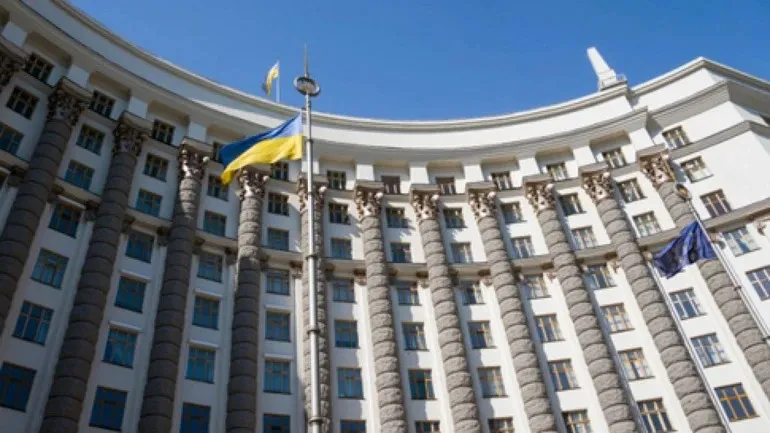
The government has approved and submitted to the Verkhovna Rada four bills that Ukraine must adopt as part of its agreements with international partners. These decisions will determine, in particular, whether Ukraine receives €1.45 billion in macro-financial assistance, as well as its ability to secure further external financing.
The Cabinet of Ministers approved four bills and submitted them to the Verkhovna Rada for consideration. These documents are necessary for Ukraine to fulfill its obligations to the European Union and the International Monetary Fund. According to him, the adoption of these bills is one of the conditions for receiving the third tranche of EU macro-financial assistance in the amount of €1.45 billion. “Today, the government approved and submitted to the Verkhovna Rada four bills necessary to fulfill international obligations and attract external financing. This is part of Ukraine’s commitments to the EU and the IMF and a condition for receiving the third tranche of macro-financial assistance worth €1.45 billion,” Melnichuk noted.
What Will Change for Sole Proprietors
One of the bills concerns the administration of value-added tax (VAT) for sole proprietors. The government proposes to simplify certain VAT rules for sole proprietors. The goal of these changes is to make tax administration more transparent and bring it into line with the requirements Ukraine has undertaken under international agreements.
It is also proposed to raise the threshold for unscheduled audits related to budget refunds and negative VAT balances. Currently, this threshold is 100,000 hryvnias. The government proposes raising it to 1 million hryvnias.
Rules for Large Companies
The second bill concerns transfer pricing. These are the rules under which the state regulates transactions between related companies, particularly when they operate in different countries. Such rules are necessary to prevent companies from artificially shifting profits to jurisdictions with lower tax rates and thereby reducing their tax liability.
The government proposes to bring Ukraine’s transfer pricing rules into line with OECD and European Union standards. In effect, this involves further aligning the Ukrainian tax system with the rules in place in EU countries and developed economies.
Changes for the Capital Market
The third bill concerns the Ukrainian capital market. The government proposes consolidating the sector’s key state institutions into a single holding structure. It also plans to allow an international strategic investor to be brought into this structure.
They intend to select this investor through an open competition. According to the government’s plan, this should help make the Ukrainian capital market more efficient and transparent for international investors. Bringing in a foreign strategic partner should also strengthen the management of the relevant institutions and create conditions for the further development of the financial sector.
Changes to the High Anti-Corruption Court’s Operations
The fourth bill concerns the work of the High Anti-Corruption Court. The government aims to improve the efficiency of case proceedings at the High Anti-Corruption Court. To this end, it is proposed to introduce single-judge hearings for certain civil and administrative cases.
Specifically, this applies to cases involving the recognition of assets as unjustified and their forfeiture to the state. It also applies to administrative cases involving the imposition of sanctions. In other words, in certain categories of cases, a single judge will be able to render a decision instead of a panel of judges. The government believes this will allow such cases to be heard more quickly and make the court’s work more efficient.
International Funding Depends on These Laws
The Cabinet of Ministers emphasizes that these draft laws are significant not only for domestic reforms. Their adoption is linked to the fulfillment of Ukraine’s agreements with international partners and the receipt of financial support. “A significant portion of the $29.5 billion in funds from international partners depends on the joint and effective work of the government and parliament,” emphasized Taras Melnychuk.
According to him, the government expects the Verkhovna Rada to support these bills. “We are counting on the Verkhovna Rada’s support for the government’s bills, which are necessary for the country’s financial stability and to meet defense needs,” the government representative stated.
The documents must now be considered by parliament. If lawmakers approve them and the bills pass all necessary procedures, Ukraine will be able to fulfill its relevant international obligations and count on further funding from its partners. One of the immediate financial outcomes the government is counting on is the third tranche of EU macro-financial assistance in the amount of €1.45 billion. This was announced by Taras Melnychuk, the government’s permanent representative in the Verkhovna Rada.
President Volodymyr Zelenskyy announced the dismissal of the deputy heads of the Security Service of Ukraine (SBU) and the Main Intelligence Directorate (GUR) following a conflict between employees of the two security agencies in Kyiv. Firearms were used during the incident, and two of those involved have already been notified of charges against them.


