
Terekhov proposed lowering the VAT on food and medicine for Kharkiv residents
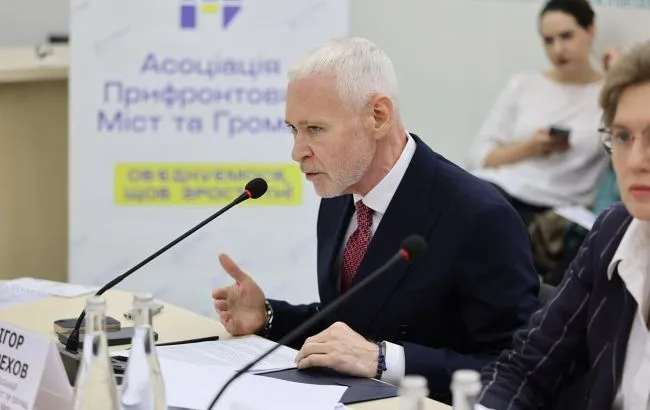
Ihor Terekhov, mayor of Kharkiv and head of the Association of Frontline Cities and Communities, proposed lowering the VAT on basic foodstuffs and medicines to 5 percent. According to him, this could make essential goods more affordable for Ukrainians who have been hardest hit by the war. Other proposals include raising the minimum wage to 10,000 hryvnias and pensions to 6,000.
Ukraine needs to rethink its approach to fighting poverty and make basic goods more accessible to the population. This proposal was put forward by Ihor Terekhov, mayor of Kharkiv and head of the Association of Frontline Cities and Communities of Ukraine. He made this statement during a roundtable discussion in Kyiv titled “Responding to the Challenge of Poverty: New Initiatives for State Social Protection Policy.” One of the main proposals was to reduce the VAT rate on basic food items to 5%.
This refers to goods that people buy every day: meat, fish, dairy products, vegetables, fruits, flour, grains, cooking oil, pasta, and baked goods. Terekhov believes that such a change should, first and foremost, help families with the lowest incomes. “Year after year, the war is destroying people’s well-being, taking away jobs, incomes, savings—and for some, their own homes, the ability to live, the ability to work, and the chance to build a future… We need to take proactive measures. The government must now build a system that ensures growth in household incomes so that we do not lose our people,” said the mayor of Kharkiv.
There are calls to reduce the VAT on medications
Separately, the Association of Frontline Cities and Communities is proposing changes to the tax on medications and medical devices. Currently, a preferential VAT rate of 7% applies to these items. Terekhov and the Association propose reducing it to 5%. They also propose expanding the list of medicines and medical devices eligible for the reduced rate.
According to the proposal’s authors, this should reduce the financial burden on people who regularly have to buy medications. This is particularly important for retirees, low-income individuals, and families who have lost part of their income due to the war. At the same time, lowering the VAT rate does not in itself guarantee an automatic drop in prices at stores and pharmacies. To achieve this, according to Terekhov, additional oversight is needed regarding how the final price of goods is determined.
Proposal to Control Markups
The mayor of Kharkiv separately emphasized the need to control retail markups. According to him, the tax reduction should not turn into additional profit for sellers. The savings must reach the buyer. “We need clear oversight by the authorities over retail markups and restrictions on those markups. And this applies not only to socially essential goods at this time. In the context of the war, I believe that such oversight must be very strict,” Terekhov stated.
In other words, this is not just about changing the tax rate. The authors of the proposal want the government to simultaneously monitor prices and retail markups. This should reduce the risk of a situation where the tax is lowered, but the final price for the consumer remains virtually unchanged.
How to Compensate for Budget Losses
A reduction in VAT would mean lower tax revenues for the state budget. Therefore, during the roundtable, Terekhov was asked how such a proposal could be implemented without significant losses to public finances. He replied that the government should look for savings within its existing expenditures.
First and foremost, he said, it is necessary to assess the effectiveness of government programs and audit those that are not delivering the desired results. “There are many ways to avoid budget losses today. First and foremost, this involves strict oversight and auditing of the ineffective programs that currently exist and are being funded,” said Terekhov.
He also called for stepping up the fight against corruption and the embezzlement of public funds. “In addition, we need to work to ensure that there is no corruption and no embezzlement of funds. And that is the most important thing. Then our international partners will support us,” stated the mayor of Kharkiv. Thus, the Association proposes to offset any potential decline in tax revenues not by cutting other social spending, but by identifying inefficient expenditures and strengthening control over budget funds.
What Else Is Being Proposed
Reducing the VAT on food and medicine is not the Association’s only initiative. Separately, it is proposed to temporarily set the VAT at 7% for equipment used in autonomous and backup power supplies for households.
This refers to equipment that helps people maintain power during outages. This is particularly relevant for Ukraine due to the constant risks to its energy infrastructure. The Association has also prepared proposals regarding household income.
They want to raise the minimum wage to 10,000
As part of the preparation of the 2027 state budget, the Association proposes setting the minimum wage at no less than 10,000 hryvnias. Another proposal concerns the minimum pension, which they want to raise to 6,000 hryvnias.
Terekhov explains these initiatives by the need to support people whose incomes have significantly decreased during the years of war or have failed to keep pace with rising costs. This is not only about combating poverty but also about an effort to support domestic demand and keep people in Ukraine.
At the same time, the final parameters of the 2027 state budget still have to go through the budget process. Therefore, the proposed figures currently represent the Association’s position and are not yet approved payment amounts.
More Assistance Proposed for IDPs
A separate set of proposals concerns internally displaced persons (IDPs). The Association proposes increasing assistance for IDPs to 4,500 hryvnias per person. It is also proposed to guarantee this payment for the first six months following displacement. At the initial stage, the assistance would be provided regardless of family income.
The rationale behind this proposal is that people often face significant expenses immediately after relocating. They need to find housing, settle into their new lives, replace their documents, find work, and meet their basic needs. Six months of guaranteed support, according to the authors’ plan, could give people time to adapt to their new surroundings.
They want to avoid cutting off assistance immediately after employment
Another proposal concerns people who have been out of work for a long time or have been living on social assistance. The association proposes changing the approach to calculating the income of such families after they find employment.
Specifically, during the first year after finding employment, the proposal is to exclude half of a person’s wages when determining their family’s eligibility for social assistance. At the same time, they suggest not canceling social benefits immediately, but rather reducing them gradually.
The idea is to ensure that a person does not find themselves in a situation where starting a job automatically means losing all benefits. With this approach, employment could become more financially advantageous, and the family would have time to transition from social assistance to self-sufficiency.
Why Terekhov Is Speaking Out on This Now
The full-scale war has severely impacted Ukrainians’ incomes. People are losing their jobs, homes, businesses, and savings, while household expenses remain high. The situation is particularly difficult for frontline communities. There, businesses are closing due to shelling, people are forced to relocate, and local authorities must simultaneously allocate resources to security, reconstruction, and support for the population.
That is why the Association of Frontline Cities and Communities is proposing changes to the government’s social policy. “I fully understand that the state budget is under strain today, and the majority of it goes toward defense and the Armed Forces of Ukraine. But it is very important today to find ways to ensure that our people can live with dignity,” Terekhov stated. His proposals must now be evaluated in terms of their impact on the budget and the economy. Lowering the VAT could help consumers, but at the same time raises questions about government revenue. Increasing social benefits will also require additional budgetary resources.
Therefore, the proposed package includes not just one change, but several measures at once: lowering taxes on basic goods, price controls, identifying inefficient budget expenditures, increasing revenue, and reviewing social assistance. For now, these remain proposals from the Association of Frontline Cities and Communities. Whether they will be implemented will depend on decisions by the government and parliament, as well as the preparation of the 2027 state budget. This was stated by Ihor Terekhov, mayor of Kharkiv and head of the Association of Frontline Cities and Communities, during a roundtable discussion in Kyiv.
Law enforcement officials uncovered a scheme to supply medical drugs to public institutions at inflated prices, which caused losses of over 80.9 million hryvnias to the state and local budgets.


