
The Beheading of John the Baptist, which marks the holiday on August 29
On August 29, Orthodox Christians commemorate the martyrdom of John the Baptist—the prophet who baptized Jesus Christ and called people to repentance. On this day, the Church observes a strict one-day fast, and among the people, the holiday is known as “Golovosik” and is associated with a number of ancient prohibitions and superstitions.
On August 29, according to the New Julian calendar, the Orthodox Church of Ukraine commemorates the Beheading of the Holy Prophet, Forerunner, and Baptist of the Lord, John. This is a day of remembrance for the tragic death of John the Baptist. The Church remembers him as one of the most important prophets, who preached repentance and prepared people for the coming of Jesus Christ.
John the Baptist is also known for baptizing Jesus Christ in the waters of the Jordan River. The prophet was not afraid to speak openly about what he considered wrong. He even condemned rulers. In particular, John spoke out against King Herod Antipas because of his marriage to Herodias, who had previously been his brother’s wife. For this, John the Baptist was imprisoned.
How John the Baptist Died
According to biblical tradition, the prophet’s execution took place during the celebration of Herod’s birthday. At the feast, Herodias’s daughter Salome danced before the guests. Herod was so impressed by her dance that he promised to grant her any wish.
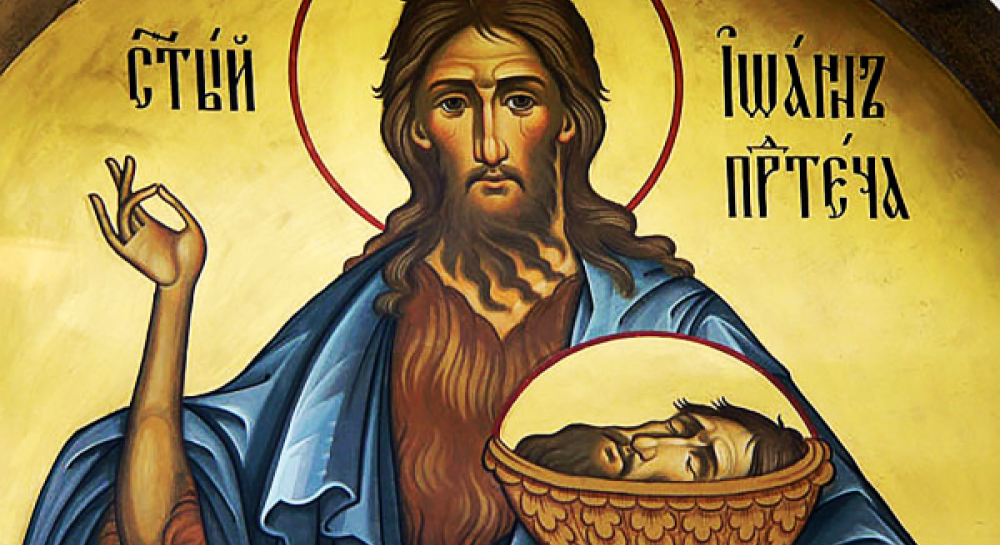
Salome, on her mother’s advice, asked that John the Baptist’s head be brought to her on a platter. Herod did not want to kill the prophet, but he did not want to break his promise in front of the guests. Therefore, he ordered John to be executed in prison.
Thus, the prophet suffered a martyr’s death. It is this event that the Church commemorates on August 29. The day is considered a day of mourning, so it has special observances.
Why Is the Holiday Called “Golovosik”?
Among the people, the Beheading of John the Baptist is called “Golovosik.” The name comes from the story of the prophet’s execution itself. Folk tradition has associated many taboos with this day. Some of them symbolically relate to the head, blood, and anything that might remind one of the tragic death of John the Baptist.
One of the main traditions is a one-day fast. On this day, believers abstain from meat and devote more time to prayer.
What Not to Do on August 29
Some of the taboos stem specifically from folk customs rather than church rules. According to folk tradition, people tried not to handle knives, axes, or scissors on this day. It was believed that any cutting action was reminiscent of the beheading of the saint. People were also advised not to cut bread with a knife but to break it with their hands.
There was also a separate prohibition against round-shaped foods. Our ancestors associated vegetables and fruits such as watermelon, melon, apples, and round loaves of bread with the saint’s head. People also avoided red-colored foods—tomatoes, beets, and red berries. These were symbolically associated with the prophet’s blood. According to ancient beliefs, on this day one should also avoid getting a haircut, washing one’s hair, or combing it.
At the same time, it is important to distinguish between church regulations and folk beliefs. The Church does not impose bans on specific vegetables, fruits, or the use of a knife as a mandatory rule for all Christians. The main Church tradition on this day is prayer, remembrance of John the Baptist, and fasting.
Folk Omens on Golovosik
August 29 was also associated with numerous weather omens. If cranes began to fly away earlier than usual, this was considered a sign of an early and cold winter. Clear and warm weather supposedly promised a long and pleasant fall.
If it rained on this day, people expected a wet fall. And an abundance of rowan berries on the trees was considered a harbinger of a harsh winter. These signs are part of folk culture, not scientific weather forecasts.
How to Spend This Day
On August 29, believers can spend the day quietly, without loud entertainment, devote time to prayer, and reflect on the story of John the Baptist. According to church tradition, a one-day fast is observed on this day.
The main significance of the holiday lies not in the numerous everyday prohibitions, but in the memory of the prophet who did not renounce his beliefs even in the face of death. In folk tradition, Golovosik has remained one of the days treated with particular caution. Hence the large number of superstitions and taboos, some of which have survived to this day.


