
Fruit prices have changed in Ukraine: here are the current prices as of June 29

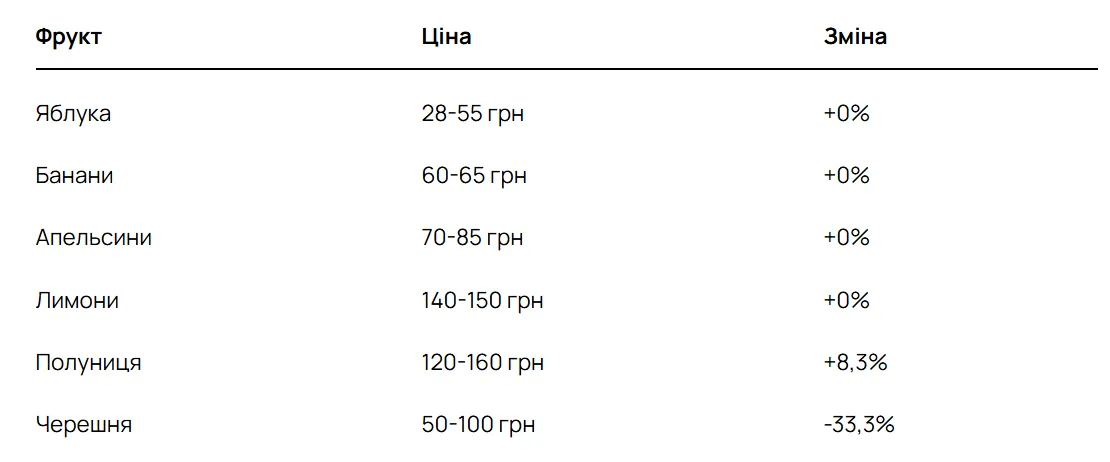
As of June 29, 2026, the price of strawberries in Ukraine has risen, while prices for cherries have fallen. At the same time, apples, bananas, lemons, and oranges are selling at the same prices as before.
Compared to the previous period, the biggest changes were seen in seasonal berries. The rest of the popular fruits did not show any significant price fluctuations.

Which fruits became the cheapest
Strawberry prices in Ukraine have begun to rise. Currently, they cost 120–160 UAH, whereas last week they were selling for 105–160 UAH/kg.
The price of sweet cherries, on the other hand, is falling rapidly. Currently, prices for sweet cherries range from 50 to 100 UAH per kilogram, although in mid-June they were more expensive—70–150 UAH per kilogram.
Apricots have also become nearly half as expensive—from 110–160 to 60–110 UAH/kg. Prices for raspberries have dropped from 250–750 to 200–300 UAH/kg.
Price Forecast
The cost of imported fruits, particularly bananas and oranges, will depend on fluctuations in the hryvnia’s exchange rate against the dollar. In the domestic produce segment, apple prices are expected to rise as local farms gradually deplete their stocks from last year’s harvest.
At the same time, there is no reason to expect a significant reduction in the apple harvest in Ukraine. The new season may yield a larger gross harvest than last year.
Due to weather anomalies this spring, the harvest of fruit crops in Ukraine will decrease; in particular, the greatest losses are expected for apricots and cornelian cherries. Peaches, sweet cherries, sour cherries, and plums were also affected by low temperatures during the spring.
This is according to data from the “Stolichny” market website in Kyiv.
Cherries have become significantly more expensive: current fruit prices in Ukraine.
As a reminder, inflation in Ukraine in March turned out to be higher than the National Bank’s forecast, primarily due to a sharp rise in fuel and energy prices on global markets. This led to higher business costs, which were reflected in the prices of transportation, services, and some food products.
In March 2026, annual inflation in Poland stood at 3%. One of the key reasons for the rise in prices was the increase in energy costs amid the situation in the Middle East.


