
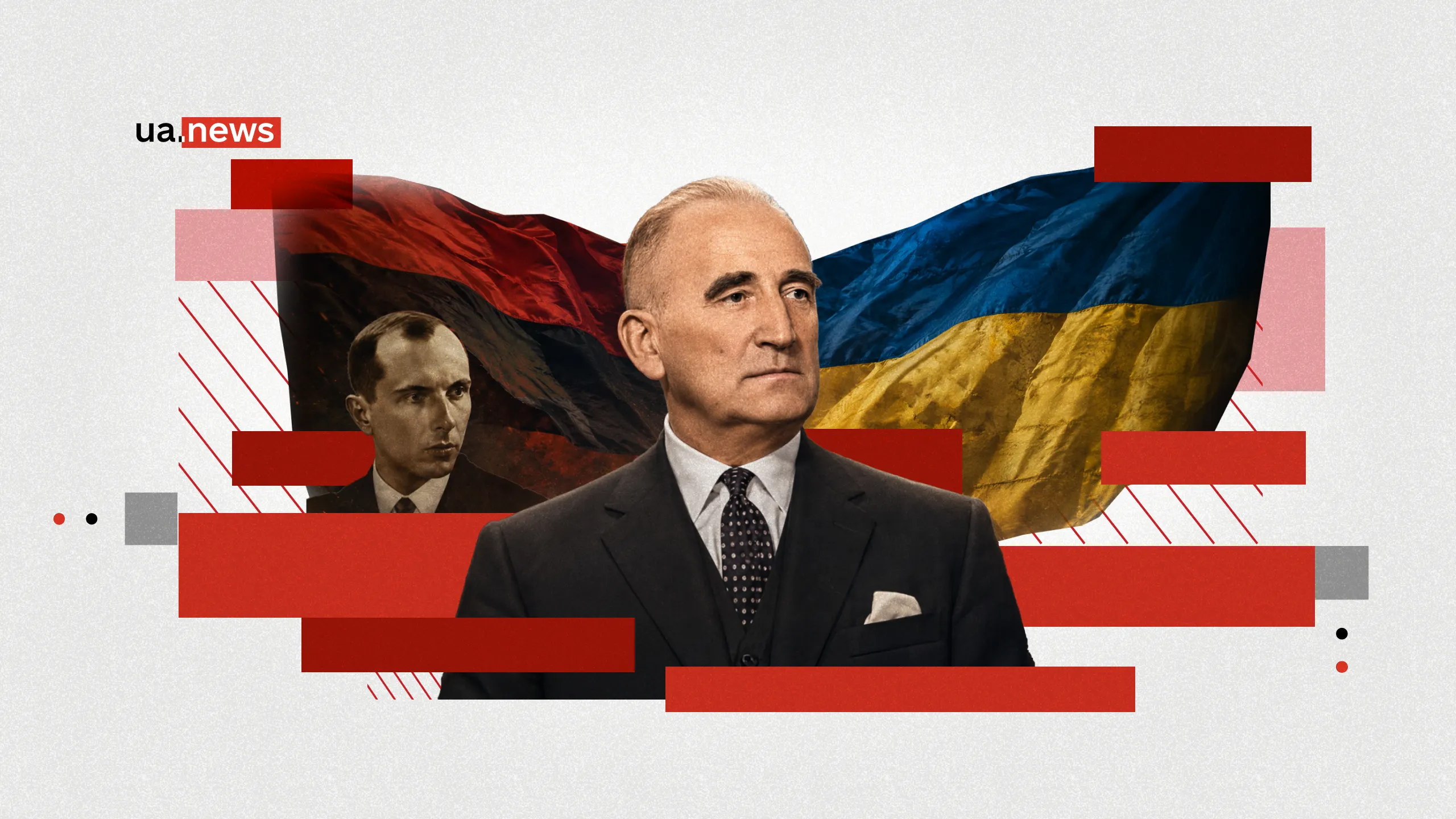
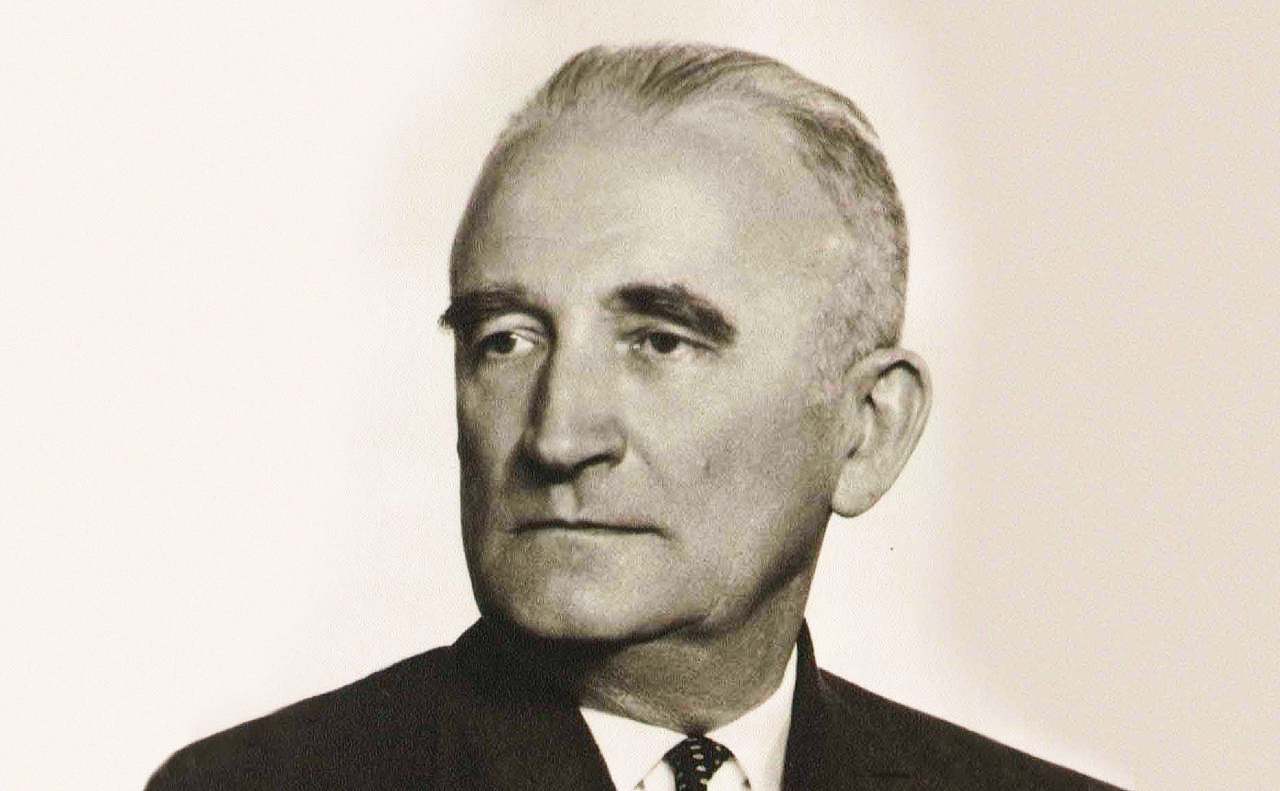
On May 25, 2026, a ceremony was held at the National Military Memorial Cemetery that sparked mixed reactions both within the country and abroad. With military honors, accompanied by an orchestra, and attended by top government officials, the remains of one of the leaders of the Organization of Ukrainian Nationalists (OUN)—Andriy Melnyk—were reburied.
The solemnity of the event and the presence of Ukraine’s entire leadership provoked a serious diplomatic chill with Israel and Poland, as this figure has a very complex historical legacy, including close ties to collaboration with Nazi Germany.
However, aside from the international backlash, the ceremony also exposed an internal paradox. For a significant portion of ordinary Ukrainians, the figure being buried with such pomp remains virtually unknown. While practically everyone has heard of Stepan Bandera, Symon Petliura, or Roman Shukhevych, the name Andriy Melnyk is often associated only with a contemporary diplomat, Ukraine’s representative to the UN, rather than a historical figure.
So who is Andriy Melnyk, and what is he known for? What was his role in the struggle of 20th-century nationalists? Why did he collaborate with the Third Reich, and how did he become Bandera’s sworn enemy? UA.News investigated the matter.
From Agronomist to Colonel
Andriy Melnyk was born on December 12, 1890, in the village of Volia Yakubova in the Lviv region, which was then part of the Austro-Hungarian Empire. He came from a peasant family. After graduating from school in Lviv, he enrolled in the Higher Agricultural School in Vienna. It was during his student years that he became deeply involved in the national movement. It was an era when the Ukrainian intelligentsia was actively seeking ways to break free from imperial rule, and youth organizations became a breeding ground for future revolutionaries. At a very young age, Melnyk joined “Prosvita” and sports organizations that championed the idea of Ukrainian independence.
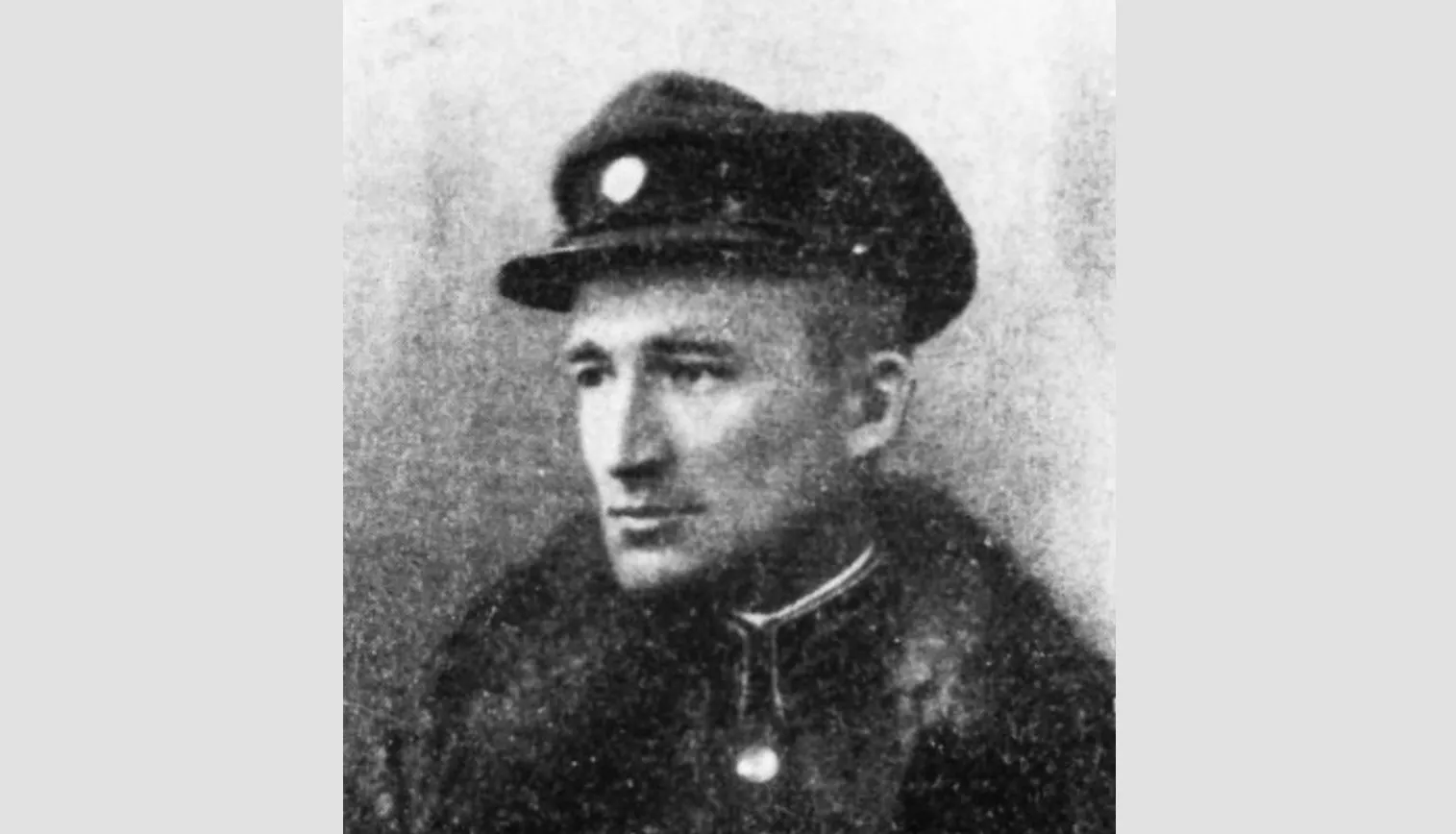
But his true baptism of fire came during World War I. Melnik then joined the Ukrainian Sich Riflemen (USS)—the first national military unit within the Austro-Hungarian Army. On the front lines, he demonstrated leadership abilities, quickly rising from private to officer, eventually reaching the rank of colonel.
Melnik’s military talent fully blossomed during the 1917–1921 revolution. The future leader of the nationalists became chief of staff of the Sich Riflemen Corps—an elite unit of the UNR army under the command of Yevhen Konovalets. It was there, in the midst of suppressing the Bolshevik uprising at the Arsenal factory and defending Kyiv against Muravyov’s troops, that Melnik’s friendship and political alliance with Konovalets were forged. The defeat of the liberation struggle forced him into exile, but he did not step away from the political struggle.

Konovalets’ Right-Hand Man and the Birth of the OUN
Having settled in Czechoslovakia, Melnyk became one of Konovalets’ closest aides. Together, they were at the forefront of the OUN’s founding in 1929. Melnyk handled organizational matters, intelligence, and relations with European circles, remaining in the shadow of his charismatic leader. Everything changed on May 23, 1938, when NKVD agent Pavel Sudoplatov assassinated Yevhen Konovalets in Rotterdam (Netherlands) by planting explosives in a box of chocolates.
The OUN was faced with the question of a successor. Konovalets left an oral will in which he explicitly named Melnyk as his successor. It was this decision that sparked a deep conflict within the nationalist community. The young and radical wing of the OUN, which operated underground in Western Ukraine—in particular, Stepan Bandera—considered Melnyk to be too cautious of a “desk-bound” figure, out of touch with the realities of the struggle against the Polish occupation authorities. They believed that under the circumstances of the time, what was needed was not diplomacy, but decisive (including terrorist) acts of “direct action.” Thus, in 1940, the OUN finally split into two hostile factions: the OUN(m) led by Melnyk and the OUN(b) led by Bandera.
Working with the Nazis: From Collaboration to the Walls of a Concentration Camp
World War II became a moment of truth for all Ukrainian nationalists. The historical context of that time was ruthless: small political groups and nations, squeezed between Hitler’s Reich and Stalin’s USSR, had to seek their chance and make a choice. The Nazis’ bid for a racial restructuring of Europe seemed to many like a window of opportunity, and this false illusion was shared by politicians across Europe.
Melnik, like his opponents from the Bandera wing, tried to use the German military machine. The OUN(m), which he led, bet on legal diplomatic cooperation with the Germans. Melnyk conducted negotiations in Berlin, trying to convince the German command of the benefits of an alliance with the Ukrainians against Moscow. Unlike Bandera, who took a risky gamble by proclaiming the Act of Restoration of the Ukrainian State on June 30, 1941, without German permission, Melnyk adhered to subordination. He believed that an agreement could be reached with Hitler to defeat the Bolsheviks through joint efforts and achieve statehood gradually. Some of his supporters joined the advance units that invaded Ukraine in the wake of the Wehrmacht.
However, this calculation turned out to be a fatal mistake. Hitler did not want an independent Ukraine in any form: the German dictator fundamentally distrusted the Slavs and, to put it mildly, did not like them, considering them “Untermenschen,” that is, “subhumans.” When the Germans realized that the nationalists dreamed of their own statehood rather than the role of colonial administrators, they resorted to repression. Bandera and his associates were thrown into a concentration camp. Melnik, despite all his loyalty and diplomacy, met the same fate: in January 1942, he was placed under house arrest, and later, in 1944, sent to the infamous Sachsenhausen concentration camp.
It is worth noting, however, that he, like Bandera, was held in the relatively privileged “Zellenbau” bunker for political prisoners, where deposed prime ministers, opposition politicians, and officers from all over Europe were detained. In other words, the Nazis did not kill potentially “useful” leaders, but rather kept them “in reserve” just in case—perhaps they might still come in handy? But the fact remains: collaboration with the Nazis did take place, and it was this very collaboration that landed both OUN leaders behind the barbed wire of a concentration camp. The attempt to use one totalitarian monster against another ended in predictable collapse and defeat. But that was not the end of the story.
A Bloody Feud: Melnyk vs. Bandera
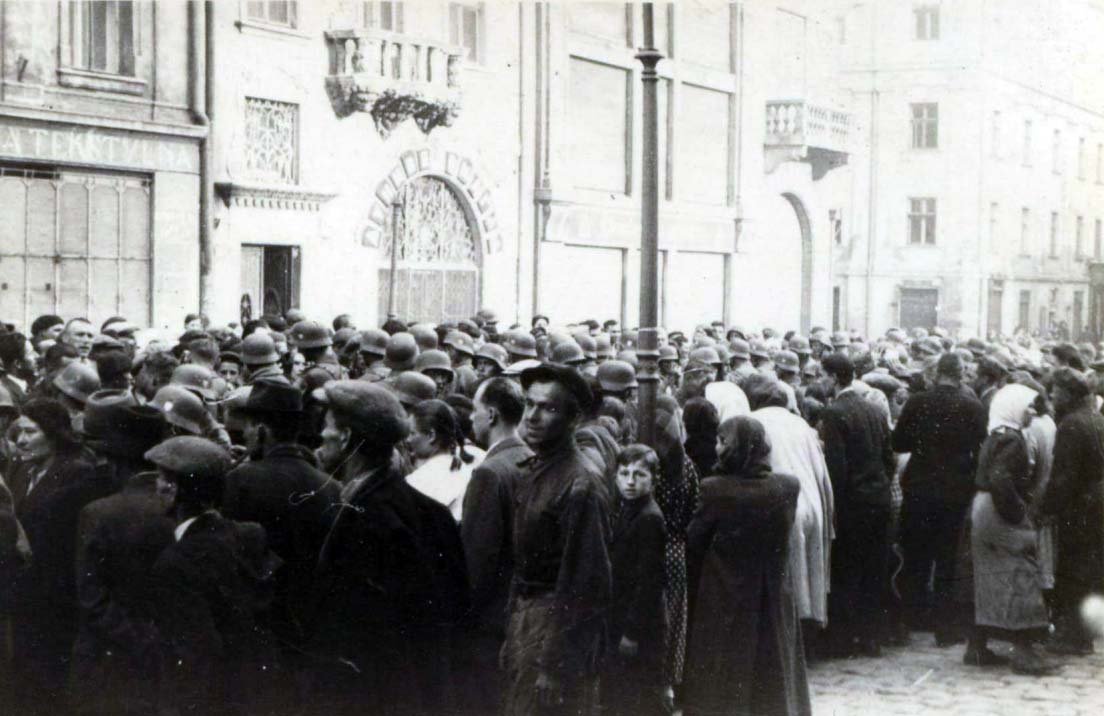
The internal war within the OUN, which raged alongside World War II, deserves a separate mention. The split between Melnik’s and Bandera’s factions did not exist in a vacuum. It was a brutal, bloody struggle for power, influence, and ideological leadership. Melnyk considered himself the legitimate heir to Konovalets; for him, subordination, respect for hierarchy, and organizational discipline were almost sacred. Bandera and his comrade Shukhevych, nearly 20 years younger than Melnyk, relied on the youth underground in Galicia and demanded a total restructuring of the organization and a transition to an armed uprising. They accused Melnyk of passivity and an inability to take decisive action.
Verbal battles quickly escalated into the physical elimination of rivals. Bandera’s followers launched a veritable hunt for Melnik’s supporters. Murders took place right on the streets of occupied cities—in Zhytomyr, Vinnytsia, and Kyiv. This literal civil war, in which Ukrainian nationalists massacred one another instead of uniting against common enemies, became one of the darkest chapters in the movement’s history, historically weakening it.
It must be acknowledged that Melnyk lost that war. His OUN(m) ultimately ceded the initiative to the Bandera followers, who managed to create the Ukrainian Insurgent Army (UPA) and controlled the armed nationalist underground until the 1950s. As a result, Melnyk was sidelined, which in the future had a fatal impact on his place in historical memory.
Postwar Life and Death in Exile
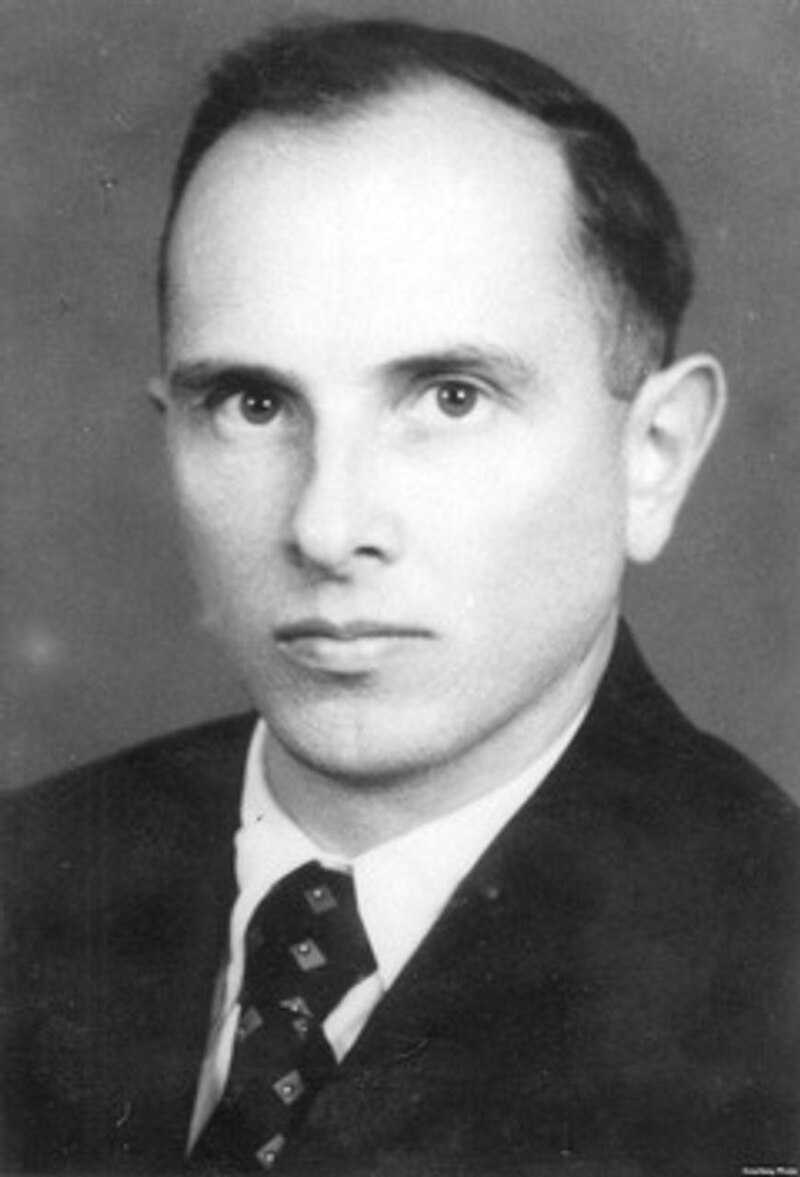
After his release from the concentration camp, Melnyk, like Bandera, found himself in West Germany. He no longer played an active role in the underground struggle on Ukrainian territory, where the UPA reigned supreme. The animosity between Melnik’s followers and Bandera’s followers smoldered for another decade, dividing the nationalist movement.
Andriy Melnyk died on November 1, 1964, in the city of Clermont-Ferrand, at the age of 73. In accordance with his will, his body was buried in a cemetery in Luxembourg, next to the grave of his teacher and friend Yevhen Konovalets. His remains remained there for over 60 years until they were ceremoniously transferred to Kyiv—contrary to his last wishes.
Why Everyone Knows Bandera, but Almost No One Knows Melnyk
At the end of this text, a natural question may arise for the reader: if Andriy Melnyk was truly an important figure for the nationalist movement—why is he almost unknown in the public consciousness, while Bandera’s name is known to everyone? The answer seems obvious: in the internal struggle, Melnik’s followers lost, which left them largely in the shadows of history. After all, just as everyone knows perfectly well who the Bolsheviks are and knows their leaders (Lenin, Stalin, Trotsky, etc.)—but almost no one, except historians, even remembers that the Communist Party also included Mensheviks led by their own leaders (Martov, Axelrod, Plekhanov, etc.).
But in reality, the answer to this question is far more complex and interesting. The primary culprit in this distortion of historical memory is… Russia: both the Soviet Union and the modern Russian Federation.
In the 1940s and 1950s, the KGB’s main enemy was not Melnik’s scattered, weakened émigré wing, but the extensive network of the OUN(b) and the UPA, which waged an armed struggle behind the Red Army’s lines. The very word “Banderites” became a universal “brand” to denote all Ukrainian nationalists without exception. Soviet propaganda did not delve into the intricacies of the OUN split; it needed a simple and personalized image of the enemy.
That image became Stepan Bandera. Ultimately, it was Bandera, not Melnyk, who was assassinated in 1959 in Munich by KGB agent Bohdan Stashynsky. Melnik, on the other hand, as a politician who had lost the internal power struggle and did not stand behind the rebel army, found himself in the informational shadows. He was not seen as an immediate threat, so no powerful propaganda myth was built around him.
Later, during the era of independence and especially after 2014, Russia once again adopted Soviet-era rhetoric. Propaganda began to massively exploit the narrative about the “Banderites,” cementing in society the image of Bandera as the sole “icon” of the nationalist movement. As for Melnik, no one on Russian television mentioned him—it is quite likely that modern propagandists do not even know who he is.

In summary, Andriy Melnyk’s story serves as a reminder that the nationalist movement was never monolithic: it consisted of diverse, often mutually hostile factions. In many ways, it was precisely this obsession with searching for internal enemies that played a cruel joke on the OUN. Ultimately, the organization missed its historic moment. Today, however, Melnik’s story can serve as a lesson in a broader sense: in any political struggle, internal unity is paramount. Without it, discord and entropy set in, which ultimately leads to the victory of other forces that are no better—they are simply more organized. After all, it is organization that always triumphs over chaos.


